


April 11 - June 1, 2026
Galleri Urbane is pleased to announce The Florist, an upcoming solo exhibition by Philadelphia-based painter Stephen D’Onofrio. This marks the artist’s sixth solo show with the gallery and celebrates a decade-long partnership.

Lily Market (Blue) - 48 x 36 inches
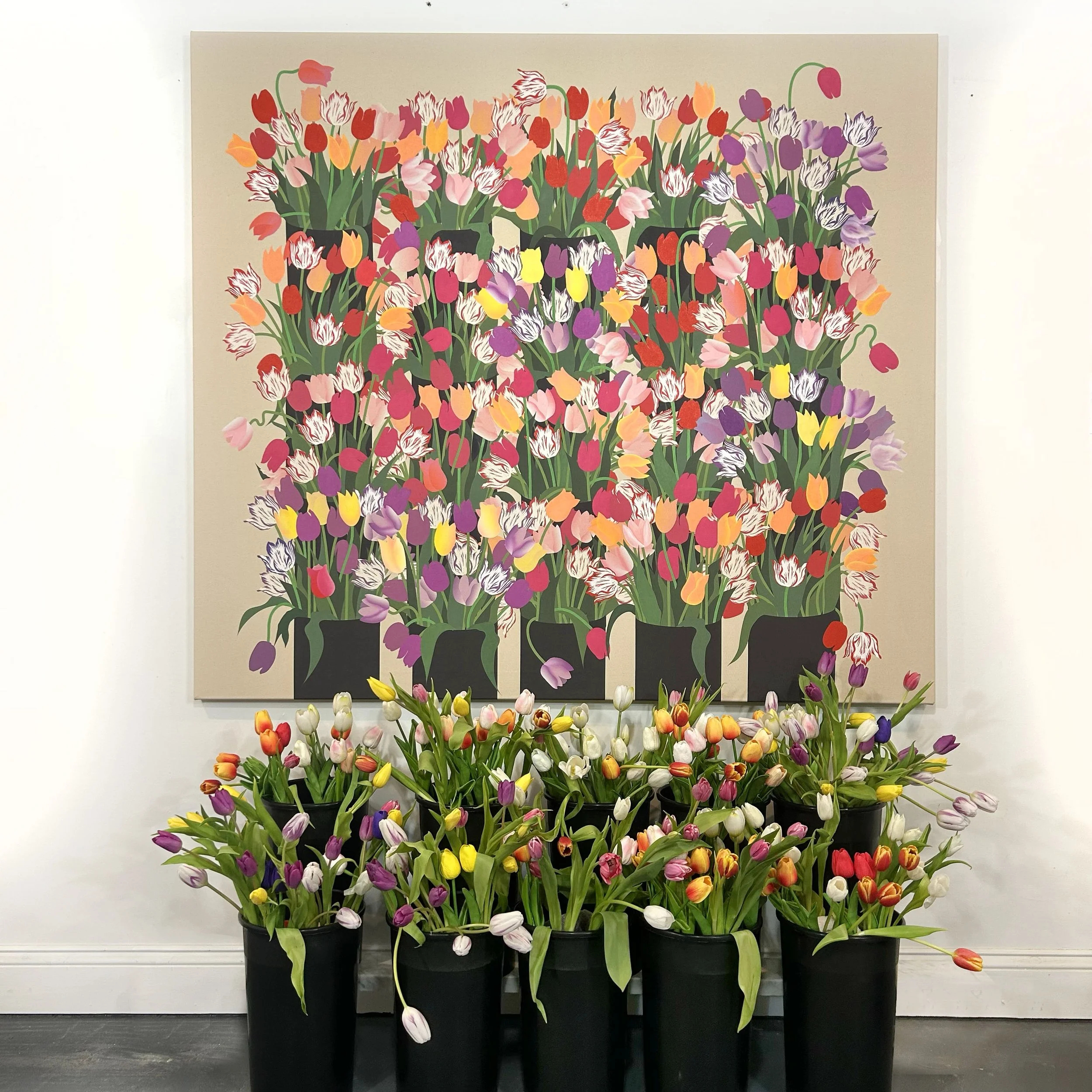
Tulips with tulips in Stephen’s studio
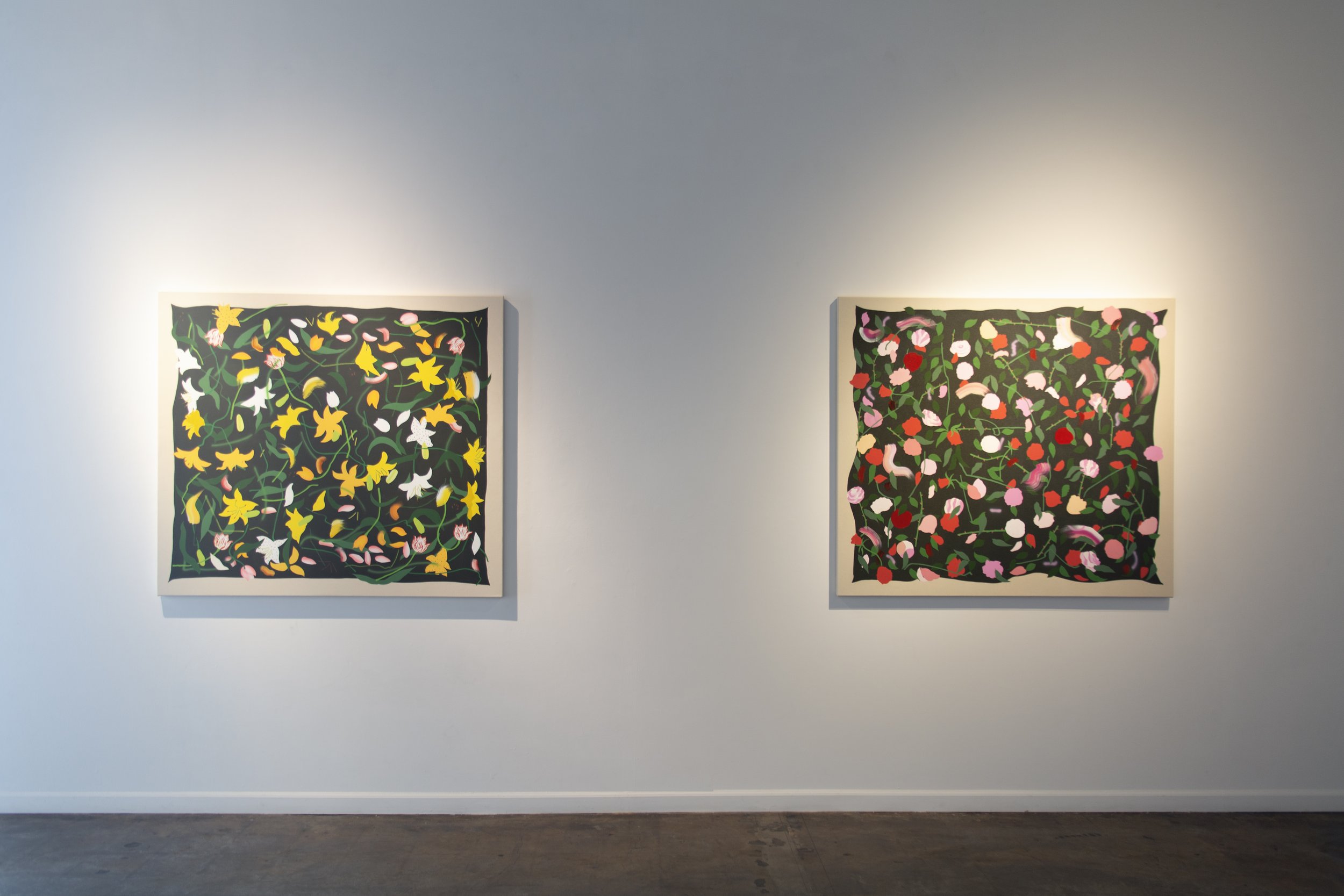
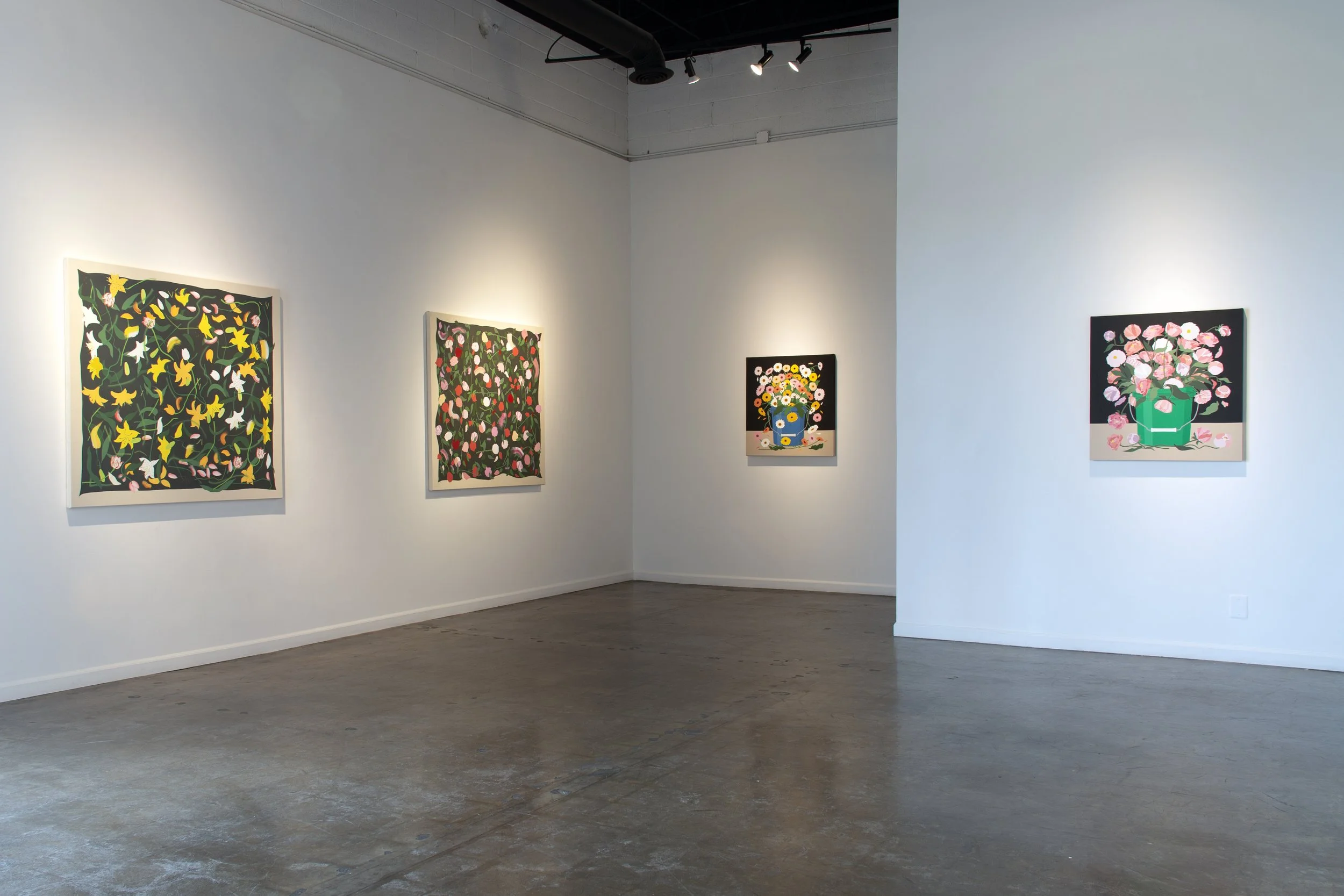
Installed exhibition views:
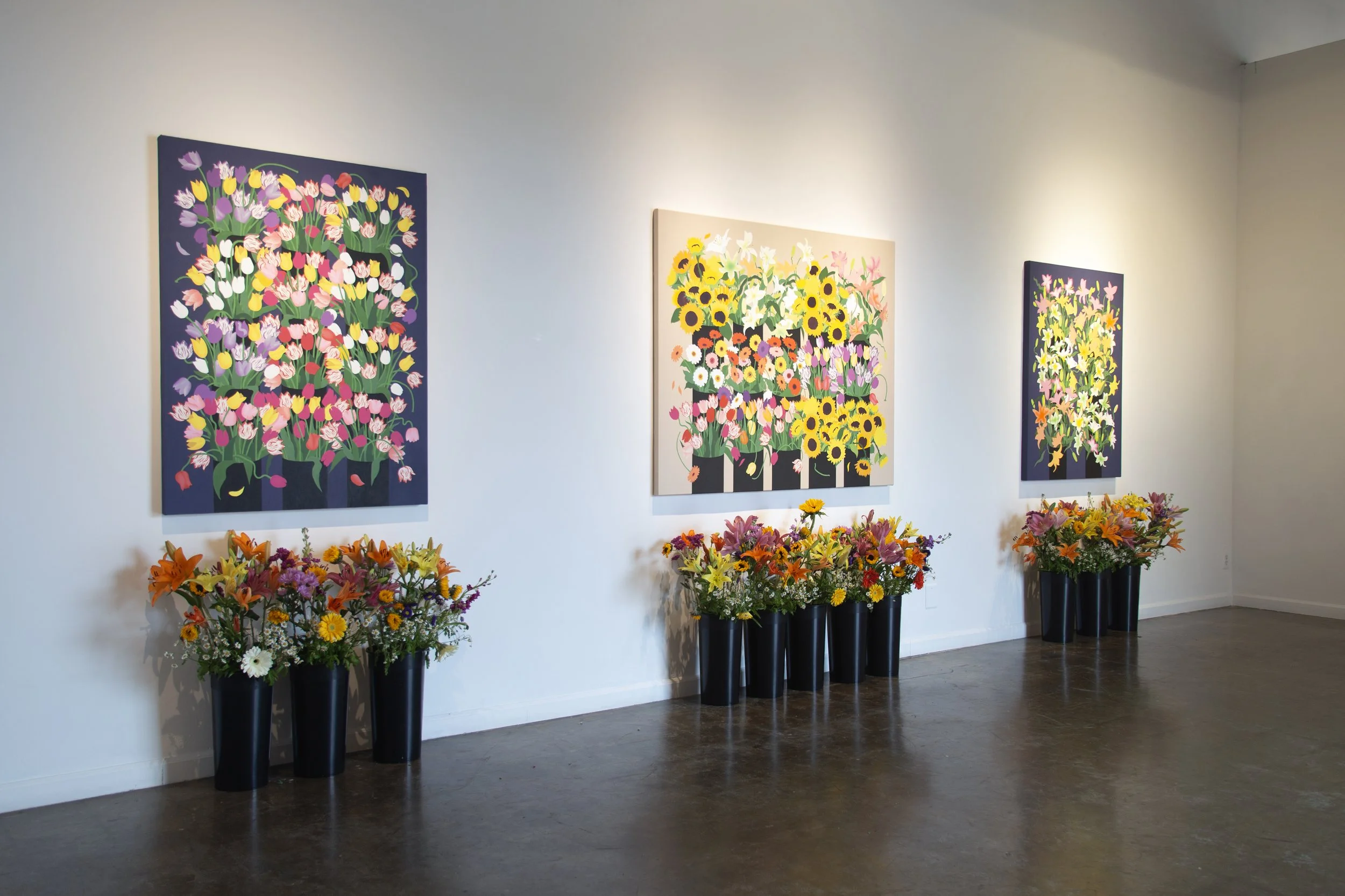
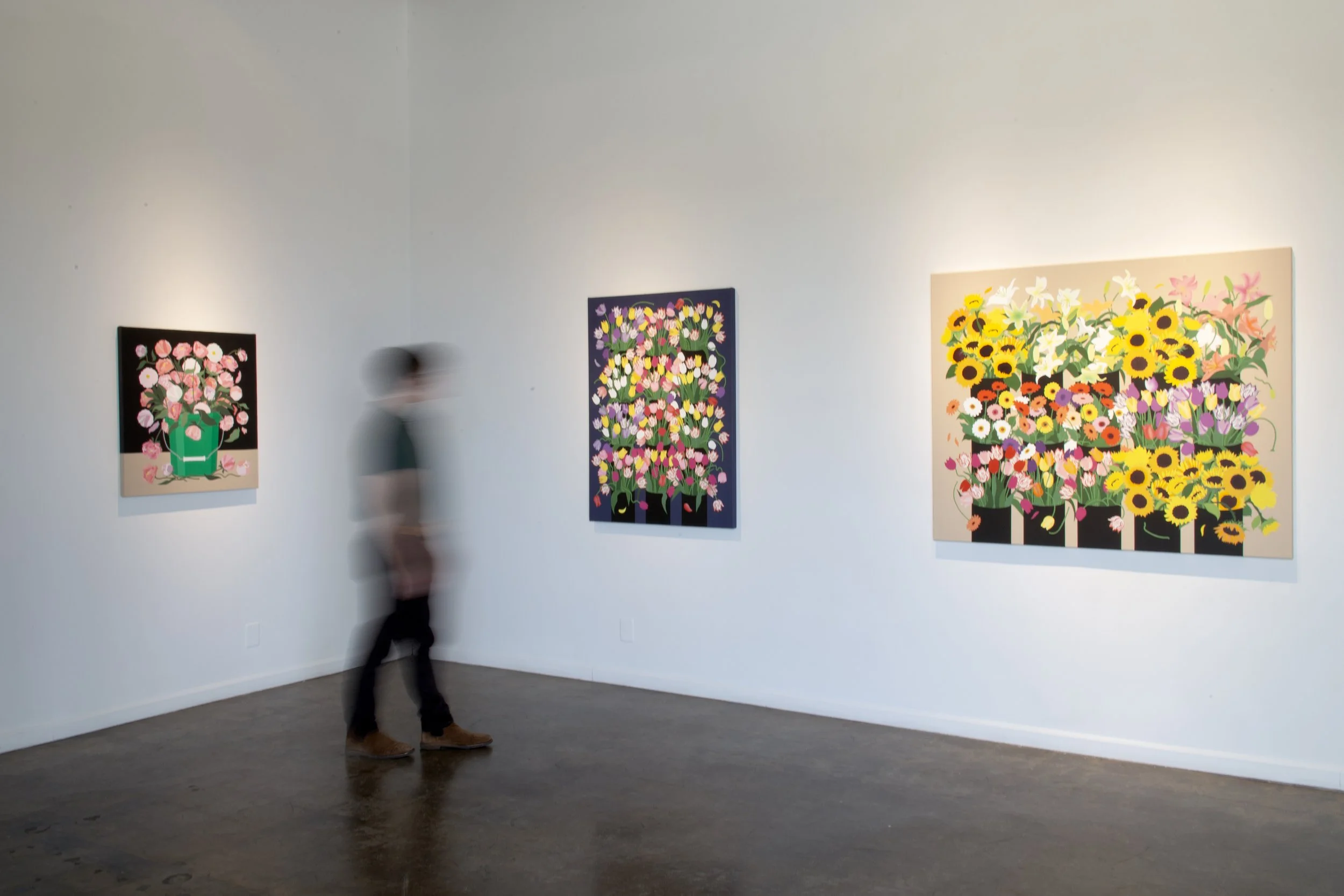
“Some of these new paintings follow the still-life structures I often use, while others move toward abstraction, where color, surface, and texture become more important than clearly defined subject matter. This shift gives me room to push the compositions in new directions and allows the color and visual texture that have always been part of my work to take on a larger role.
Overall, this body of work feels like an entry point, a moment of change. It holds onto the quiet, formal language of centuries-old still lifes, while opening that structure up—allowing florals to become a way to explore color, visual texture, and form, and to move the work toward new kinds of composition and depiction.”
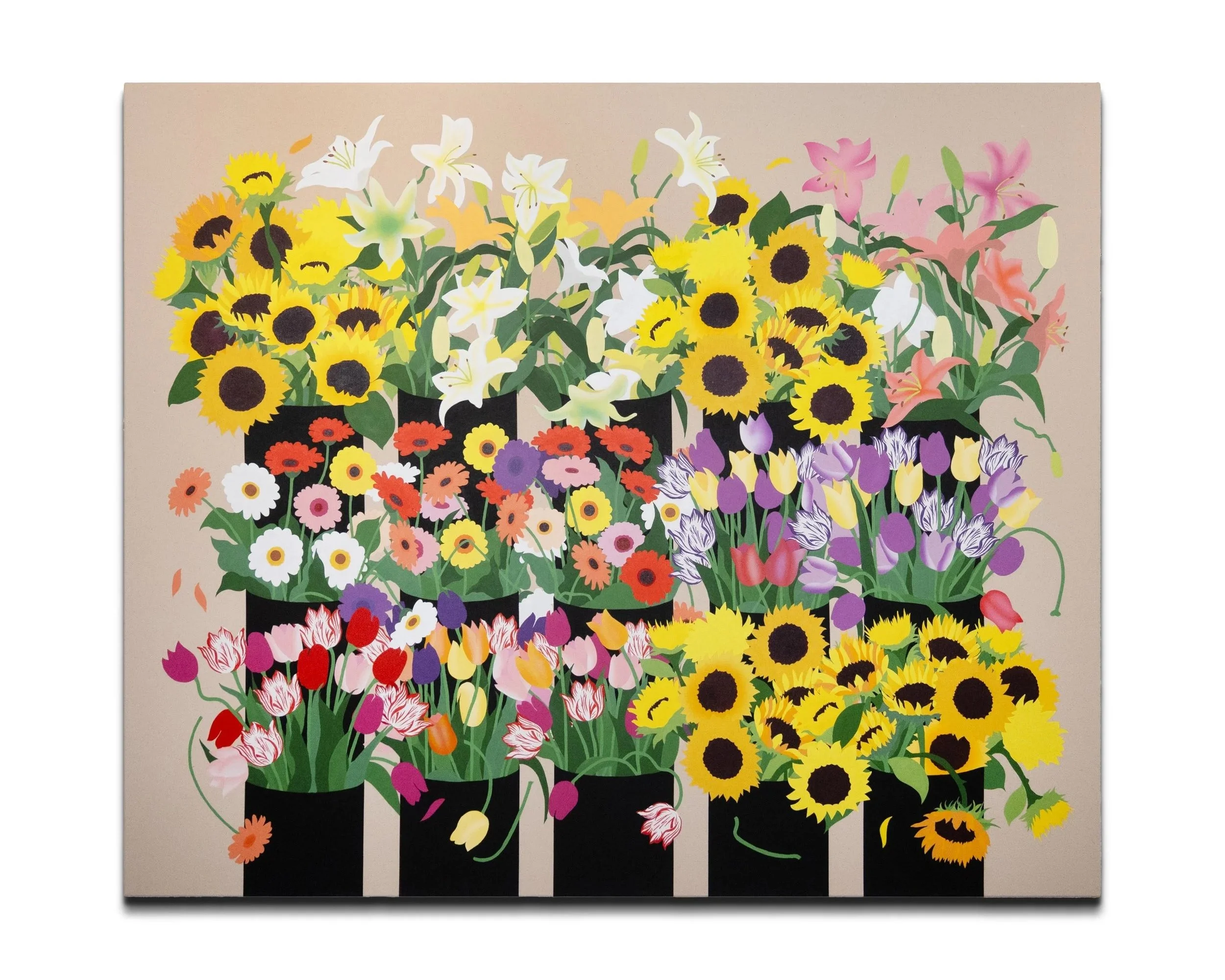
Mixed Flower Market – 48 x 58 inches
An essay by writer Eve Hill-Agnus accompanies the exhibition.
If The Arborist planted D’Onofrio firmly within the still life tradition of the Northern European Golden Age—among fruit bowls and orchard trees, the pendulous weight of a ripened harvest to come—then The Florist lavishes attention on an earlier, more volatile moment in the botanical calendar: the flower. Where fruit is culmination, the bloom is promise, extravagance, the concentrated wager of a plant on its own future. It is also, of course, the most perishable of subjects.
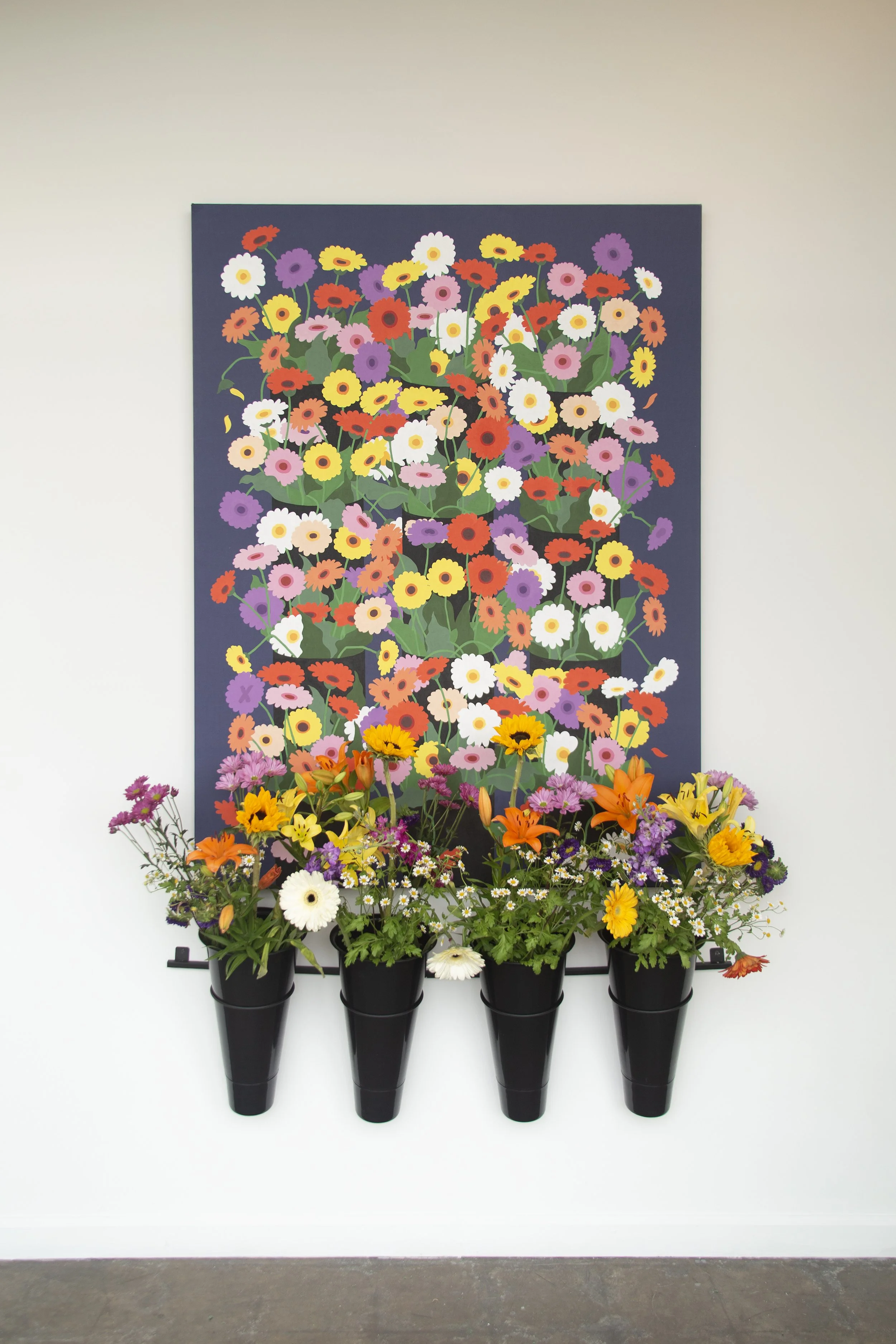
The organizational conceit of the new work is the flower market stand. In paintings that set ebony- colored floral buckets against indigo backgrounds (a departure from the artist’s customary raw canvas or black grounds), the deep, blue-violet hue evokes the prized ancient color dubbed “blue gold.” From this field of near-darkness, floral abundance erupts in the shallow pictorial space he has made his signature. What D’Onofrio has always sought is richness—but a richness with architecture beneath it, compositions that press toward pattern while remaining firmly composed.
Watch:
Join us in meeting Stephen at the gallery prior to the opening of his new solo exhibition, 'The Florist’
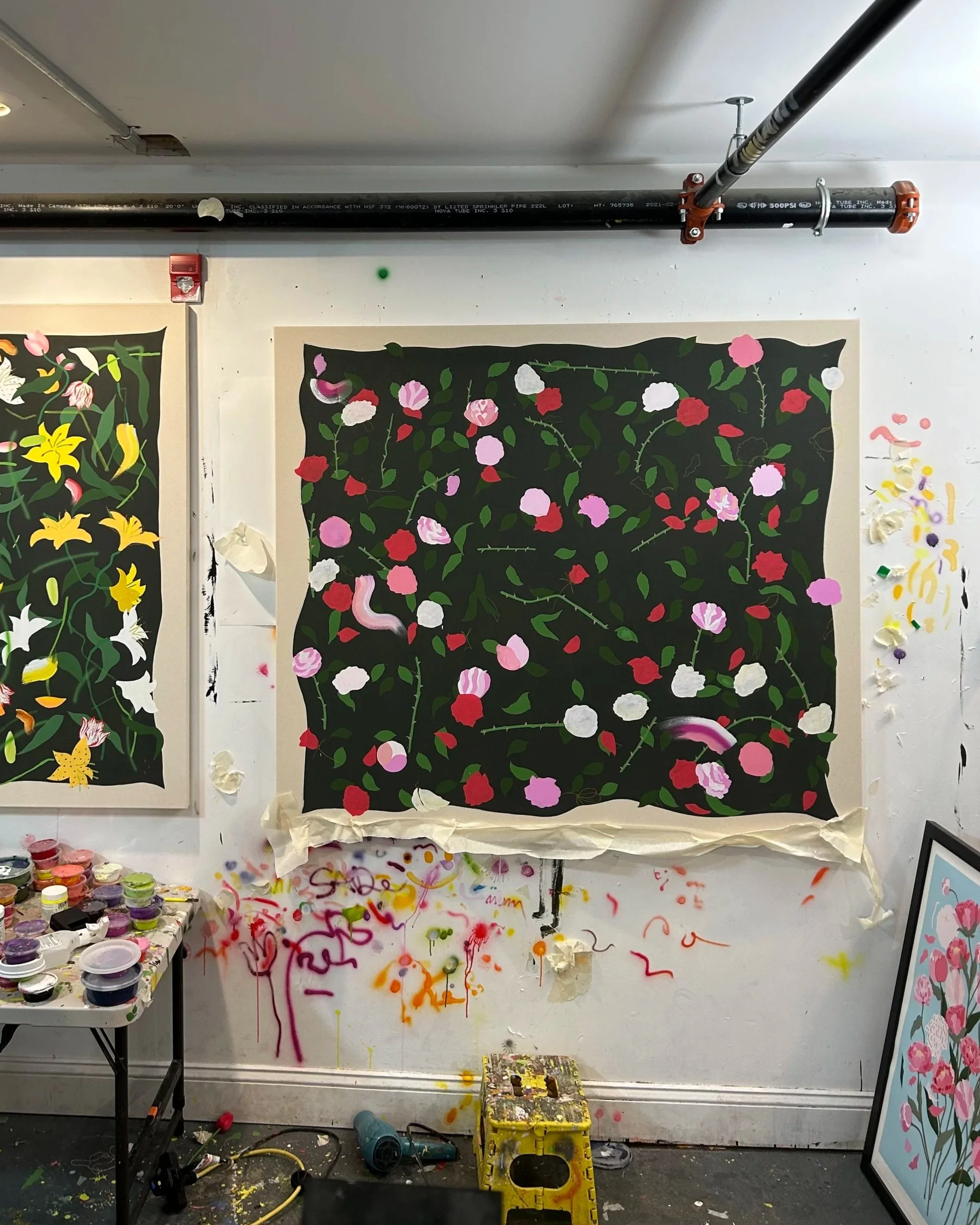
Studio View
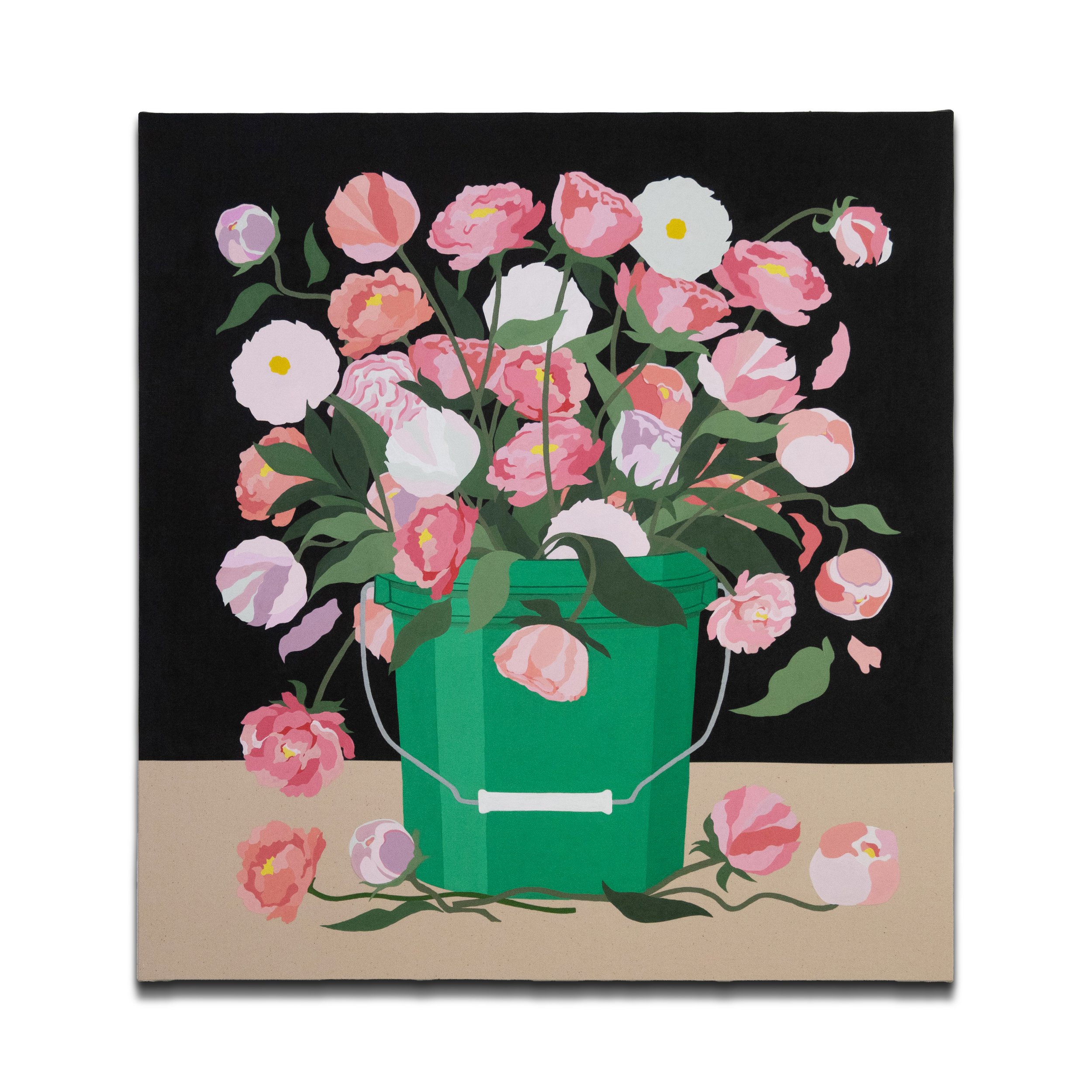
Peony Bucket – 32 x 30 inches
Watch:
Video tour of ‘The Florist‘ by Stephen D’Onofrio
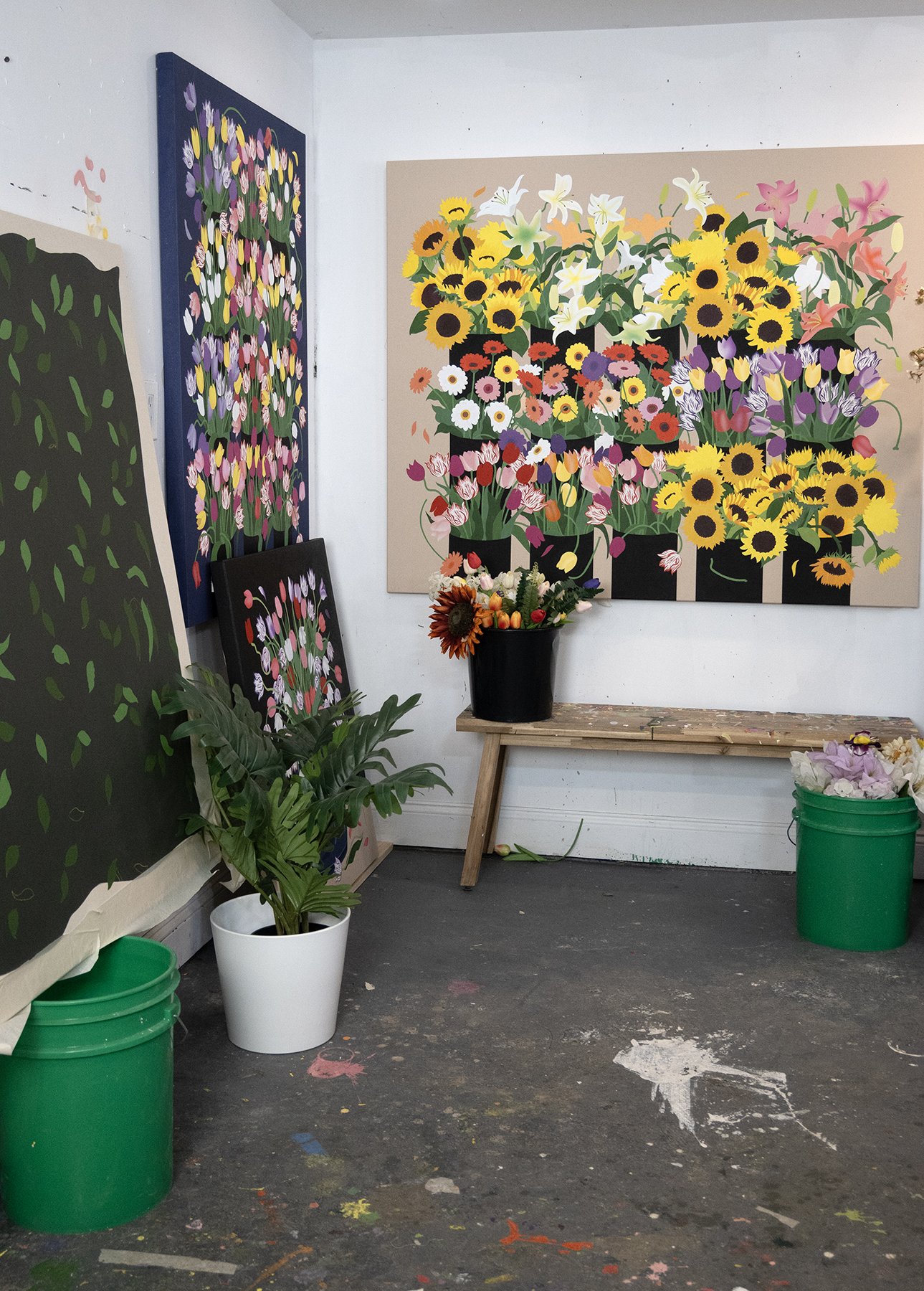
Studio View
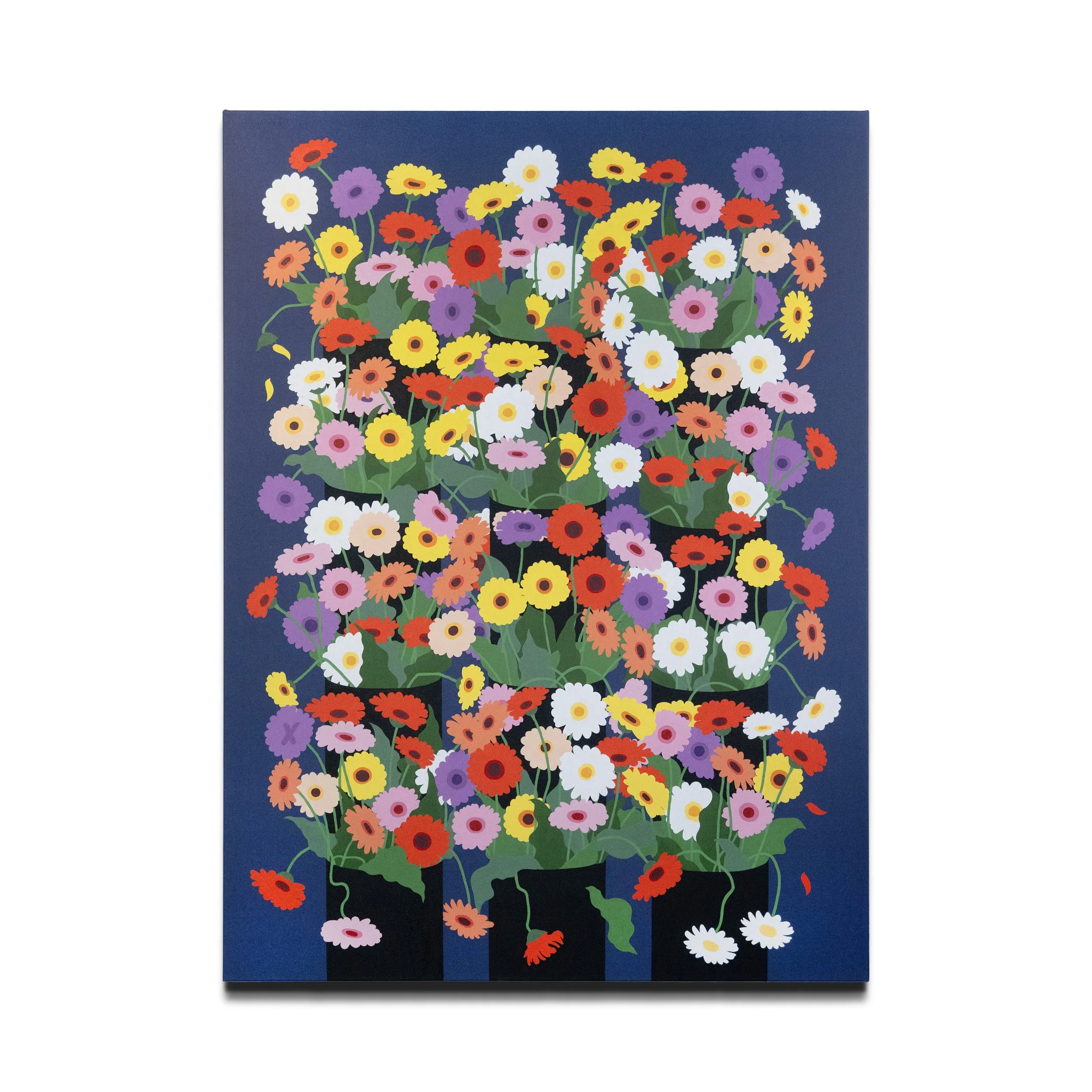
Gerbera Daisies (Blue) – 56 x 42 inches
(essay continued)
Two vases full of lilies—yellow, white, pink, peach-colored—exist as a compressed yet riotously efflorescent pattern, pistils and stamens pert punctuation amid the lush, compacted forms. In others, vibrant gerbera daisies, tulips, or sunflowers press into one another with an almost Pop insistence.
This density is never accidental. It exists due to a matrix—a compositional formula, both armature and invitation, within which the artist can then, to varying degrees, weave motif and painterly expression. The logic has affinities with textile design and decorative traditions that run from William Morris through Maija Isola of Marimekko. Yet D’Onofrio’s paintings never surrender wholly to pattern. Get closer, and the boundary between image and ornamentation begins to waver.

Florist’s Table / Lily and Tulips – 48 x 54 inches
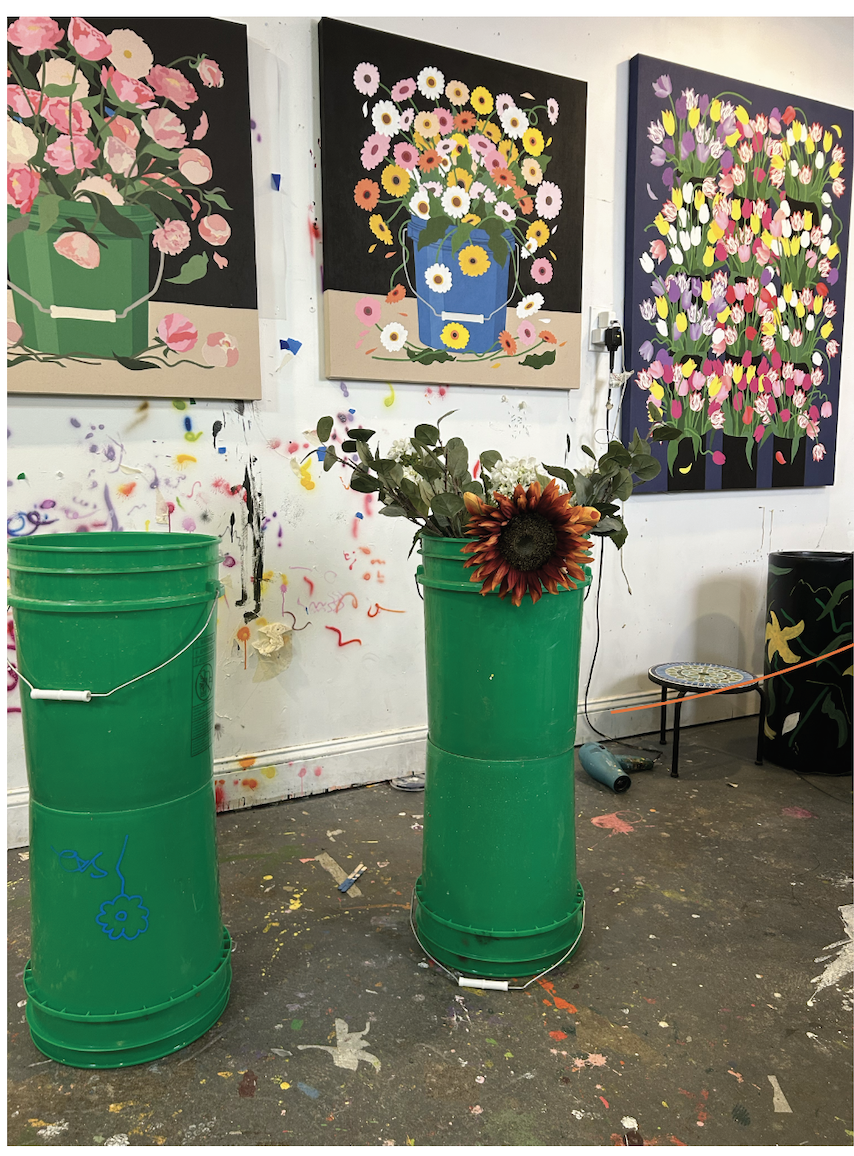
Studio View
(essay continued)
A group of new abstract paintings pushes further into that uncertainty. Looser and more freehanded— arrived at without the projector and elaborate preparatory drawing that govern other bodies of D’Onofrio’s work—they present square-format compositions of fallen petals, as though a breeze had stirred them up and scattered them, disturbing what was once ordered. Brushstrokes quiver and
arc; smears of pigment form a blur of movement. The language approaches Abstract Expressionism in its vigor, but the spirit is more reminiscent of the whorls and arabesques of Persian miniaturist illumination. In these more abstract works, with their increased movement, energy, and dynamism, the viewer is allowed to teeter on the boundary between entropy and order. If we take the risk we remain alive to what might happen.
Underlying all of this, as in his earlier work, is the memento mori—the acknowledgment that splendor and decay are not opposites but phases. The bloom that erupts from the bucket is already, in some sense, doomed, falling. D’Onofrio does not belabor this; the paintings are too full of the pleasures of color and form to read as elegies. But a quiet wisdom emanates: the nadir is present in the zenith; the lushest things are also the most fugitive. The florist knows this. So does the painter.
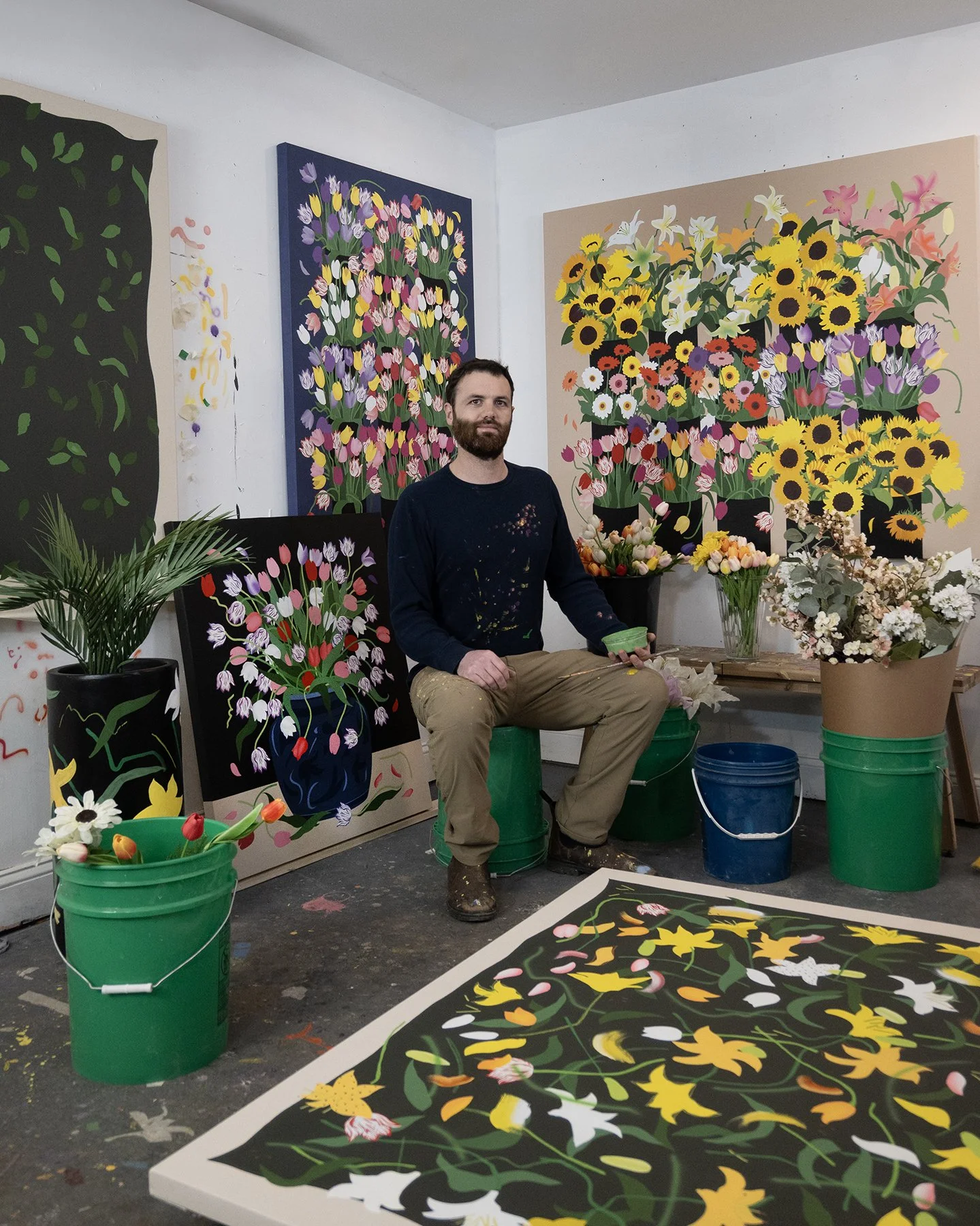
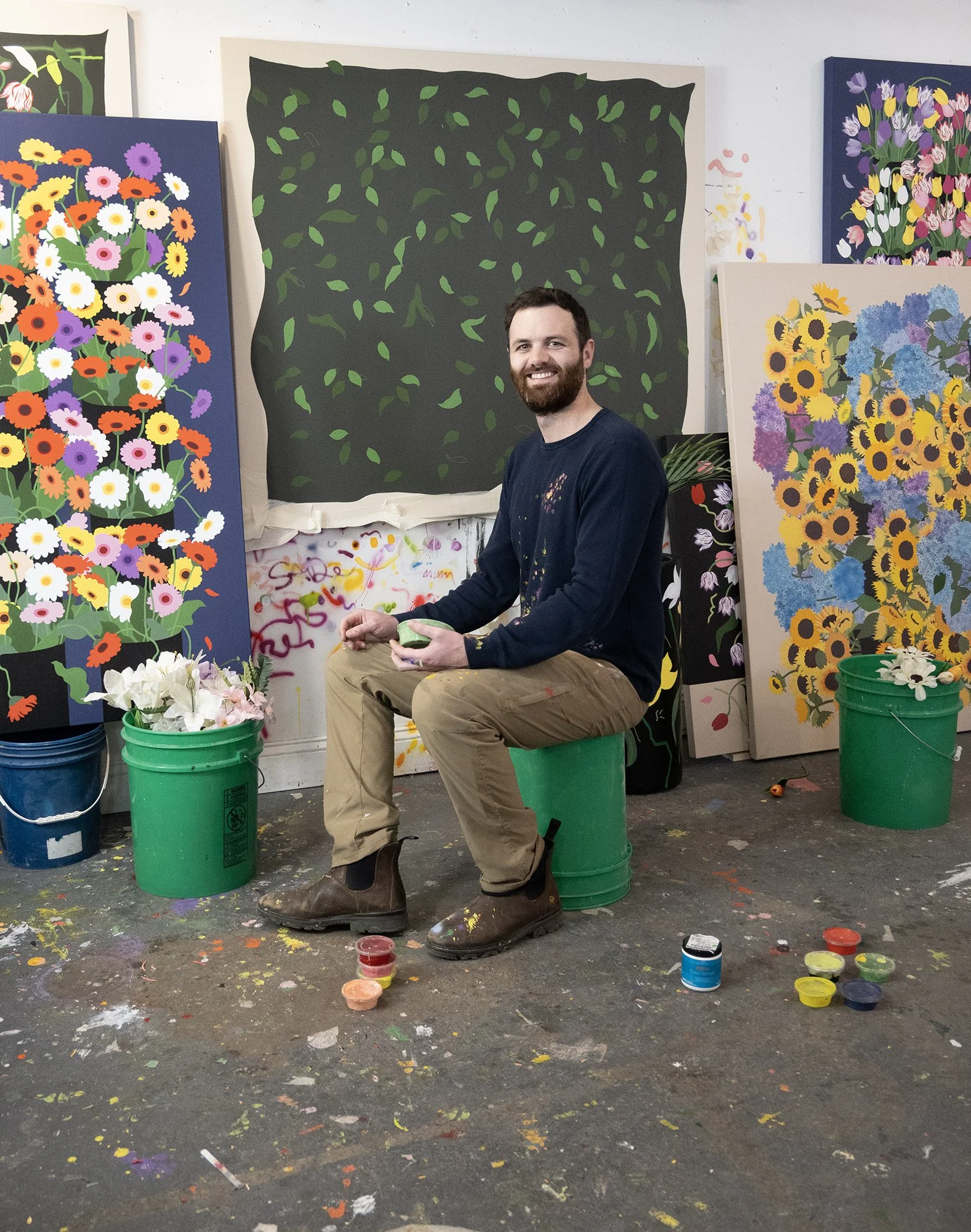
Stephen in his Studio
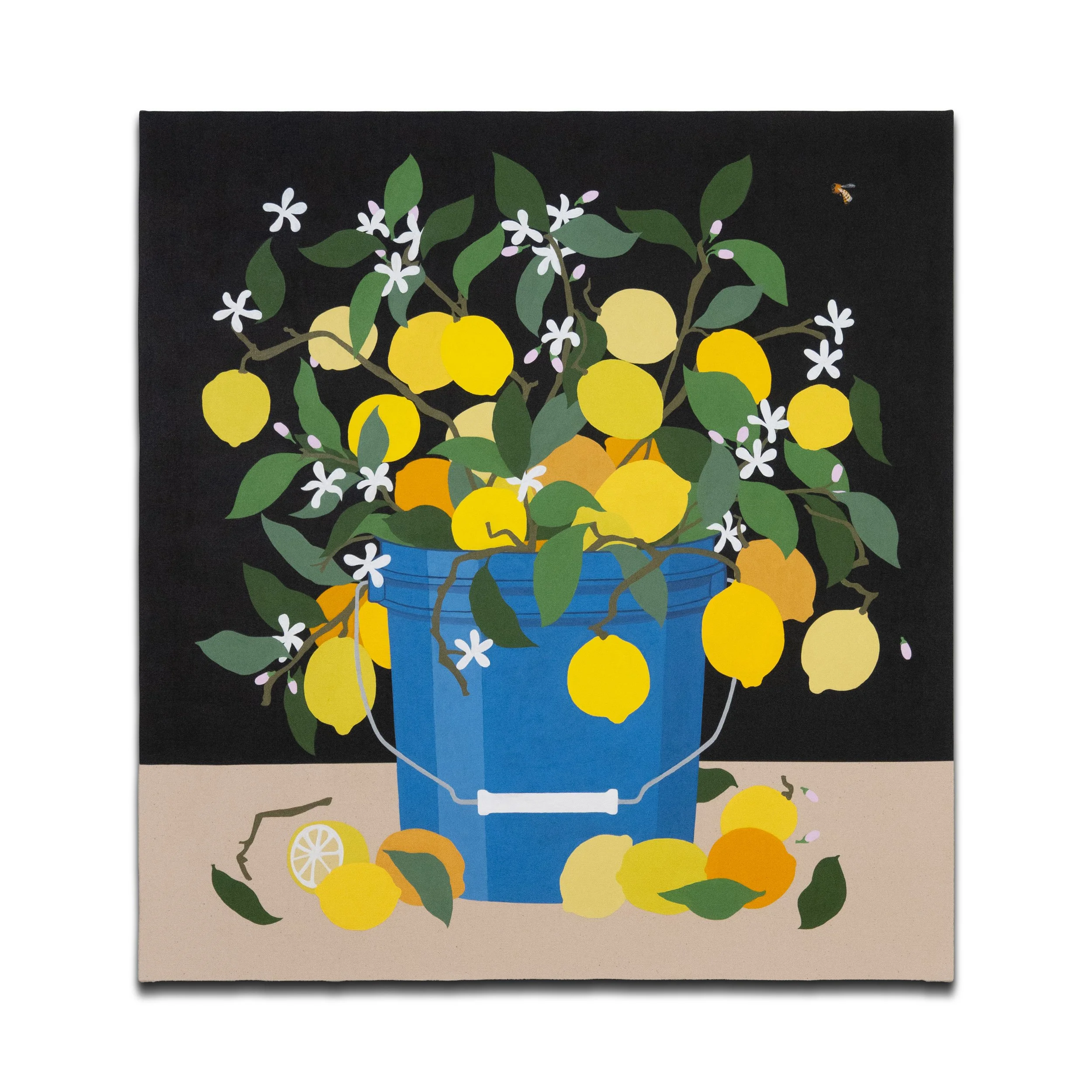
Lemon Branch Bucket – 32 x 30 inches
Stephen D’Onofrio is a contemporary visual artist focused on painting. He received his BFA and MFA from The School of The Art Institute of Chicago in 2013 and 2016, respectively. In 2018, D’Onofrio was a finalist for the prestigious Hopper Prize. He has exhibited extensively in venues across the country, including galleries in Dallas, Boston, Los Angeles, Chicago, and Philadelphia. His work can be found in numerous private and public collections including Fidelity Investments, Estée Lauder, and the Clements Collection at UT Southwestern Medical Center, Dallas. D’Onofrio has lived and worked in Philadelphia since being awarded an artist residency in the city at Jasper Studios in 2017. His work is represented in the United States by Galleri Urbane, Dallas.
In this new body of work, the artist continues to draw from the subject matter of traditional still lifes, but with shifted focus from fruit to flora. The show, titled The Florist, looks to the abundance and rich detail found in 17th–19th century European stil lifes for inspiration. The work retains the shallow space and stark contrasts associated with that lineage, while exploring new compositions inspired from the color-rich displays of urban flower stands.
Some of these new paintings follow the still-life structures D’Onofrio often uses, while others move toward abstraction, where color, surface, and texture become more important than clearly defined subject matter. This shift gives him room to push the compositions in new directions and allows the color and visual texture that have always been part of his work to take on a larger role.
A clear example of this progression is a series of painted concrete vessels. These pieces resemble the containers seen in my flower stand paintings, but instead, the vessels themselves serve as the canvas. They function as decorative flower containers and as independent abstract objects. By turning this practical object into an art piece, I highlight and transform a subtle but foundational subject matter in my paintings.
Overall, this body of work feels like an entry point, a moment of change. It holds onto the quiet, formal language of centuries-old still lifes, while opening that structure up — allowing florals to become a way to explore color, visual texture, and form, and to move the work toward new kinds of composition and depiction.