
January 10 - February 14, 2026
Galleri Urbane is pleased to announce Magdalenian Suite, a solo exhibition of the latest works by Dallas based artist Erika Jaeggli. This represents the artist’s first solo exhibition at the gallery. Meet the artist on January 10th from 5:00 - 7:00pm.
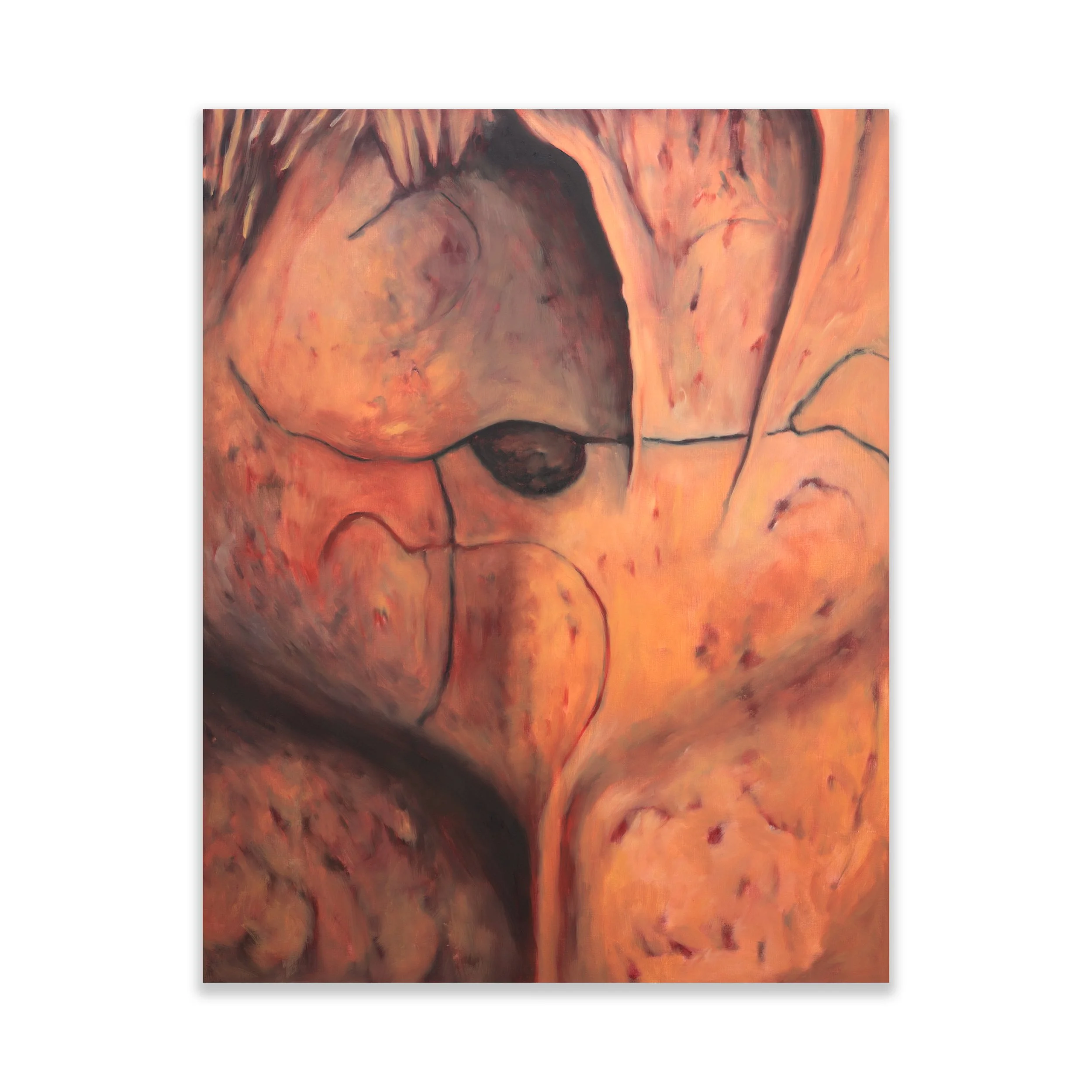
Grottes de Cougnac (HH) – 60 x 48 inches
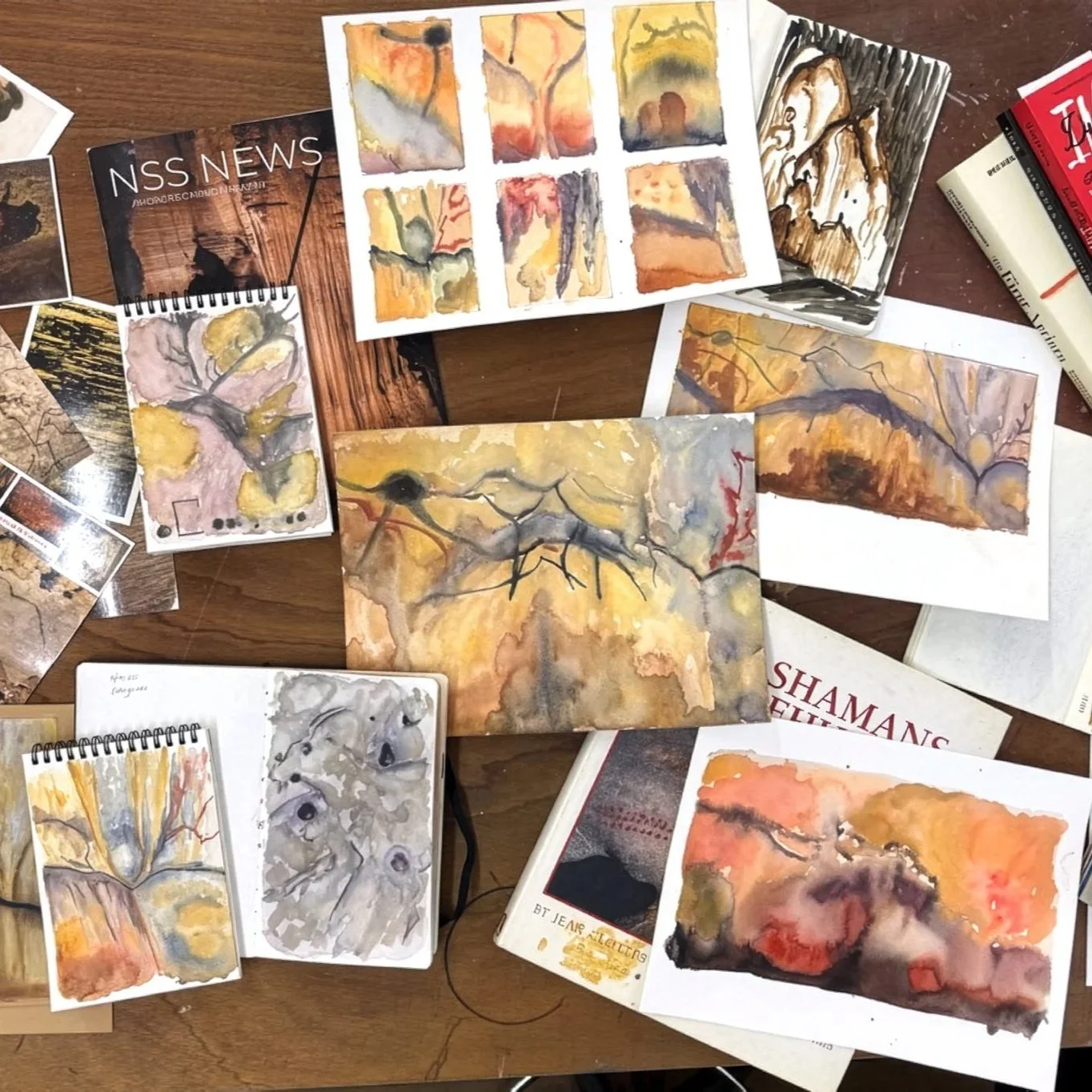
Studio View
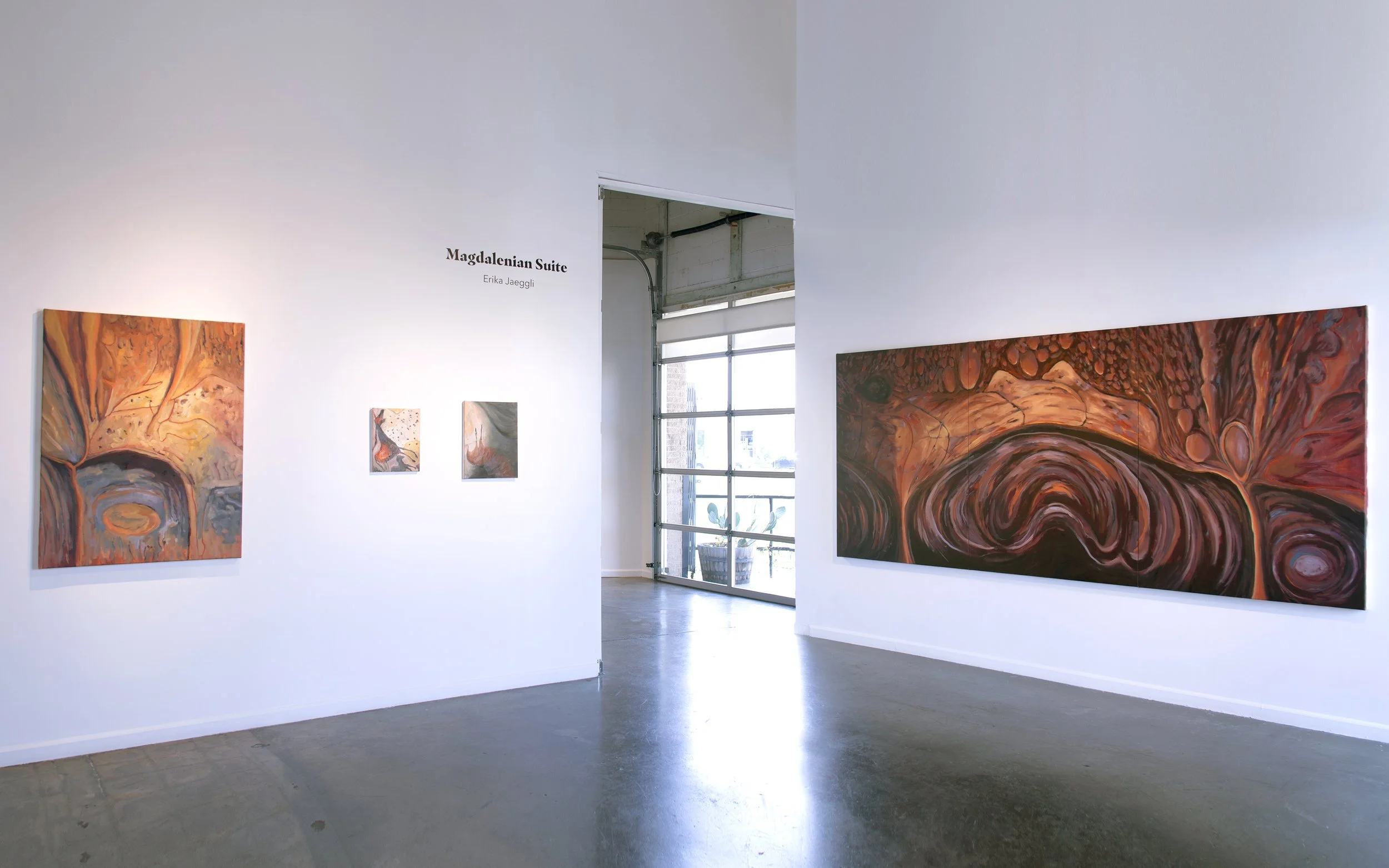
Installed exhibition views:
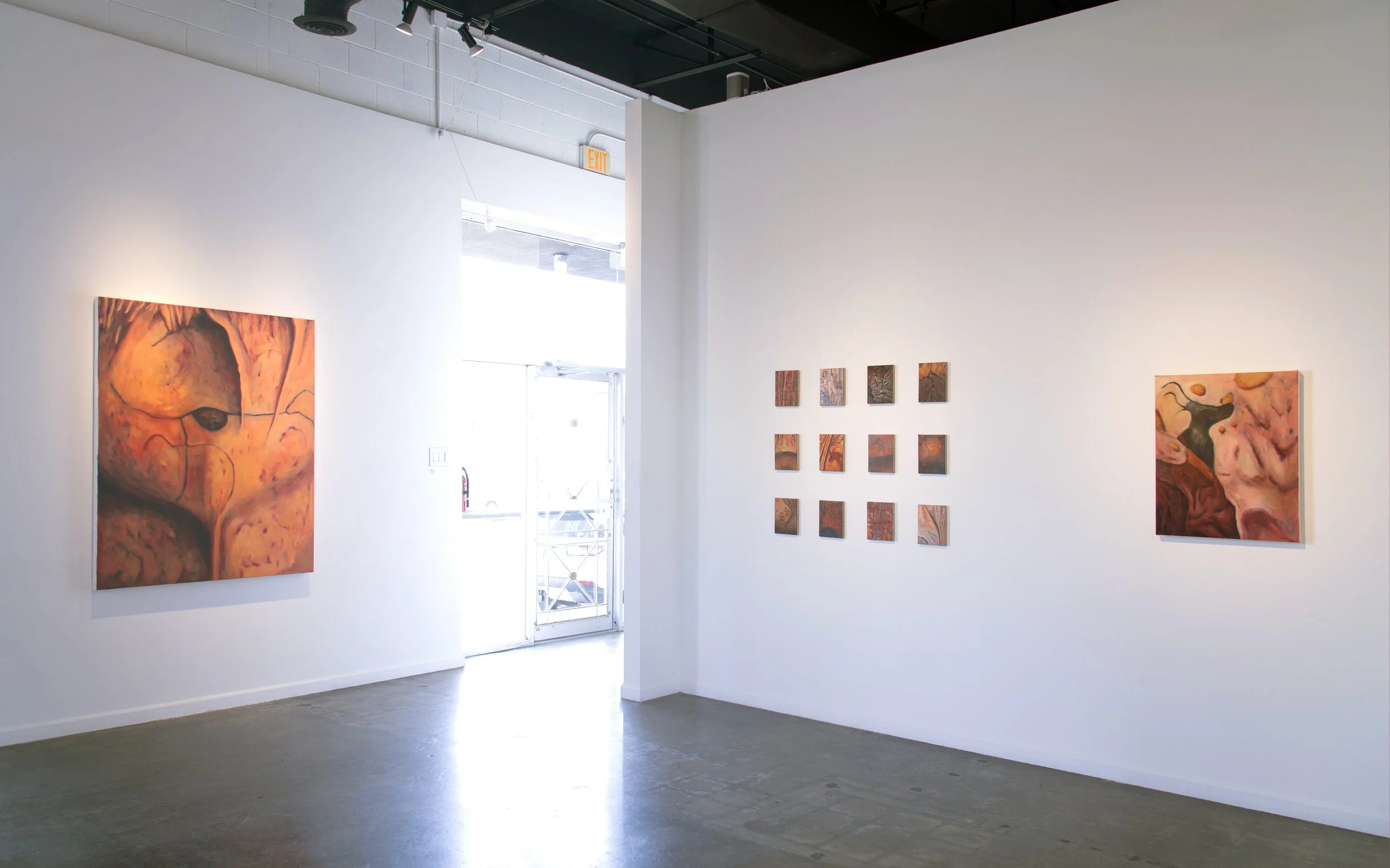
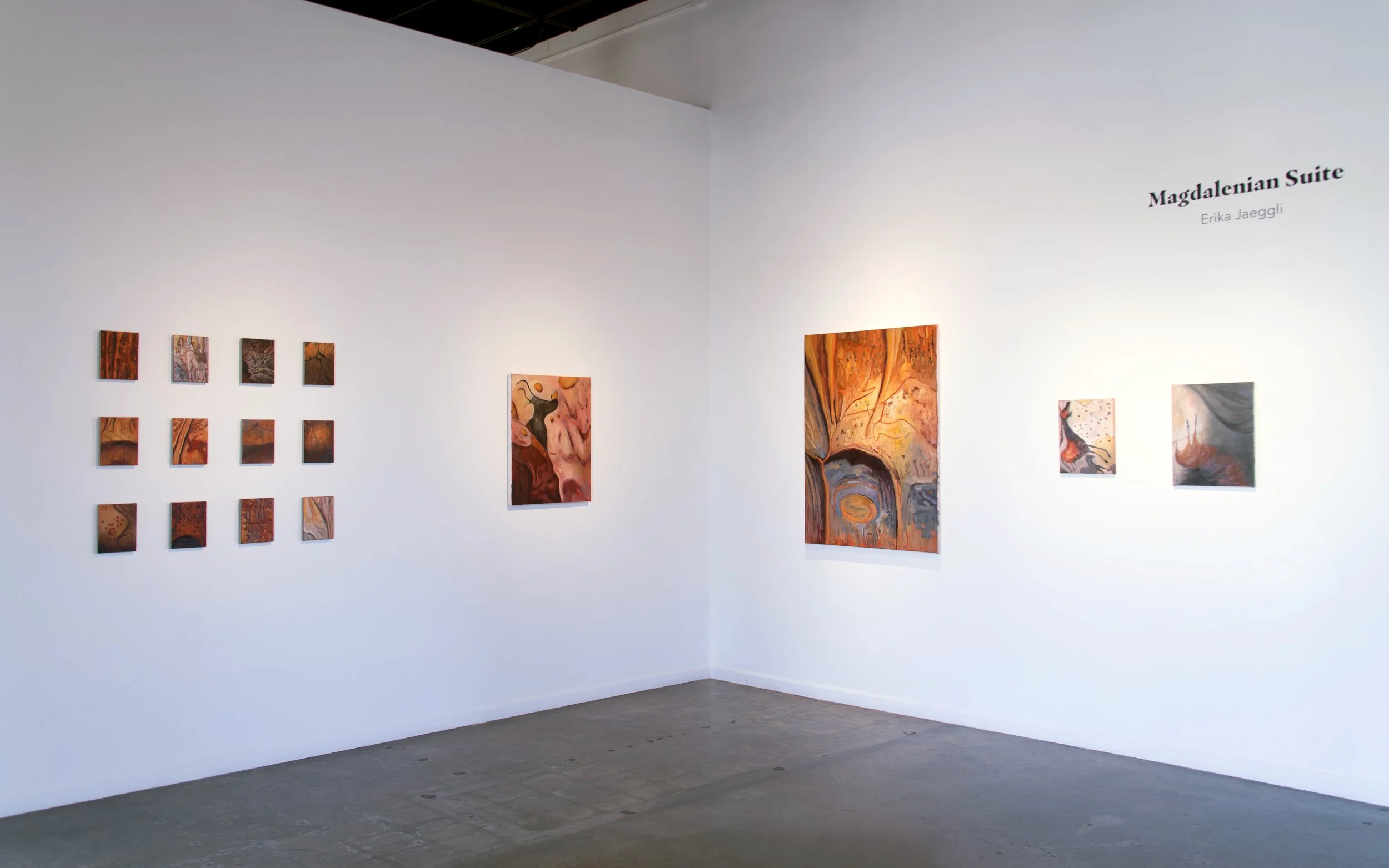
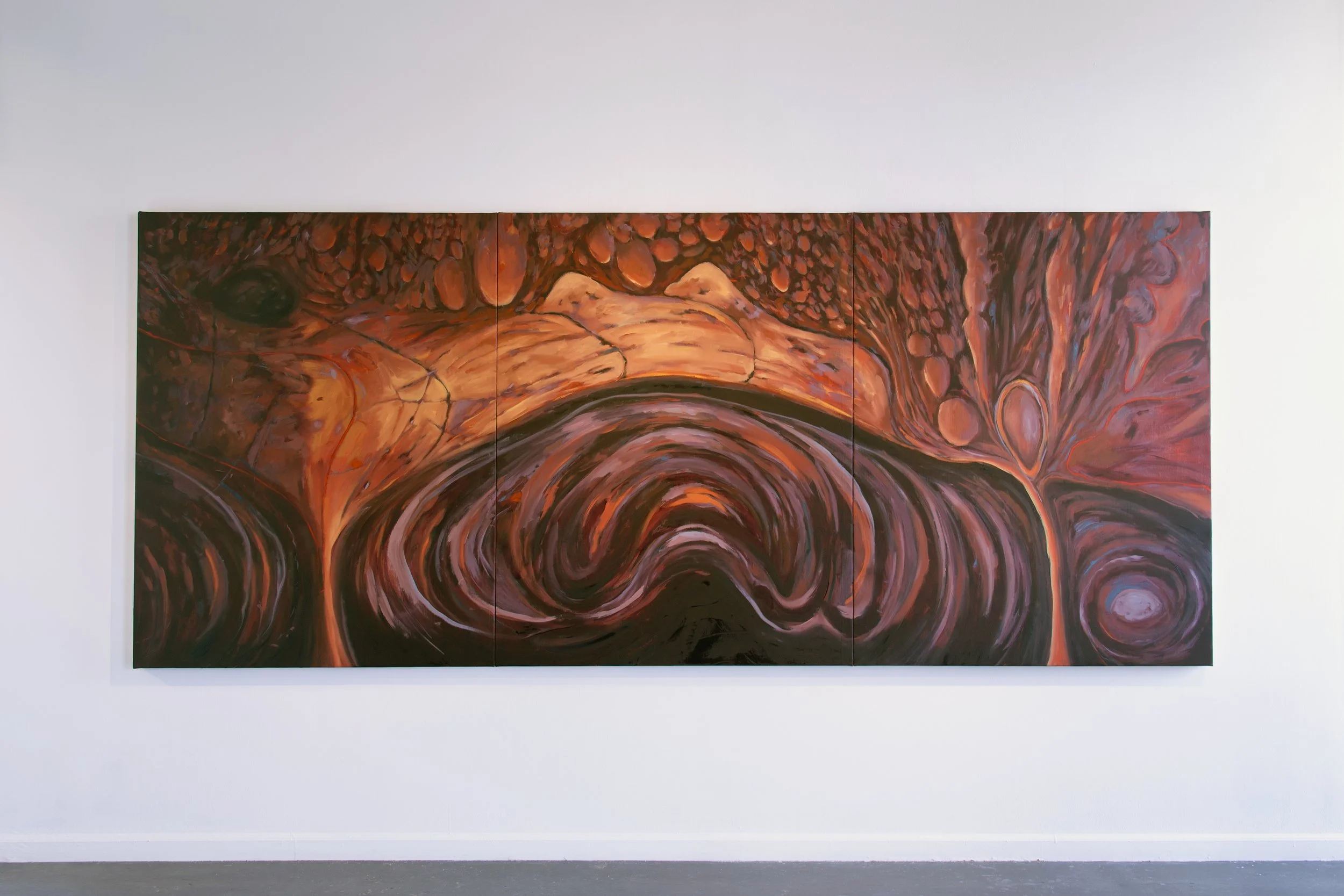
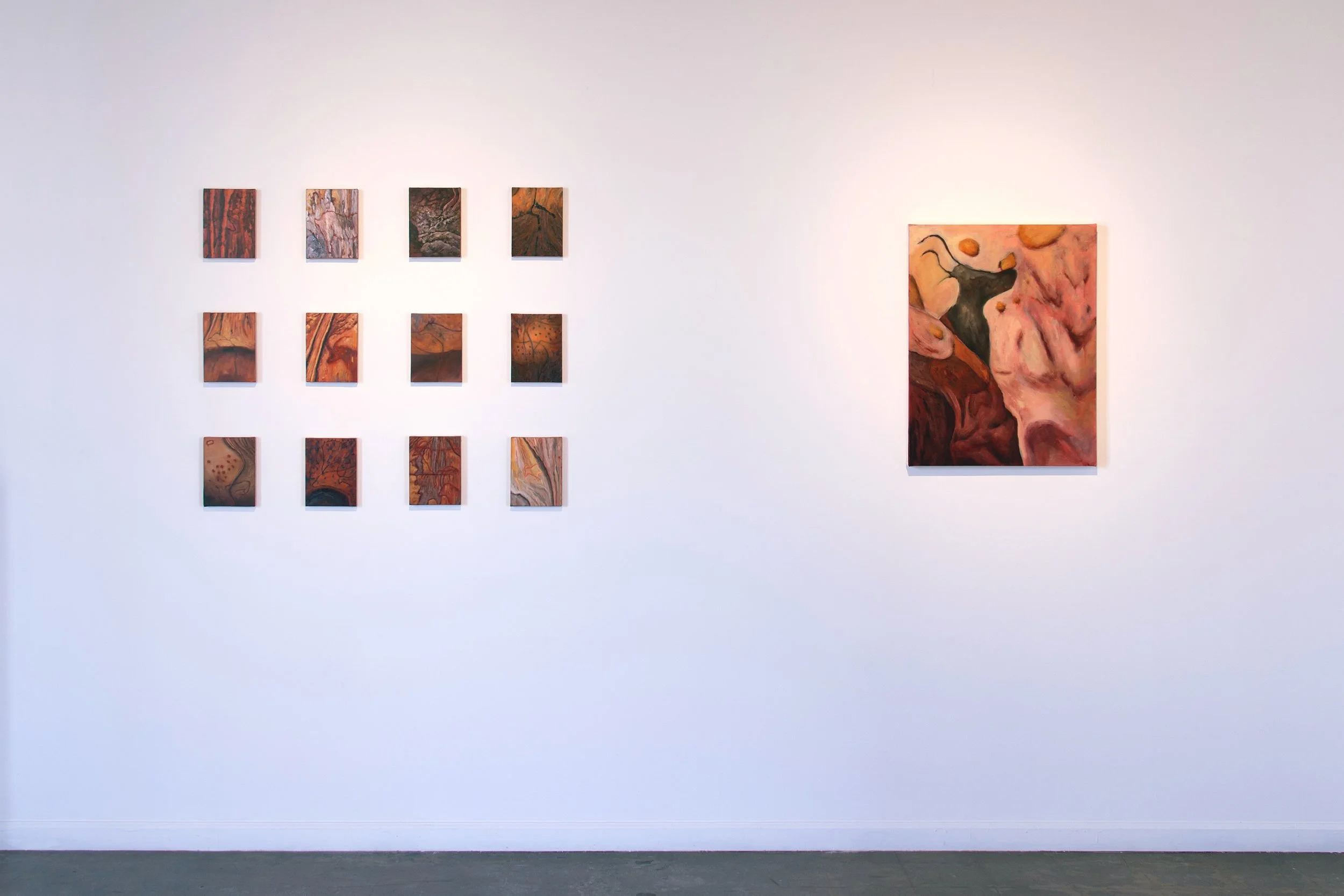
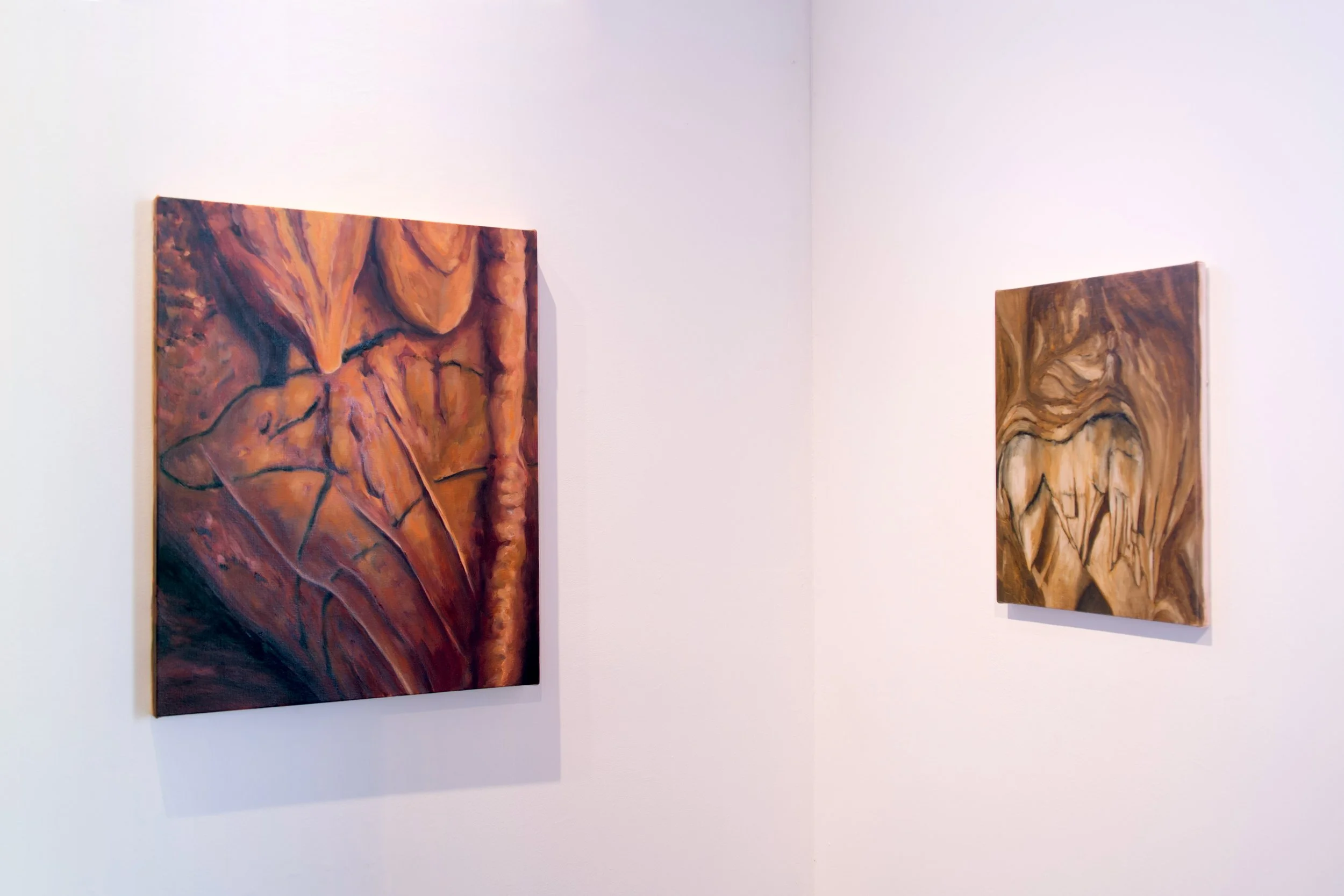
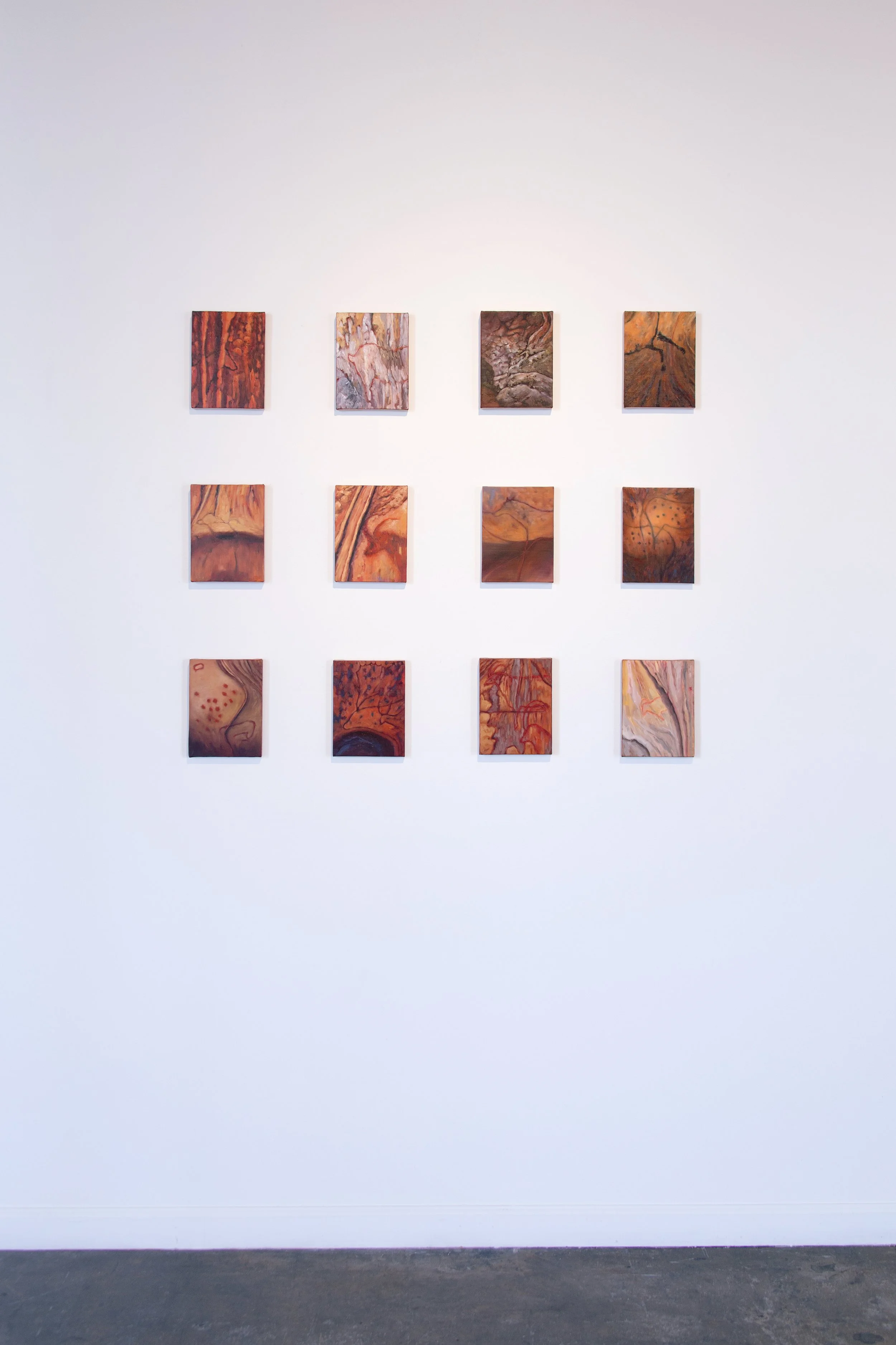
“My process begins in the cave and ends in the studio. While on site, I observe the natural formations, the interplay of light and shadow, and investigate the ways in
which sculptural forms emerge from geological processes. This field research serves as the bedrock for my studio
practice and consists of photography, videography, LiDAR scanning, as well as more traditional methods of drawing, writing, and painting. Once I have conducted my research, I work intuitively to produce a body of work. My practice consists of making paintings using oil paint, digital prints, beeswax, oil paint and pastel”
An essay by writer Eve Hill-Agnus accompanies the exhibition.
The title Magdalenian Suite anchors painter Erika Jaeggli’s exhibition in a specific geography—the caves of France’s Dordogne region—and a specific moment in deep history. During a residency in the Vézère Valley, Jaeggli wended her way into six Paleolithic sites, encountering the image-making of our prehistoric hunter-gatherer ancestors who marked the cave walls 25,000 to 12,000 years ago. She saw the oldest images we know, not so much painted as coaxed from stone.
A horse emerges only when the beam of a flashlight sweeps across a bulge in a wall; a reindeer’s tongue laps from a depression in the rock; mineral deposits transform into the hanks of sheeps’ wool; a constellation of dots reassembles itself into the body of a quadruped. In these encounters, a gorgeous synergy between human intention and geological chance entwines two- and three-dimensionality. Such moments raise questions about where images come from, how we read, what it means to perceive with patience—allowing the unknown to announce itself in its own time.
To witness this slippage is to understand the cave as collaborator—images inseparable from stone, narrative inseparable from material—cave and painting one artistic expression. Returning to the simplest painting materials, Jaeggli’s own works—lush combinations using only oil paint, linseed oil, and chalk on canvas or linen, whose surfaces pulse with life—inhabit this same territory. She inserts her own mark-making into the lineage of rich ambiguity and meaning-making.
Her research-based yet intuitive process allowed her to approach caves as both researcher and painter, absorbing archaeological scholarship and pairing it with immersive field research that lets accumulated knowledge fall away as she paints. In Jaeggli’s hands, the cave dissolves familiar categories: landscape, interior, portrait, body. With no natural light or horizon, the cave refuses the logic of plein air. It becomes, instead, a boundariless environment—simultaneously geological and bodily—asking us to reconsider what a landscape can be and thereby presenting an expansion of the landscape genre at a moment when environmental precarity forces new ways of seeing.
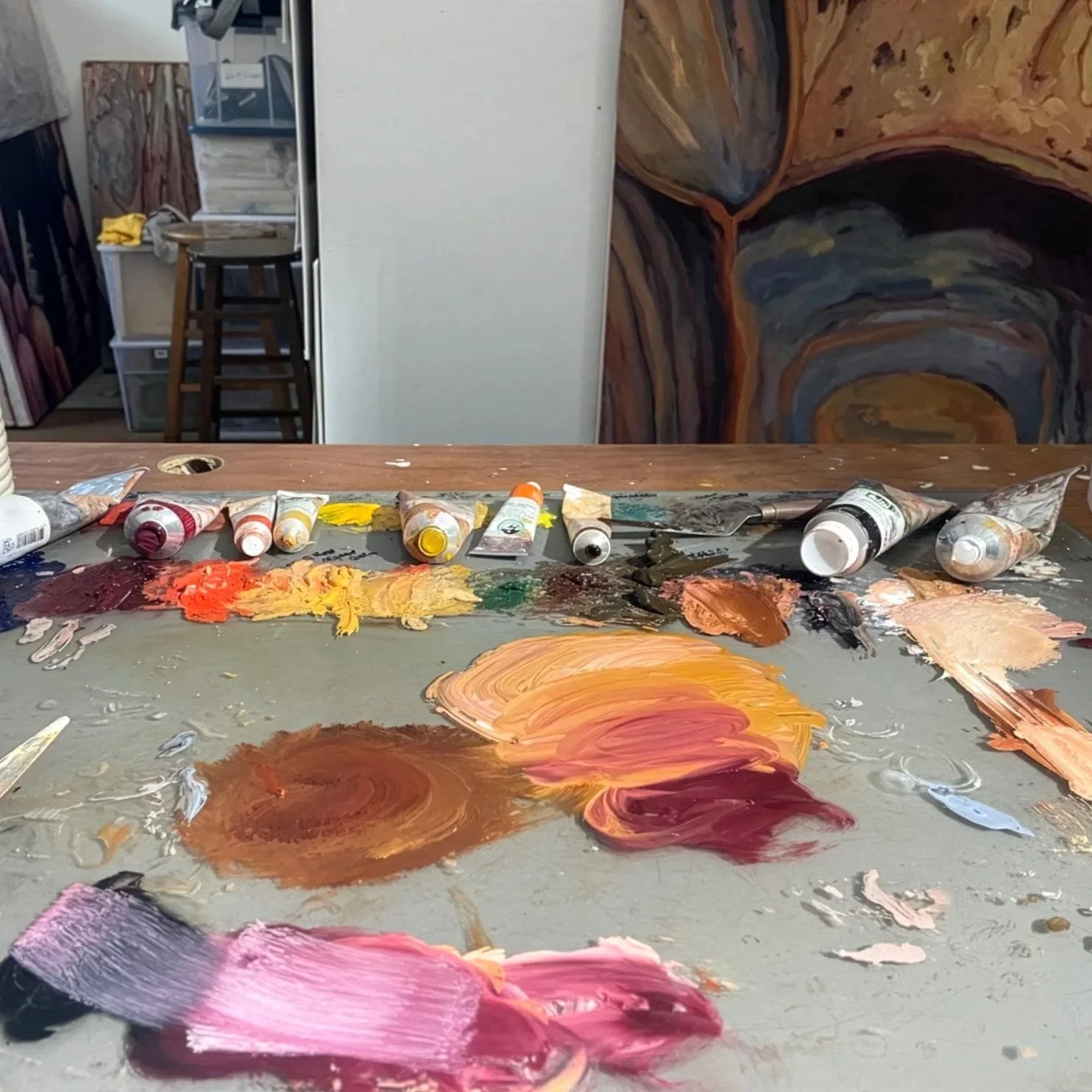
Studio View
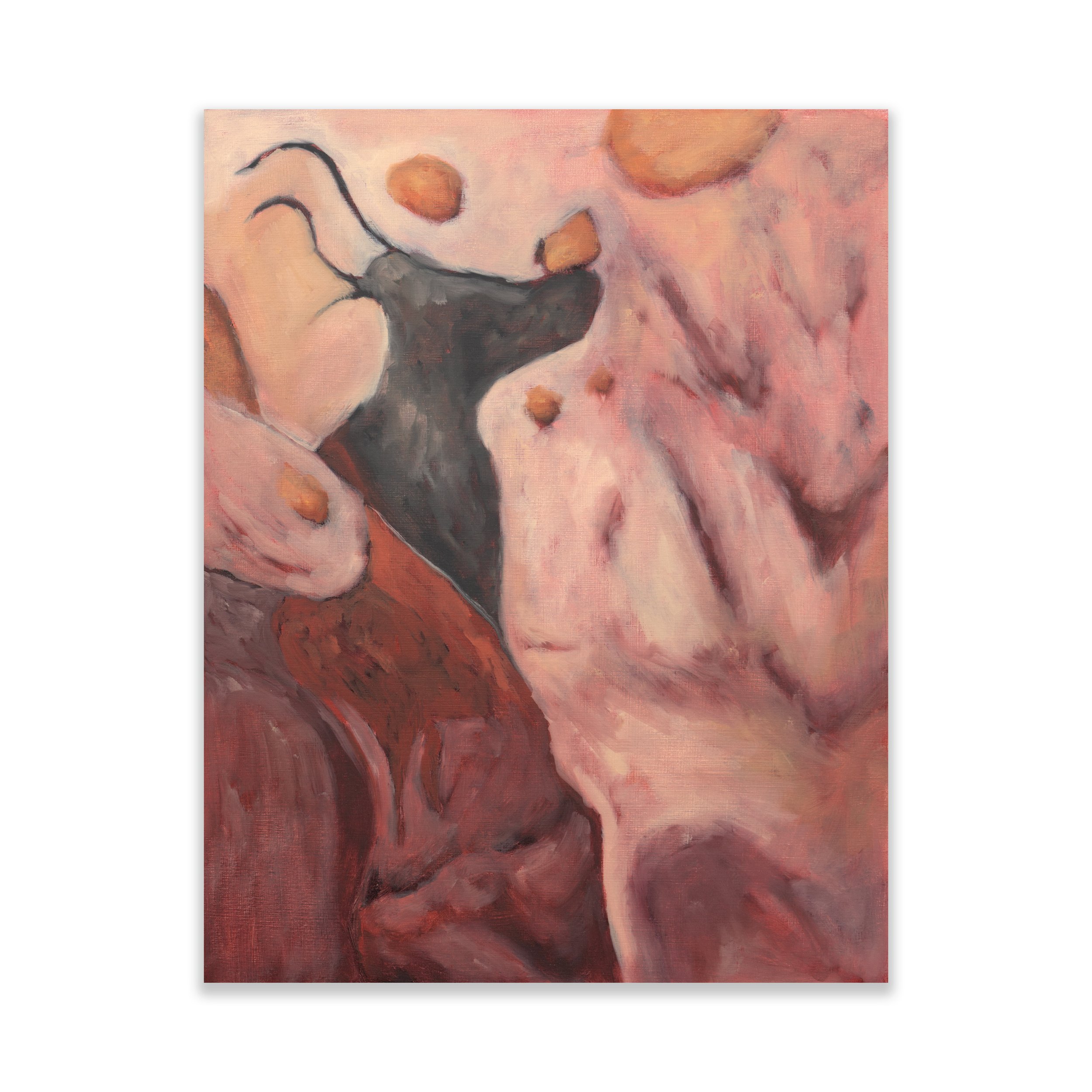
Lascaux (N) – 27.75 x 22 inches
(essay continued)
In a feminist reframing of Paleolithic imagery, Jaeggli also invites us to see prehistoric imagery and the landscape not through the inherited frameworks of largely male interpretation, including the romanticized conquests of Manifest Destiny, but through a perspective attuned to embodied experience. She describes entering a cave as entering Mother Earth. In this sense, her paintings offer a landscape that is also a body with heart chambers, uterine walls, folds of flesh.
Inside a cave, time is not a line but an accumulation. Time also stops. Multiple temporalities coexist: chronology thickens, accumulates, loops back on itself. Thirty-thousand-year-old markings are nested within inscriptions made thirteen millennia later. For Jaeggli, this temporal elasticity feels profoundly contemporary. In a moment when our everyday sense of time feels warped—sped up by technology, stretched thin by crisis—the deep time of the cave offers an uncanny reassurance. The Paleolithic no longer feels distant. It presses closer.
Despite their reputation for claustrophobia, Jaeggli experiences caves as profoundly expansive. In their chambers, she finds a sublimity closer to Turner’s storms than to darkness or fear—a sense of boundlessness unfolding within stone. There is also something oceanic or cosmic about the perspective shift of seeing the earth from inside, recalling the first “Earthrise” photograph that made our planet appear tender and exposed. This inversion of scale is part of her project: to locate wonder inside what we think we fear.
Her own practice betrays material intelligence and collaboration with the unknown. She begins with red underpainting—a warm, flesh-like ground—then works wet into wet, allowing pigment to react with itself and creating luminosity. Using unstretched canvas, she removes preciousness from the process and echoes the portability, even provisionality, of early mark-making. Pigments react with one another; gestures push beyond the edges of photographic reference.
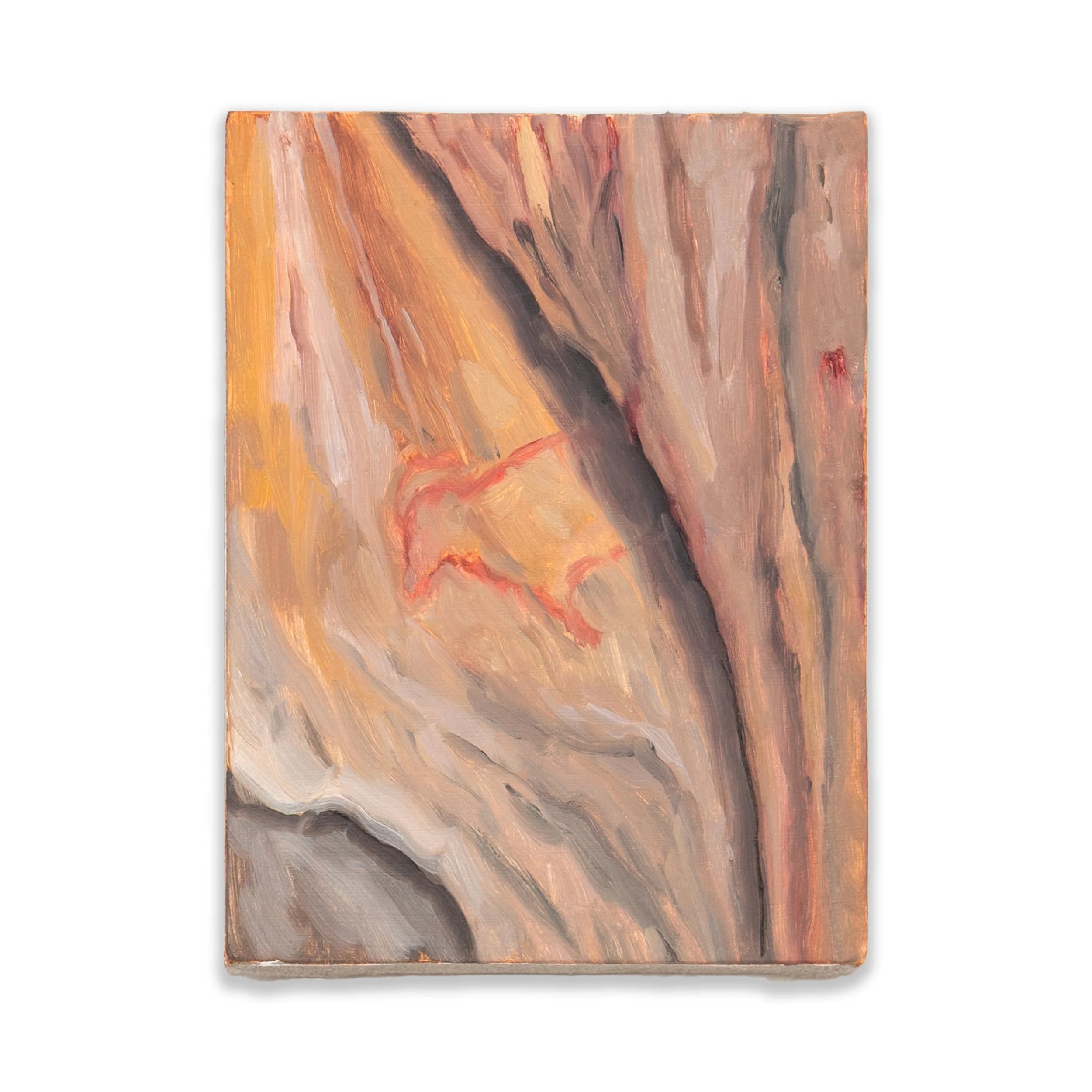
Grottes de Cougnac (11) – 8 x 6 inches
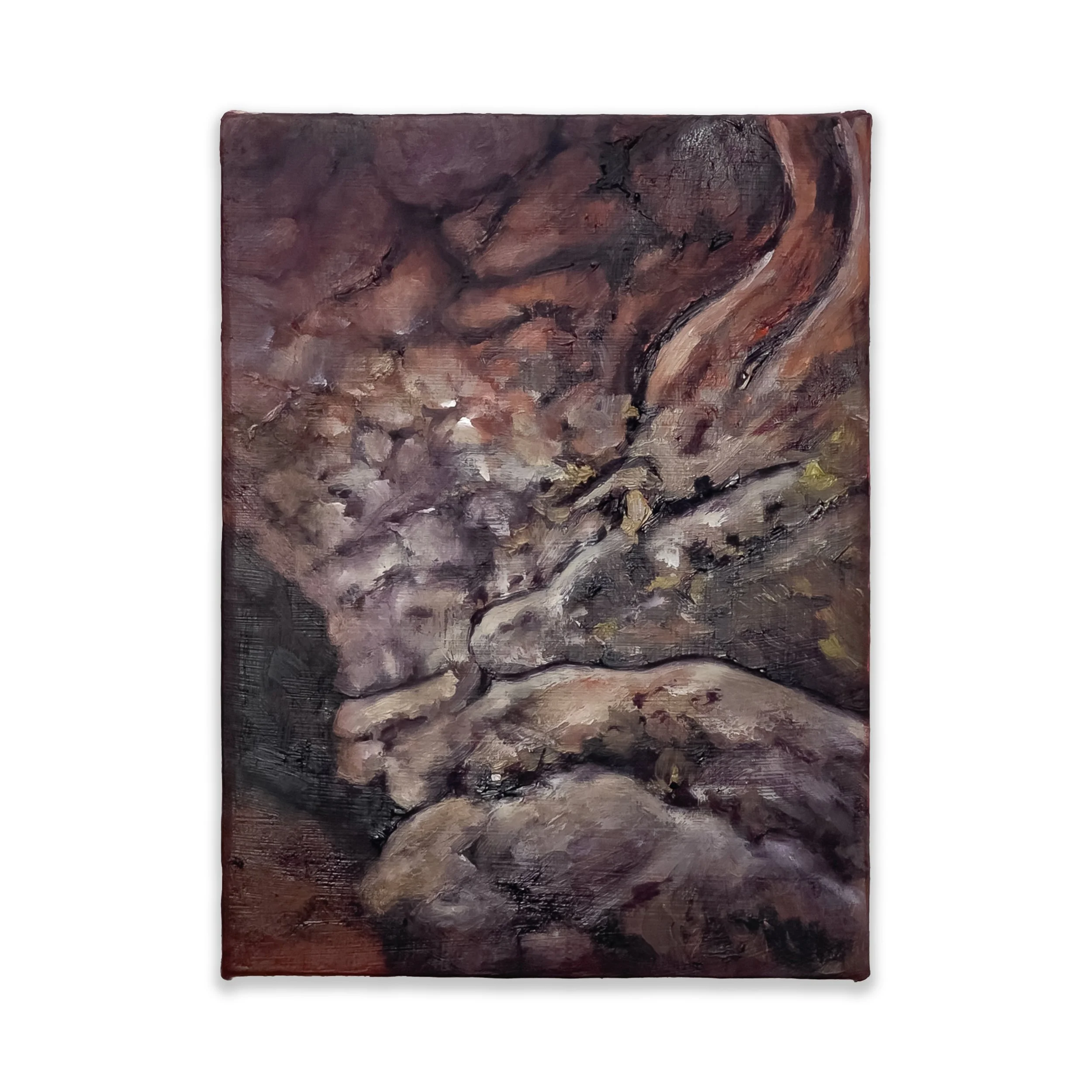
Grottes des Combarelles (27) – 8 x 6 inches
Watch:
Erika checks in from her Dallas studio to answer some questions about Magdalenian Suite
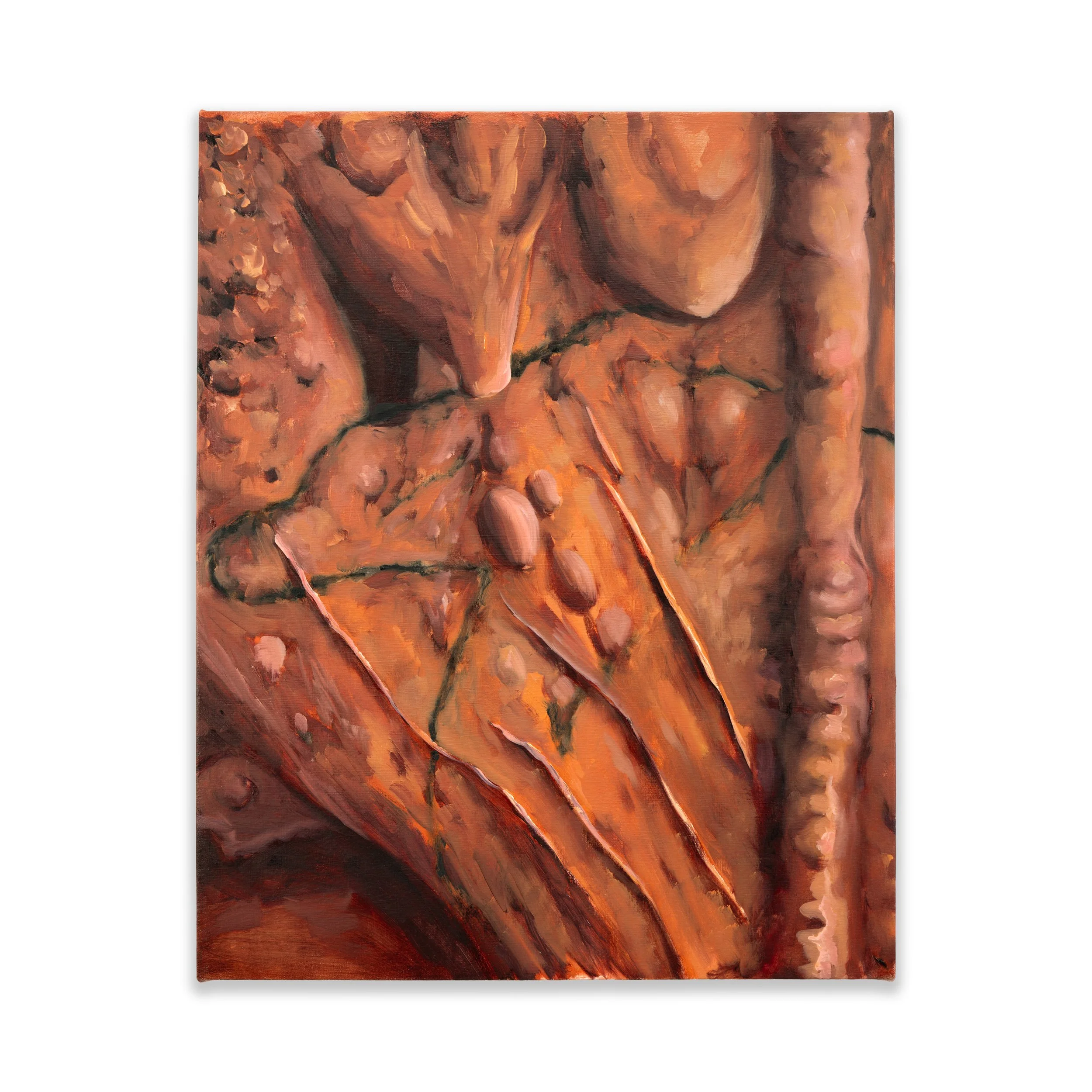
Grottes de Cougnac (J) – 27.75 x 22 inches
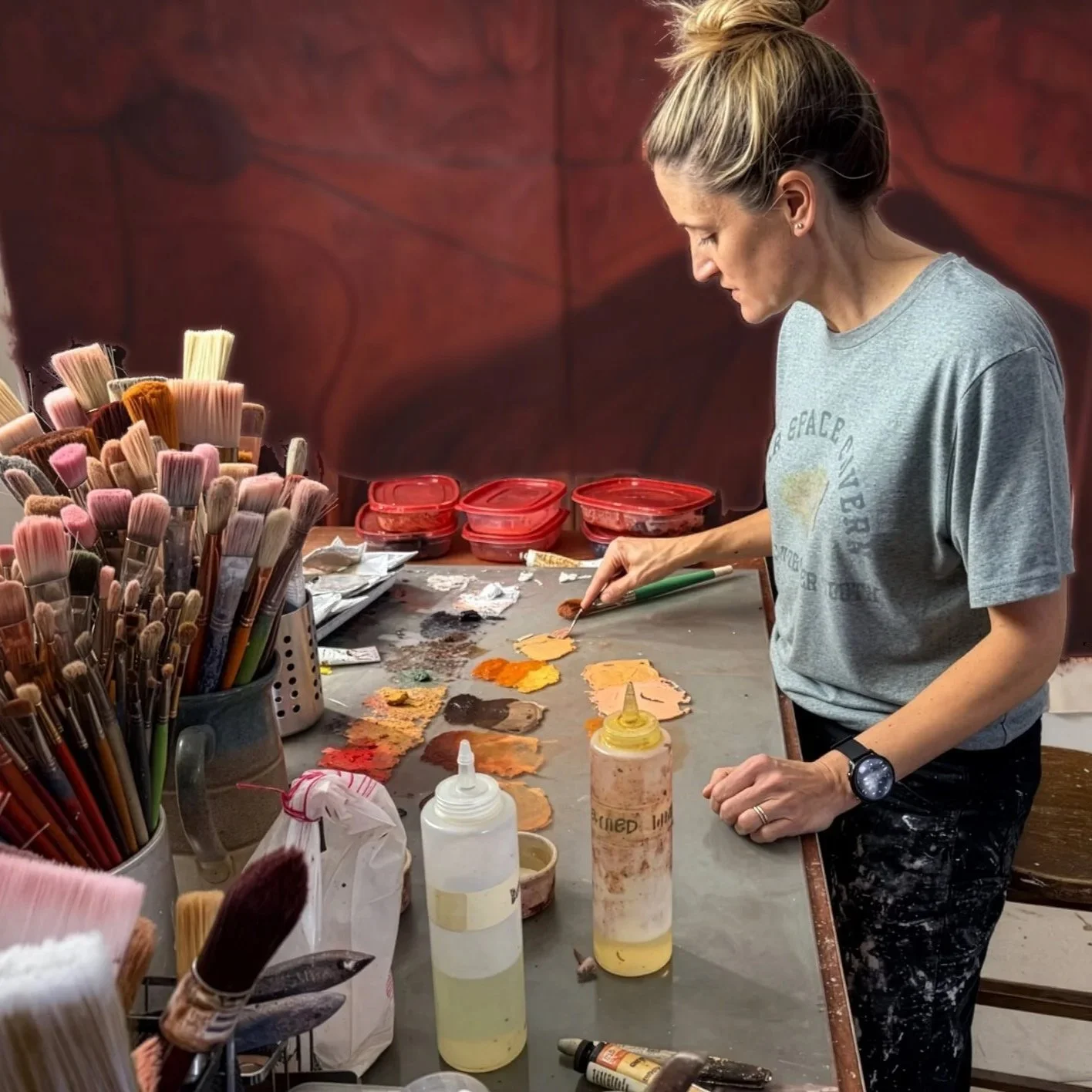
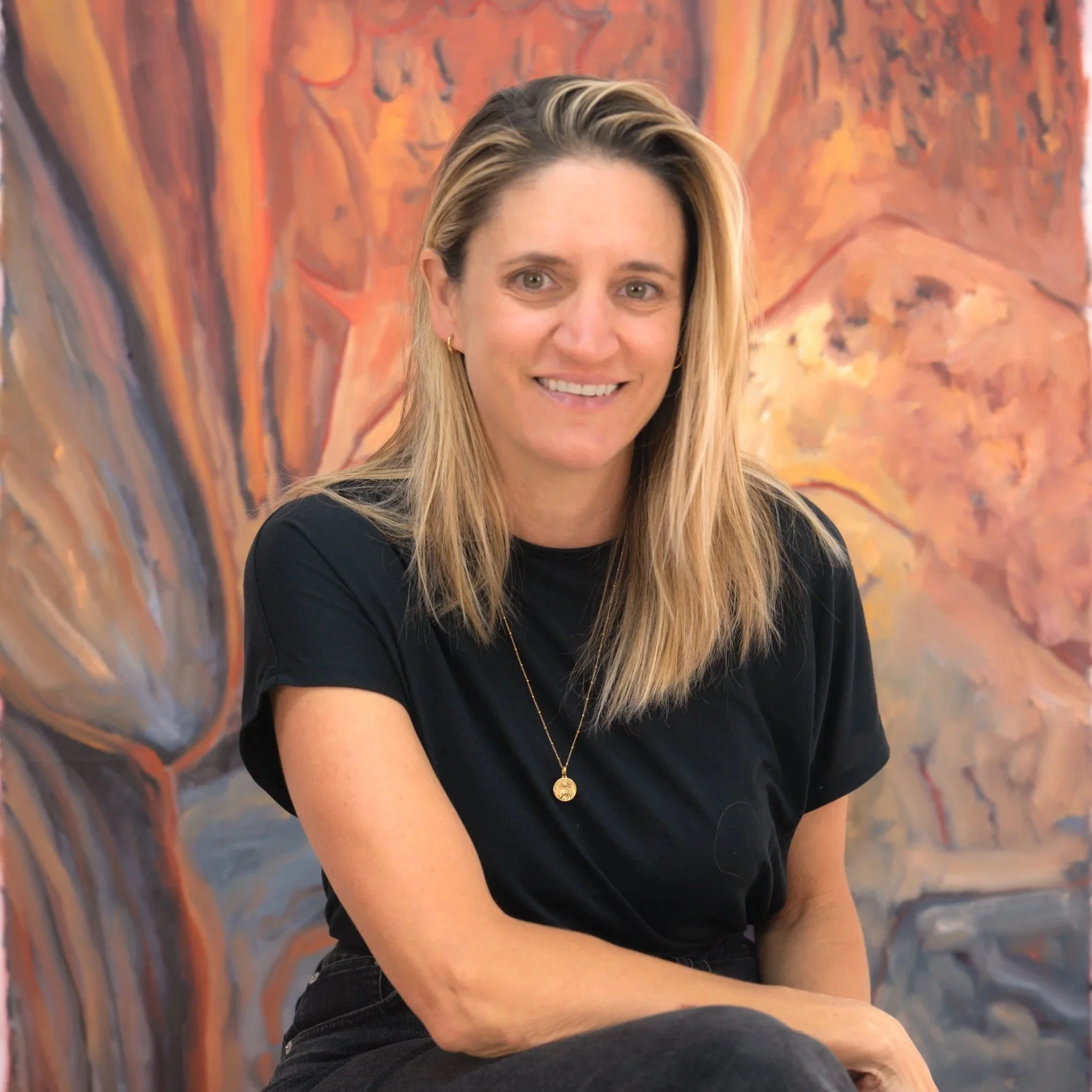
Studio Portrait
(essay continued)
Underlying the entire project is a question that reaches back to the origins of art itself. Someone— literally us, Jaeggli stresses—once held the memory of a bison or horse in mind, carried it hundreds of meters into the dark, and translated that recollection into symbol by firelight. That act of moving an idea through space and into material form is, for her, “the advent of what makes us human.” It is the beginning of consciousness externalized, thought made visible.
In an age of ecological precarity and temporal instability, the cave offers both mirror and measure. Why do we make images? Why do we keep records? Perhaps to learn from them, but also to see ourselves reflected across vast distances of time. Jaeggli’s paintings do not remake the Paleolithic; they reveal our continuity with it; in the title’s “suite” lies the idea of continuity.
The past is not behind but beside us; the cave not a relic but a pathfinder. Jaeggli’s paintings invite us to inhabit this accordion of time, this sublime within stone, and the profound, enduring human instinct to leave marks in the dark.
Watch:
Video tour of ‘Magdalenian Suite‘ by Erika Jaeggli
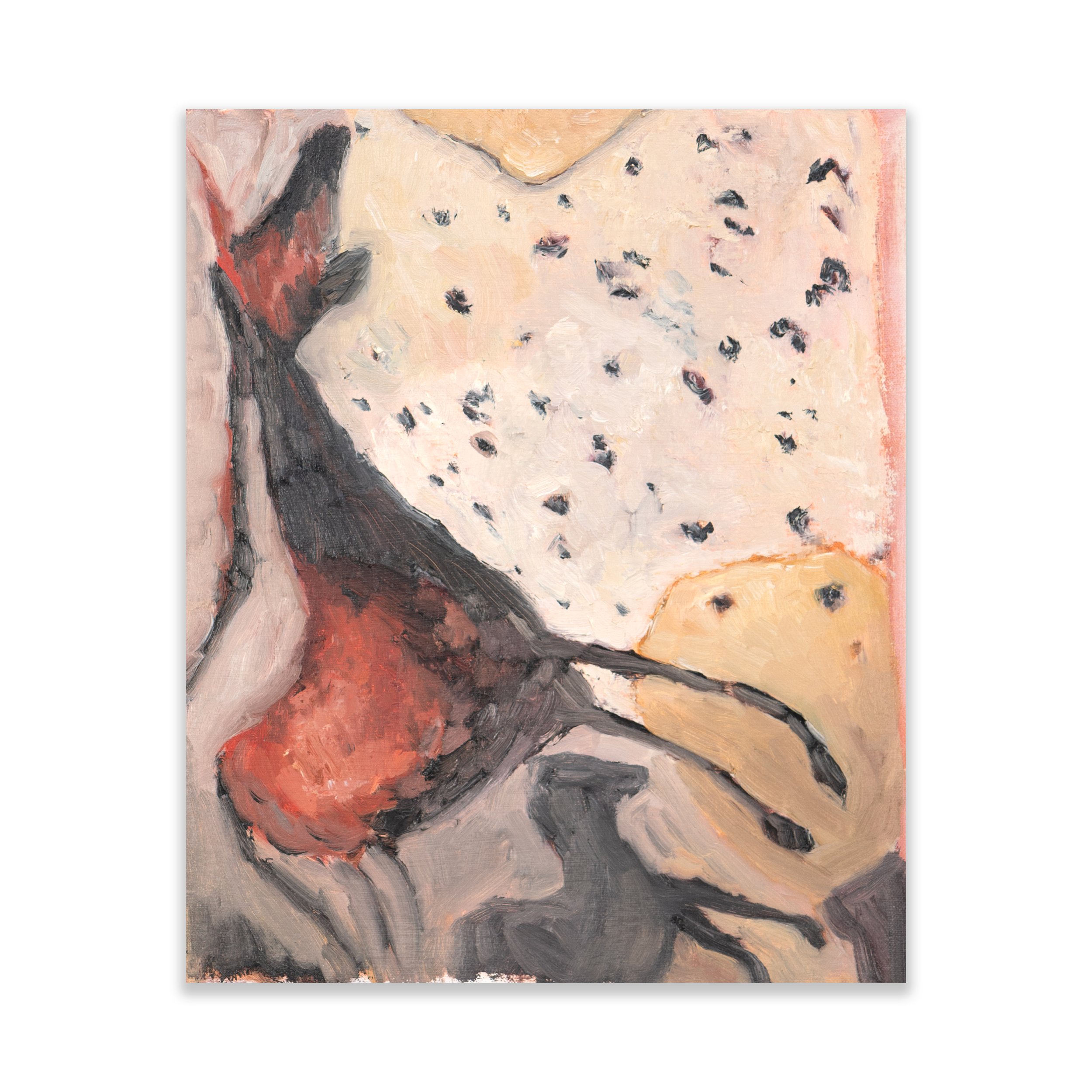
Lascaux (20), 14 x 11 inches
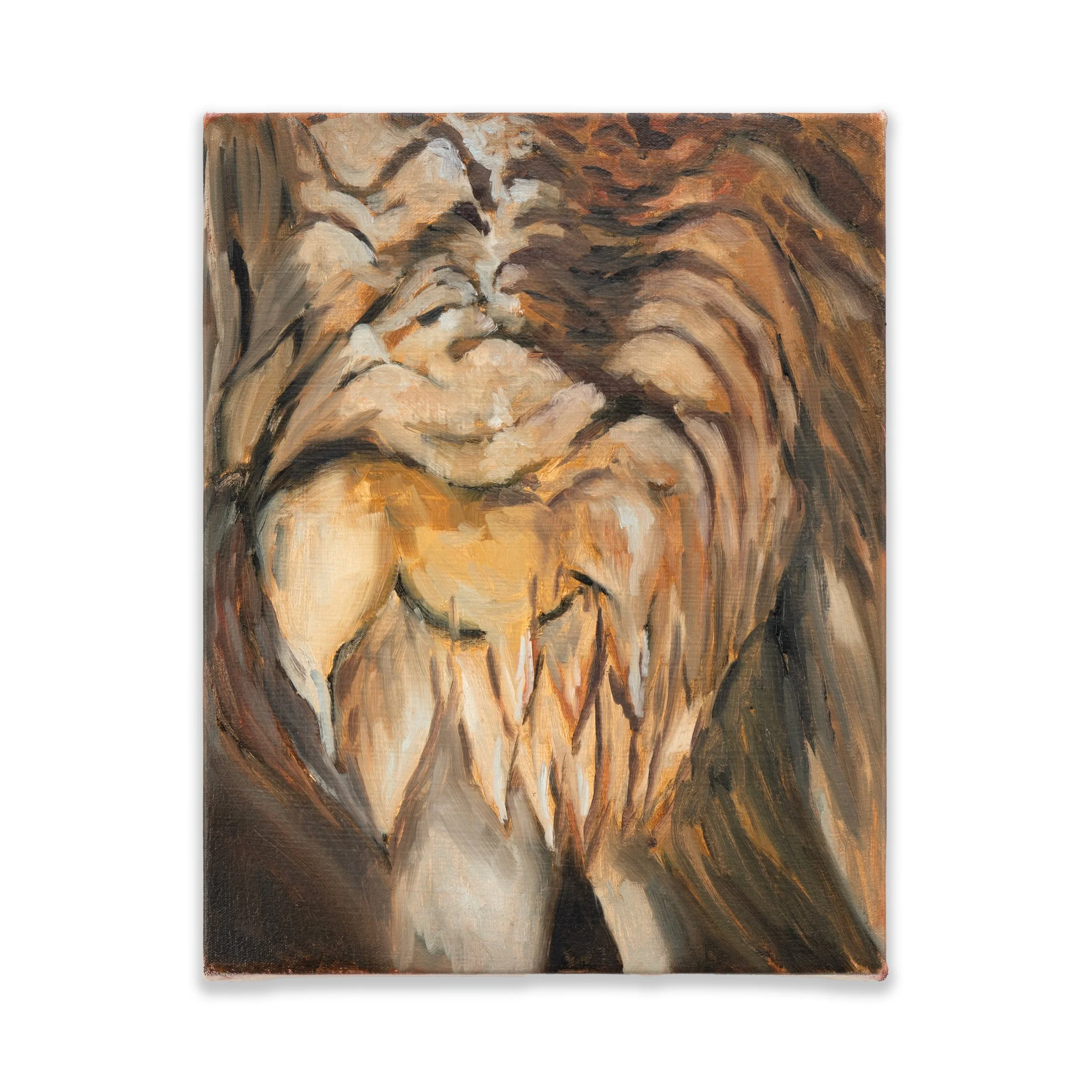
Grotte de Font-de-Gaume (1), 14 x 11 inches
Erika Jaeggli (born in Baltimore, MD) is a Dallas-based artist whose practice centers on the exploration and research of cave systems. Working across painting, digital photography, and installation, she investigates alternative perspectives of landscape through the lens of caves.
Jaeggli earned a B.A. in Art History from Columbia University, an M.A. from New York University’s Tisch School of the Arts Interactive Telecommunications Program, and an M.F.A. in Drawing and Painting from the University of North Texas. Her work has been exhibited in Texas, Florida, California, Maryland, Arkansas, and Missouri, and has been featured in Southwest Contemporary, New American Paintings and Studio Visit Magazine.
She has participated in residencies at Cuttyhunk Island, the Virginia Center for the Creative Arts, Jentel Foundation, VCCA Moulin à Nef, and forthcoming Carlsbad Caverns National Park. Jaeggli is a recipient of the Dozier Travel Grant from the Dallas Museum of Art and a TACA Pop-Up Grant.
In addition to her studio practice, Jaeggli serves on the advisory council of Texas Vignette, a nonprofit supporting women in the arts in Texas. She has taught at the University of Texas at Dallas, the University of North Texas, and the University of Texas at Arlington, and has led art education programs at the Nasher Sculpture Center, the Modern Art Museum of Fort Worth, and the Kimbell Art Museum. She is currently a lecturer at Dallas College. In addition to her art practice, she is an active caver and a member of the National Speleological Society and DFW Grotto.