


August 22 - September 26, 2026
Galleri Urbane is pleased to announce Fuzzy Felt, an upcoming solo exhibition by England-based artist Joseph Carway. This marks the artist’s first solo show with the gallery following two successful art fairs, and group show inclusion.
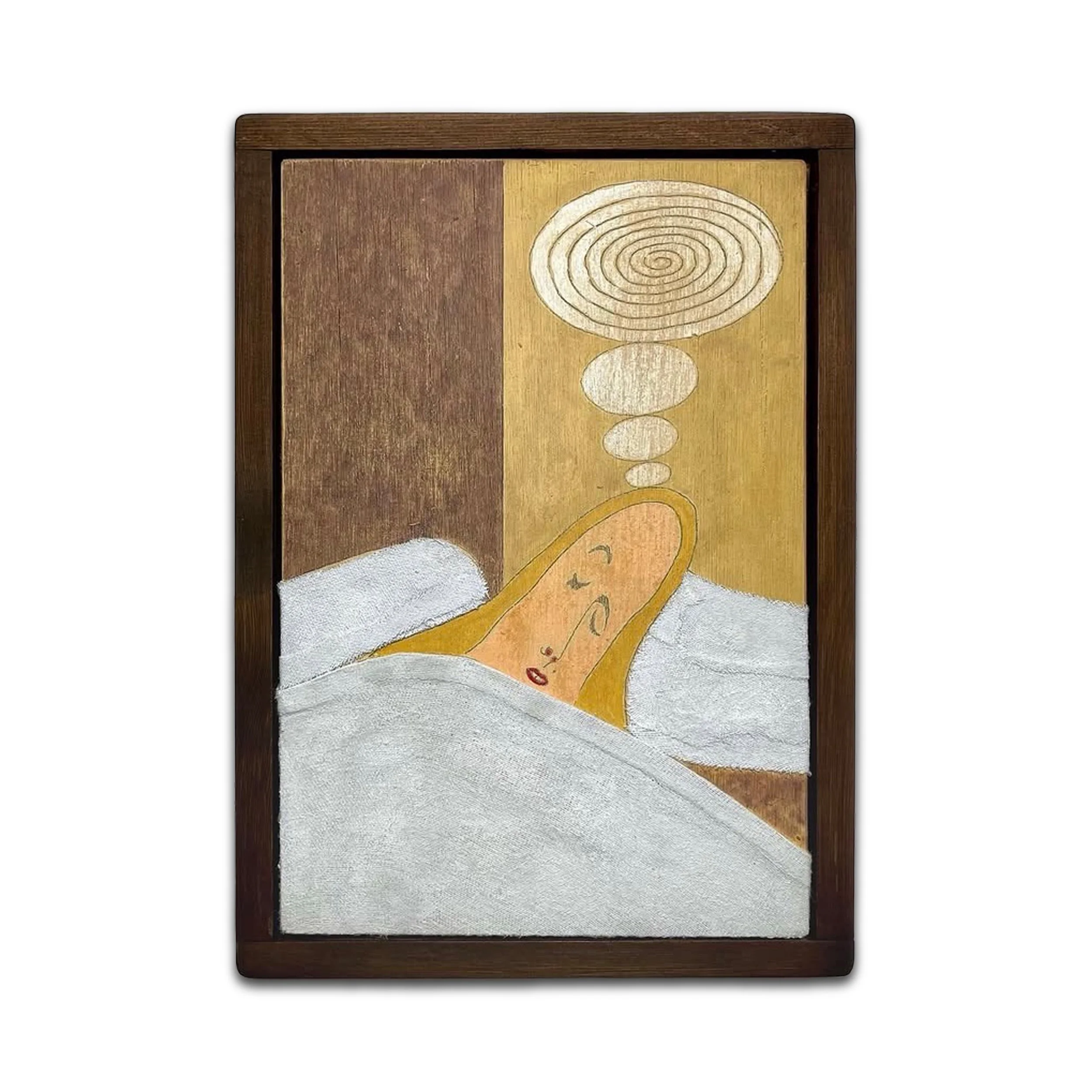
Spiral Sleeper - 11.75 x 7.75 in
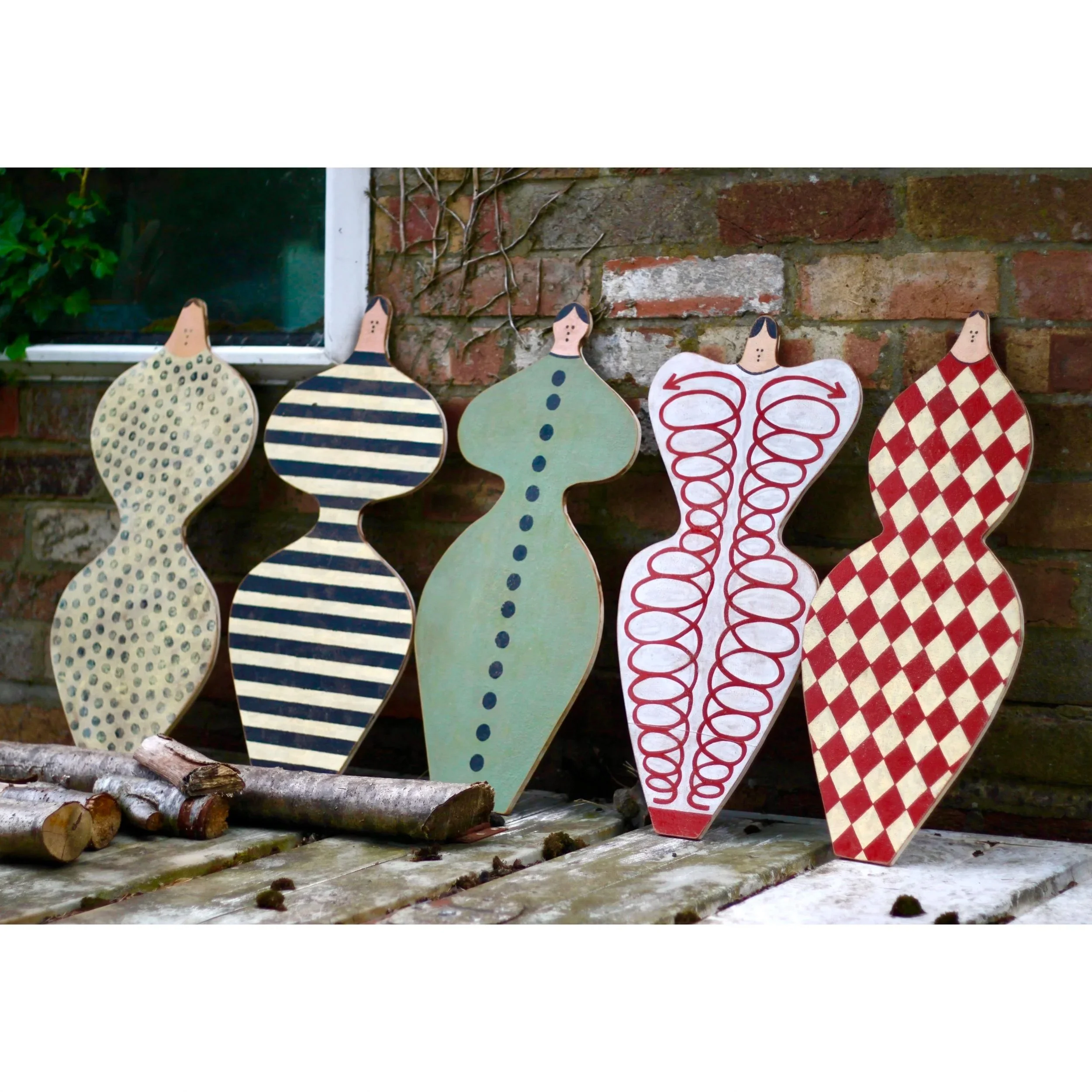
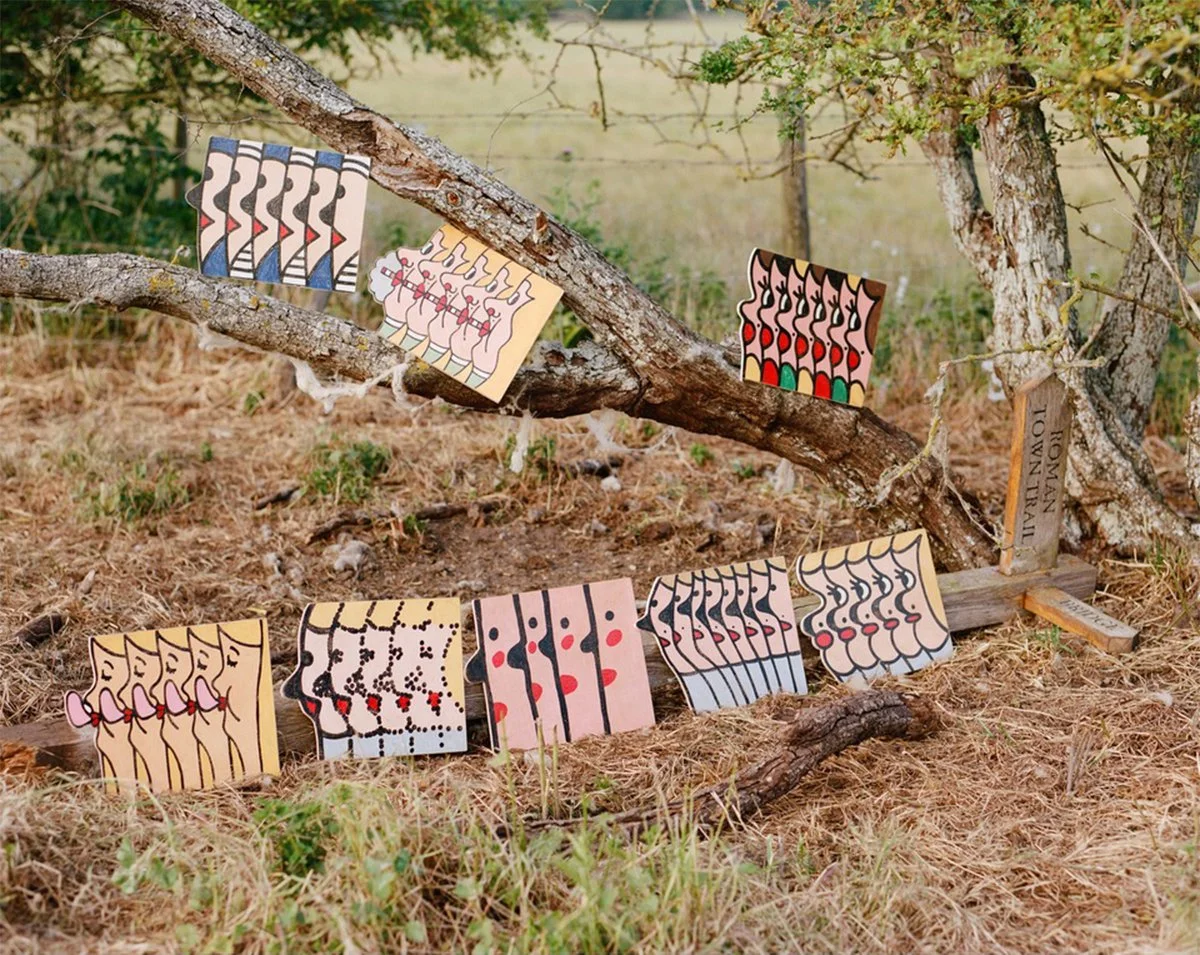
Shaped Figures outside of Carway’s Norwich Studio

“I have always said I’m trying to make myself confused. But maybe I’m trying to feel awe; when I see an image, it takes me back to my deep aesthetic projections of what life would be like when I grew up, I could dream much bigger than life could offer, there were emotions packaged up in images that I am still waiting to find in the real world. It doesn’t come, it doesn’t exist here. The narratives at play can’t ever be achieved in real life - the relationships I see in and between figures in paint far outperform the organic majesty of ‘life’.”

Portrait of Self-Portrait – 11.75 x 15.75 in
An essay by writer Eve Hill-Agnus accompanies the exhibition.
You must get close to Joseph Carway’s work to enter his world, which is ever so gently bewildering. The dimensions—often plywood the size of an A4 sheet of paper—lend themselves to such intimacy. A vestige from his earliest days of sketching out ideas as tattoo flash art, the size is also pragmatic formally. Within the bounds of its surface, Carway creates intimacy: like watching a tiny television set with your face one inch from the screen, or a condensed, private theater staged for an audience of one.
You may call it folk art, or art brut, or naive art if you would like to trace kinship. Carway does indeed cherish found objects and collect old folk pieces, finding them refreshingly simple and unaffected. He admires the rudimentary toy a parent makes for a child, its unskilled roughness paired with intuition. He admires that a tattoo can be read as folksy and avant garde in its own secret way—the way ink softens and spreads into ambiguous blurs fascinates him as much as the tattoo’s power to convey ideas from a small box of symbolic tricks. He admires, too, the work of the French Nabi painter Edouard Vuillard: the flatness of pattern, the condensing of textures in a small space, just as Carway’s own work compresses a scene until there is no longer a difference between the figure and the field it stands in.
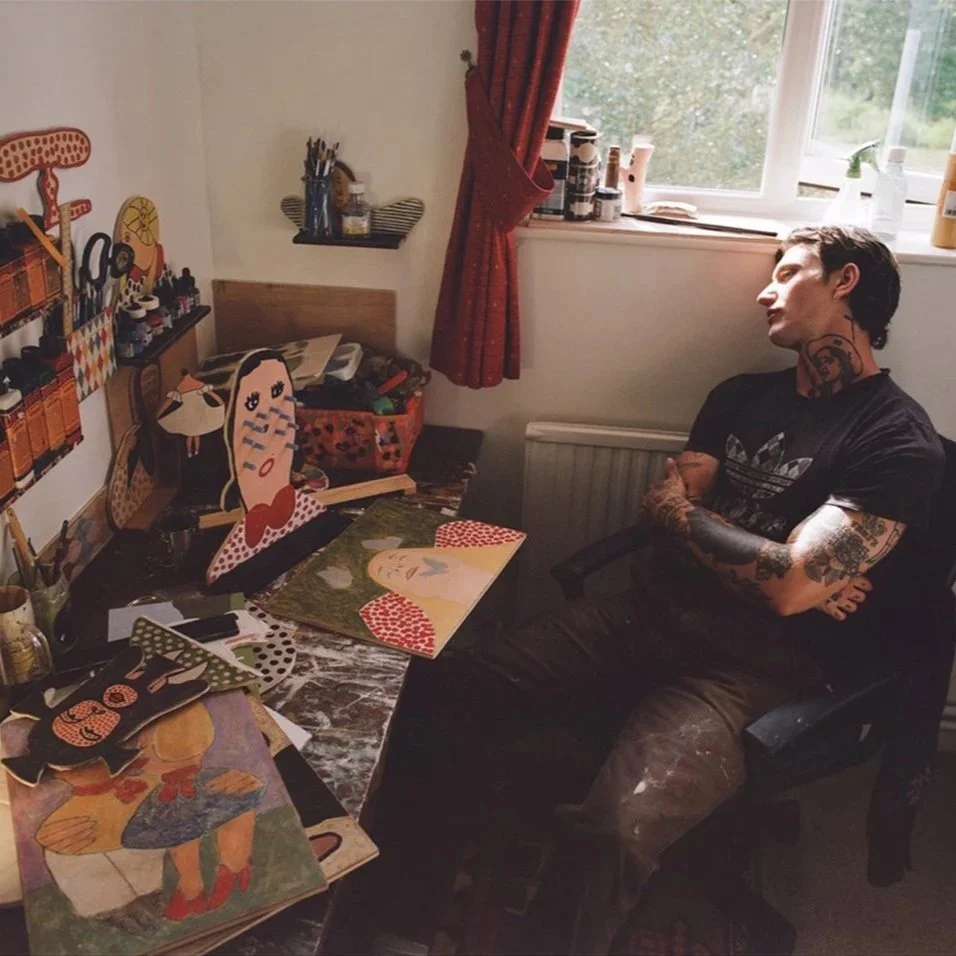
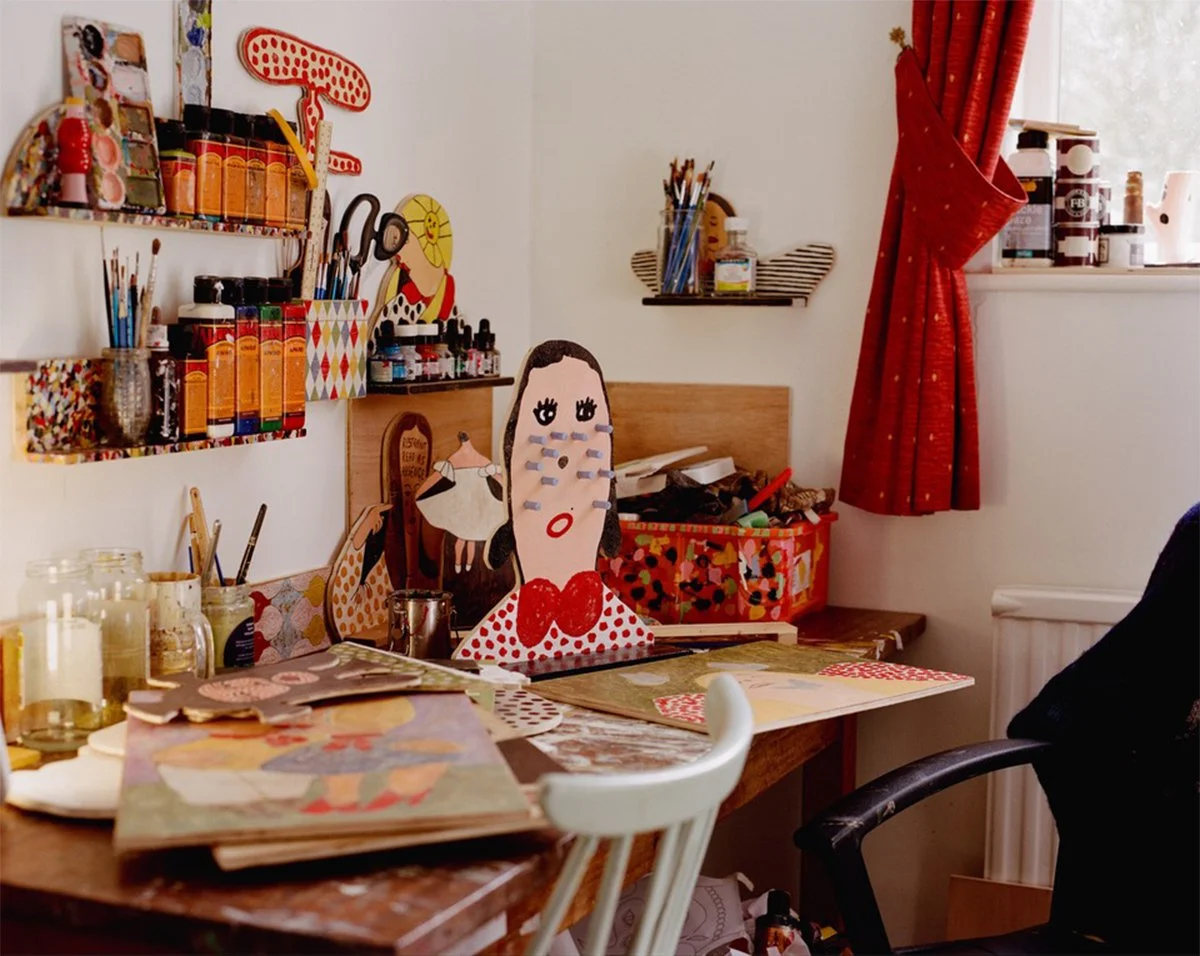
Studio View
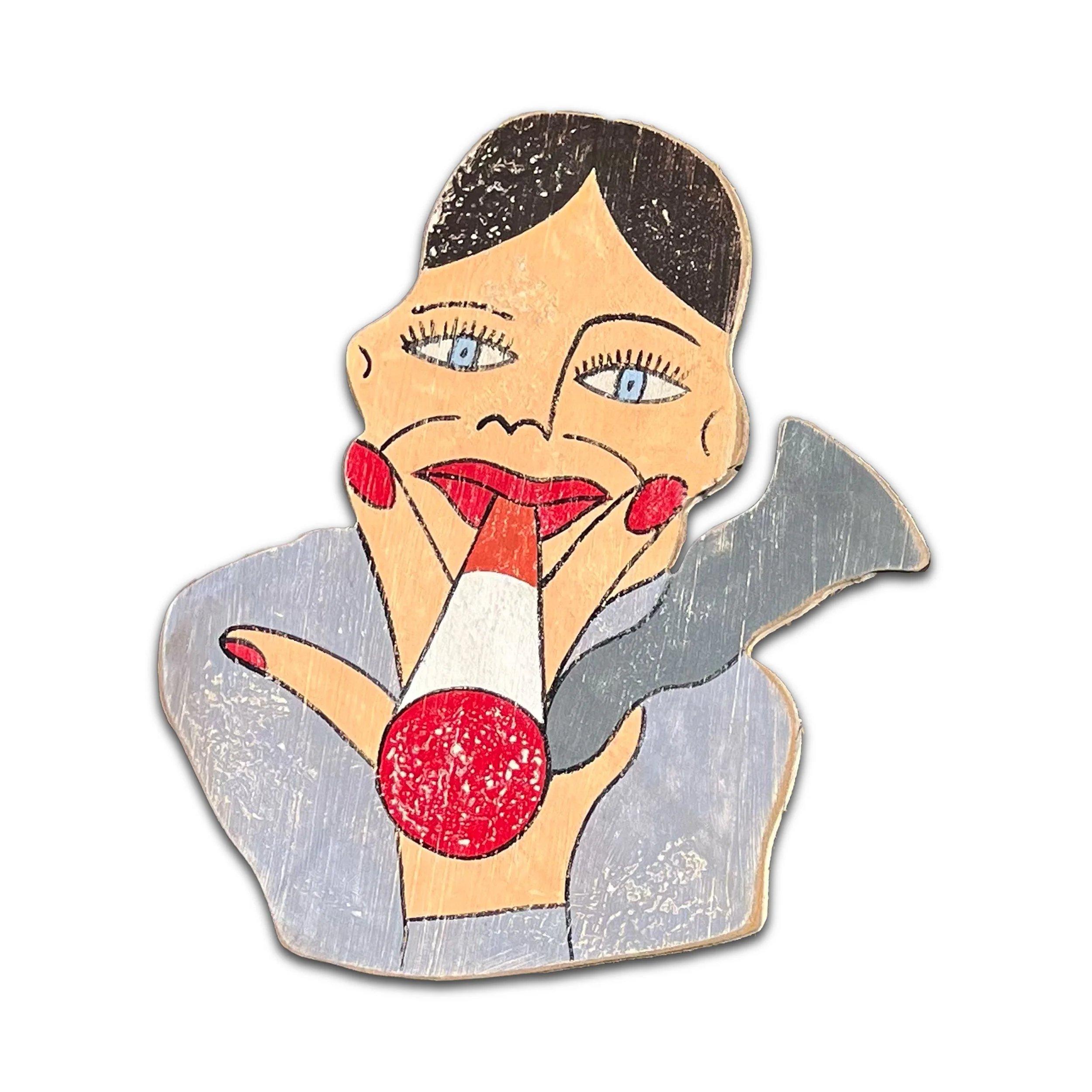
Untitled 13 – 15.75 x 11.75 in

Standing Figure 1 – 21.65h x 7.87w inches
Artworks Outside Studio, Norwich, England
What the artist harbors in a limited space is, paradoxically, both intimacy and a reaching beyond. The fourth dimension is built into the process. Carway distresses his surfaces by hand, adding texture, until they look older than they are. Call it time- travel taken on faith, a manner of meeting the painting as though it had already lived. Underneath the work’s playfulness lies a wistfulness—a desire for a thing to already have a history, to be exempt from the risk of being new.
Across Carway’s body of work, figures tend to arrive in pairs. Two small companions, leaning toward or away from each other. Whether the encounter reads as embrace or conflict, it is a shape a viewer recognizes before naming it. They might be two illustrations that wandered loose from the same storybook and simply found each other on the page. Humor infuses these pairings, but never at the expense of what might lie underneath. “Life all means so much and it all means so little,” Carway has said. His pieces hold both—to be taken exactly as seriously as they deserve: completely and not at all. They spin a moral tale if we choose to read it that way.
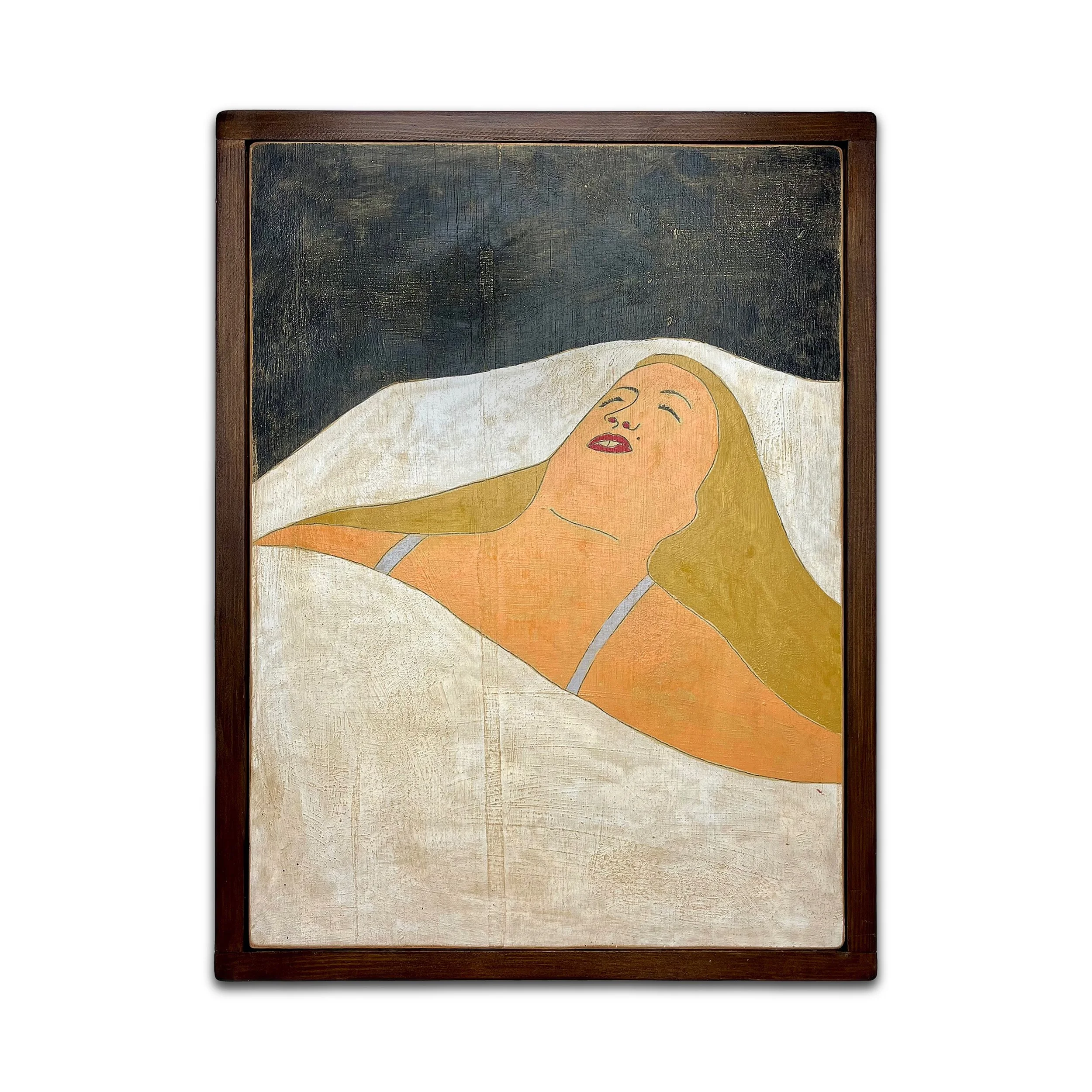
Sleeper Build – 15.75 x 11.75 in
Studio View
To render the profound and simple requires clarity and confusion at once. Carway straddles both. Bewilderment runs through Carway's account of his own process, and he holds it without apology. His work offers the sensation of standing at the edge of meaning and finding this edge to be a funny, absurd but ultimately livable place. This is the position of a child with a pen and a sheet of paper, who does not wait for the confusion to resolve before drawing the next line. Neither should we.

Pencil Pots – 4.25 x 1.5 x 1.5 in
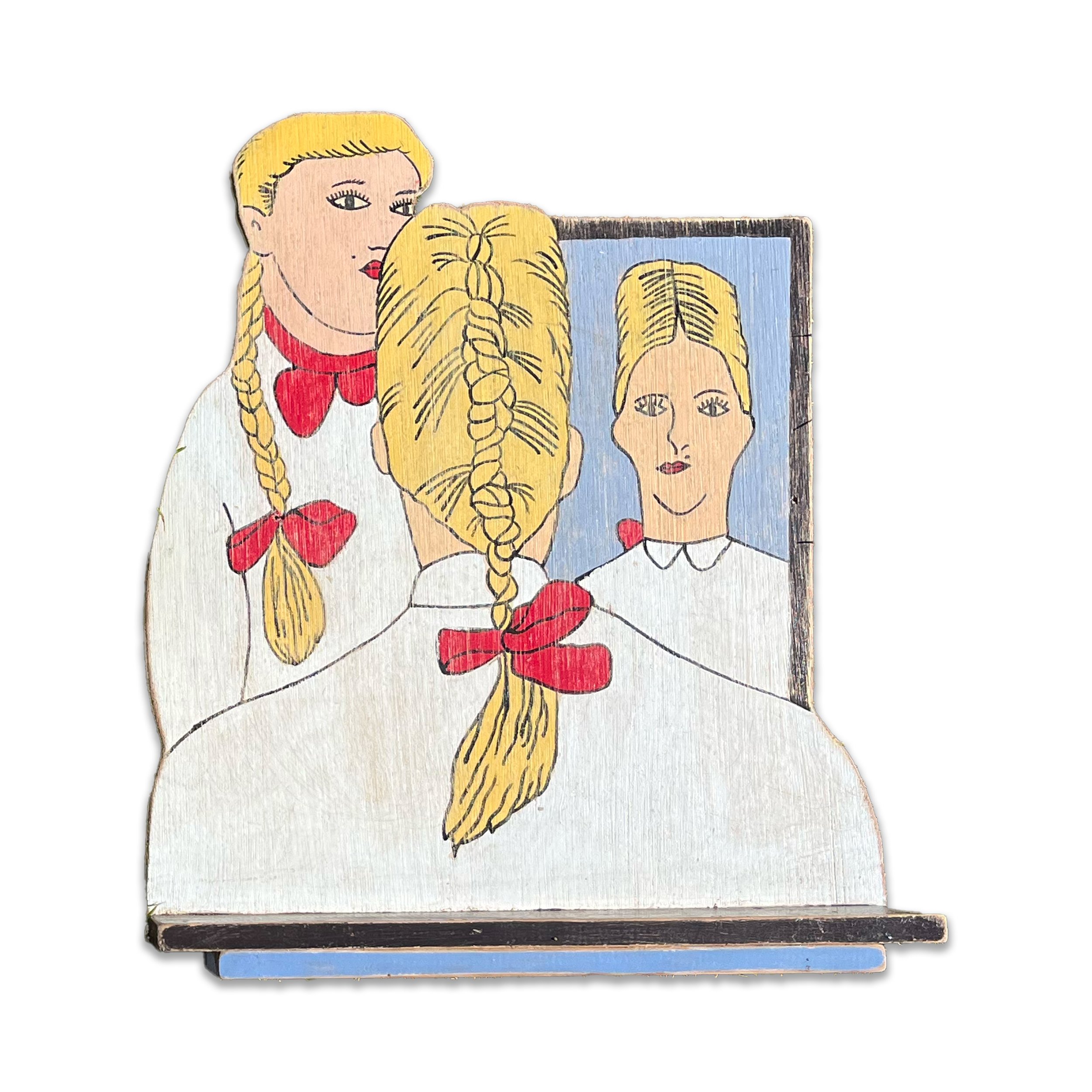
Untitled 50 – 11.75 x 7.75 x 2 inches
Joseph Carway began his career as an artist working with, and on, the human form: tattooing folk inspired linework figures, blacked out geometries, and animals. Flash sheets filled with dancing figures, crying clowns, and childlike flowers became the inspiration for his fine arts work. That sense of utility found in tattooing also became prevalent in Carway’s first foray into fine arts; wood turned pencil holders, pegboards, keychains, and painted key hooks became expressive objects brought to life in their painted figuration.
From those objects came his intimate series of wide-ranging paintings. Men thrown from horses, elongated portraits and figures, running women, and scenes of flight through curtained windows adorn these plywood panels. The sense of tactility is heightened through the intentional weathering and scuffing these panels endure. Age is present, both in the physicality of these objects, but of their subject matter. Are they forgotten and recovered works from the 1900’s? or were they made yesterday? The beauty in Carway’s paintings emerges from their timeless and permanent presence.
Joseph Carway is an English artist creating functional and flitting paintings, straddling sculpture and fine art. His work is inspired by themes of solemnity and solace, timeless imagery and gentle narratives. Play is at its height within his shaped paintings, as wooden implements often emerge from their surface to use as keyrings, “storage containers,” towel holders, or seemingly for no specific reason. The viewer is left to wonder how they might approach and engage his objects. Carway handles these themes with an obligingly naive sincerity, resulting in small wooden pieces that Illustrate scenes of life, love, religion and a willing exploration of his psyche through scenes and symbols.
Carways rectangular paintings on board have that same sense of play, but this is seen through the linework, gesture, and gaze. His subjects explore the container, rather than break from it – as in the shaped panels. The subject matter is diverse as well, exploring more formal elements, such as weight, line, expression, movement, and action. The intentional weathering and varnishing creates a push and pull, into and from the pictorial plane; still exploring 3 dimensional space within a more traditional container.
Joseph Carway lives in Norwich, England, where he paints from his home in the Norfolk countryside, alongside his work as a tattooist. Carway’s first solo exhibition was in 2025 at Giant Runt, Fort Worth, Texas. His work has entered important collections in the United States and abroad during his emergence as a painter in 2025.