Aron Barath —
November 14 – December 26, 2026
Galleri Urbane is pleased to announce , a solo exhibition by Hungarian painter Aron Barath. This marks the artist’s second solo show with the gallery, highly anticipated since the artists first solo exhibition, Color is the Dope, in 2022.
“These paintings offer a metaphysical connection to the world by preserving the spirit of the landscape where I am from and other natural places I have spent time in. I grew up in Maryland on the Chesapeake Bay where my father was a landscape architect, my grandmother a landscape photographer, and my grandfather a wetland scientist. In recent years it has become clear, the tidewater landscape I call home is slowly disappearing because of the bay’s rising sea level eroding the land.”
An essay by Eve Hill-Agnus Paris, France:
It is the slippages that are riveting in Saskia Fleishman’s work, edges opening onto something vast. The paintings originate as photographs: a sunset off the Maine coast, a stretch of New Jersey shoreline at sunrise, the rust-toned rock outside Sedona. Printed onto chiffon, each piece then becomes a negotiation between what is held and layered, and what simply passes through.
Where Fleishman applies it, locally sourced sand gives acrylic something to grip, creating almost topographic strata. Elsewhere, the chiffon remains bare, the image sheer, gossamer, kinetic, changing color with every movement and shift in light. Two conditions coexist in the same object. The contrasts—gauzy and sheer against grainy, thick brushstroke against delicate fabric—are where contradictions in texture dwell. It is a dual materiality, each half explaining the other. And like doorways that drift in the gallery, they function as portals.
The technique itself has shifted since Fleishman last showed a body of work at Galleri Urbane. Previously, mismatch was structural to the process: the artist masked off sections of the printed chiffon and painted from a photographic reference no longer visible beneath the mask, ceding the final alignment to chance. A horizon that drifts half an inch. A color that lands a shade off. The current body of work introduces a documenting step mid-process that allows Fleishman to hold the seam far closer to exact.
The cut-out sections still recede, the painted portions still advance, the optical effect remains intact, but the transition between them is now clearly continuous rather than a visible glitch. The seam so close to seamless that it seems closer to a feeling.
That sensation is the true subject of the work. Fleishman speaks of the seam in terms more spiritual than technical. “I’m thinking about a moment in the veil of the world,” she has said, “that you’re having access to something else, something beyond. And what that space looks like.” Perhaps like a glitch in the matrix. An unnoticed place. A rend in the veil, where one might be allowed to see whatever sits beyond the visible surface. In these moments at the edges of the cut-out ribbons, “a little something flickers.”
Her compositions seem designed to hold that space open. The horizon sits low in the frame. Anything afloat in the water gathers toward center; the cut-out forms—shapes Fleishman sketches loosely in a notebook before placing them, intuitively—carry an almost physical equilibrium of weight answering weight elsewhere in the canvas. There is something powerfully peaceful and meditative about them. Change is not a threat to brace against in these works; their serenity is a refusal to read change as loss.
The ceramics in the show inhabit a related territory. Hand-built and bisque-fired, left with a matte surface that recalls the raw material, they are airbrushed using the same technique Fleishman applies to the chiffon. She has been circling spirals recently, drawn to their recurrence throughout the natural world as a kind of infinite reference.
Fleishman’s earlier exhibitions favored titles pitched toward atmosphere. Contour is a word about edges: the line where one form yields to another. It is, she notes, a term from drawing before it is a term from landscape. Look closer and the word extends further still: a contour is also where one dimension gives onto another, and the edge of a reality might be traced. The masking is not an incidental technique—it toes a line between the transparent and the opaque, negotiated until it is almost, but not quite, invisible.
That is where Fleishman places us. And it is the position she asks us to hold: neither fully inside the landscape nor outside of it, but caught, briefly, in the seam.
Fleishman’s earlier exhibitions favored titles pitched toward atmosphere. Contour is a word about edges: the line where one form yields to another. It is, she notes, a term from drawing before it is a term from landscape. Look closer and the word extends further still: a contour is also where one dimension gives onto another, and the edge of a reality might be traced. The masking is not an incidental technique—it toes a line between the transparent and the opaque, negotiated until it is almost, but not quite, invisible.
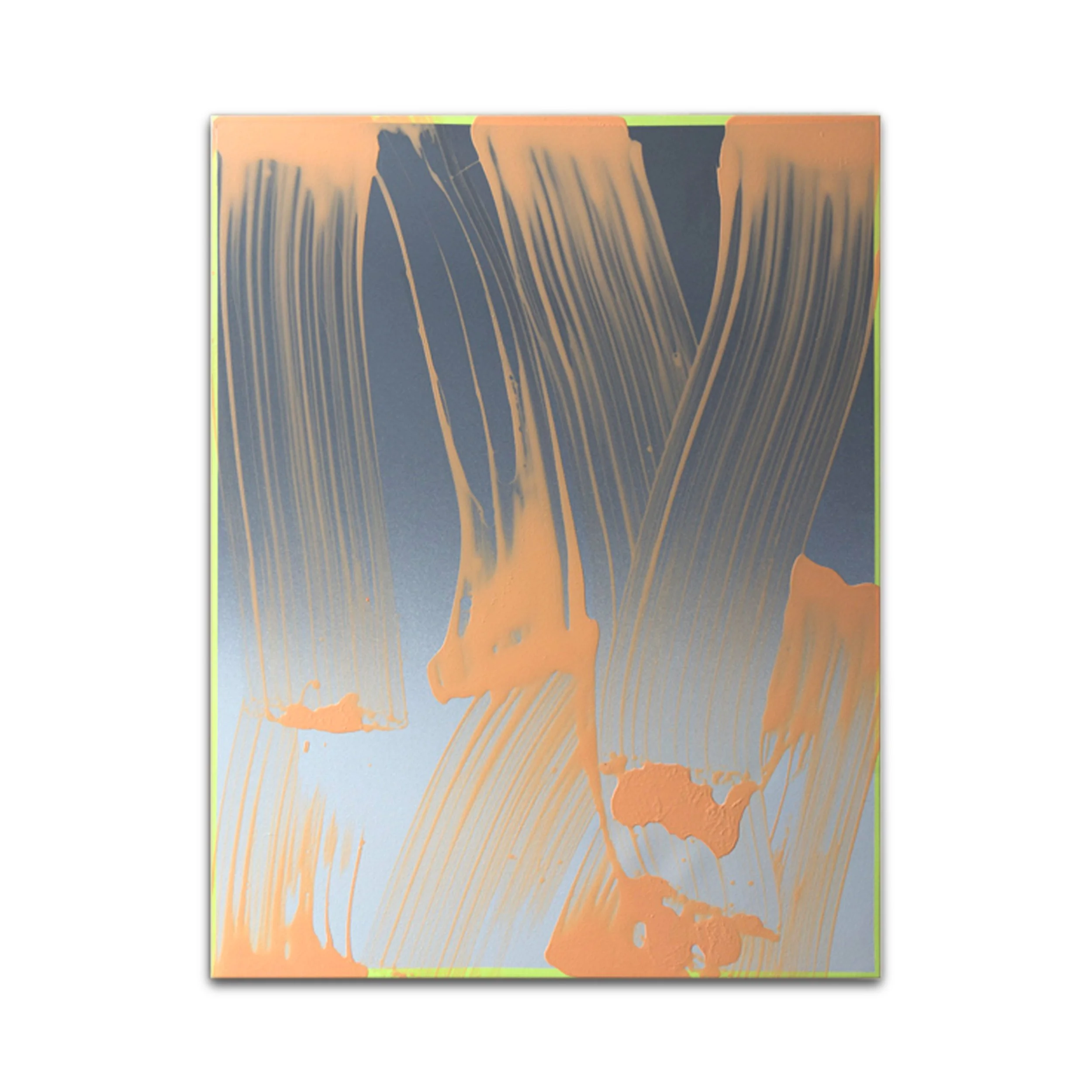
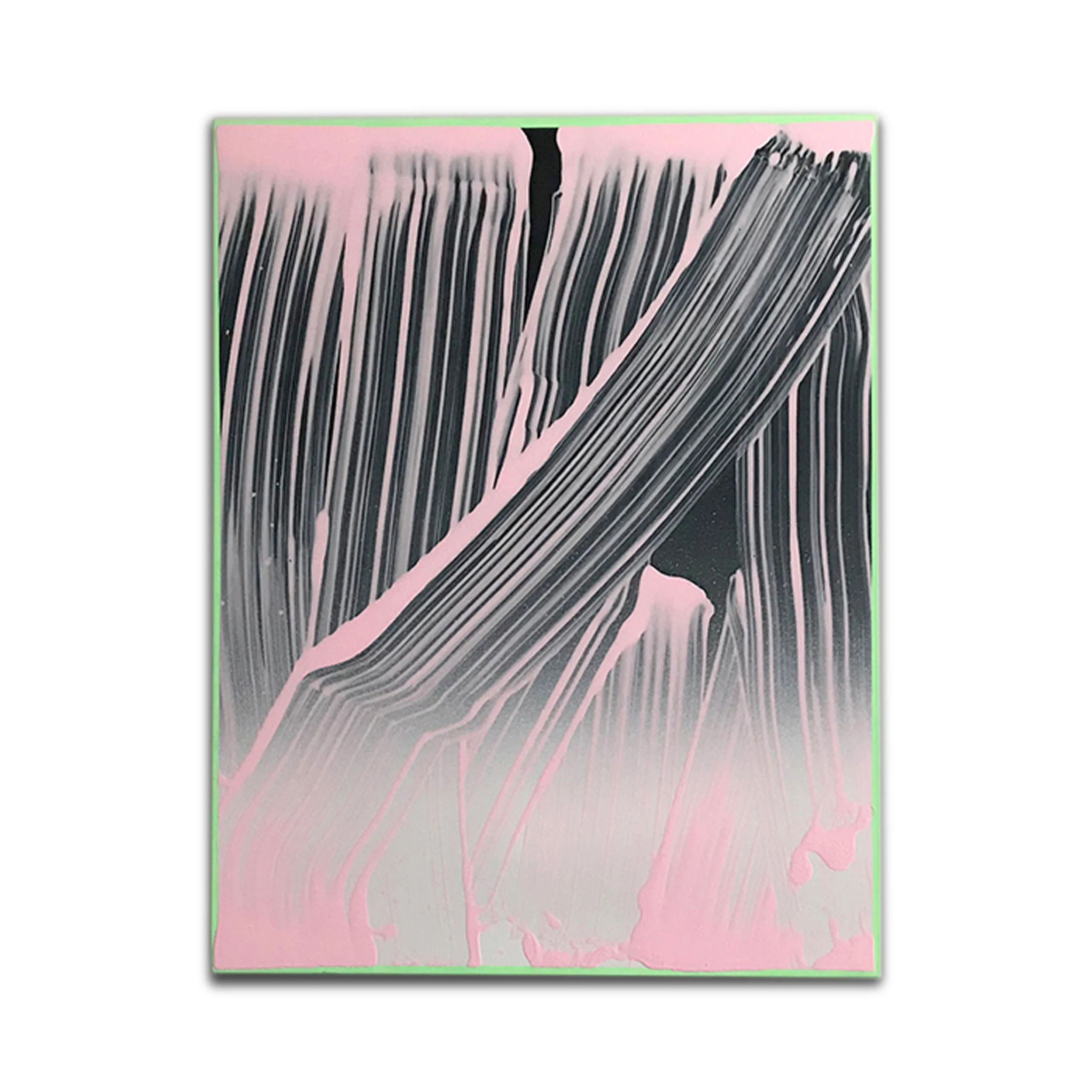
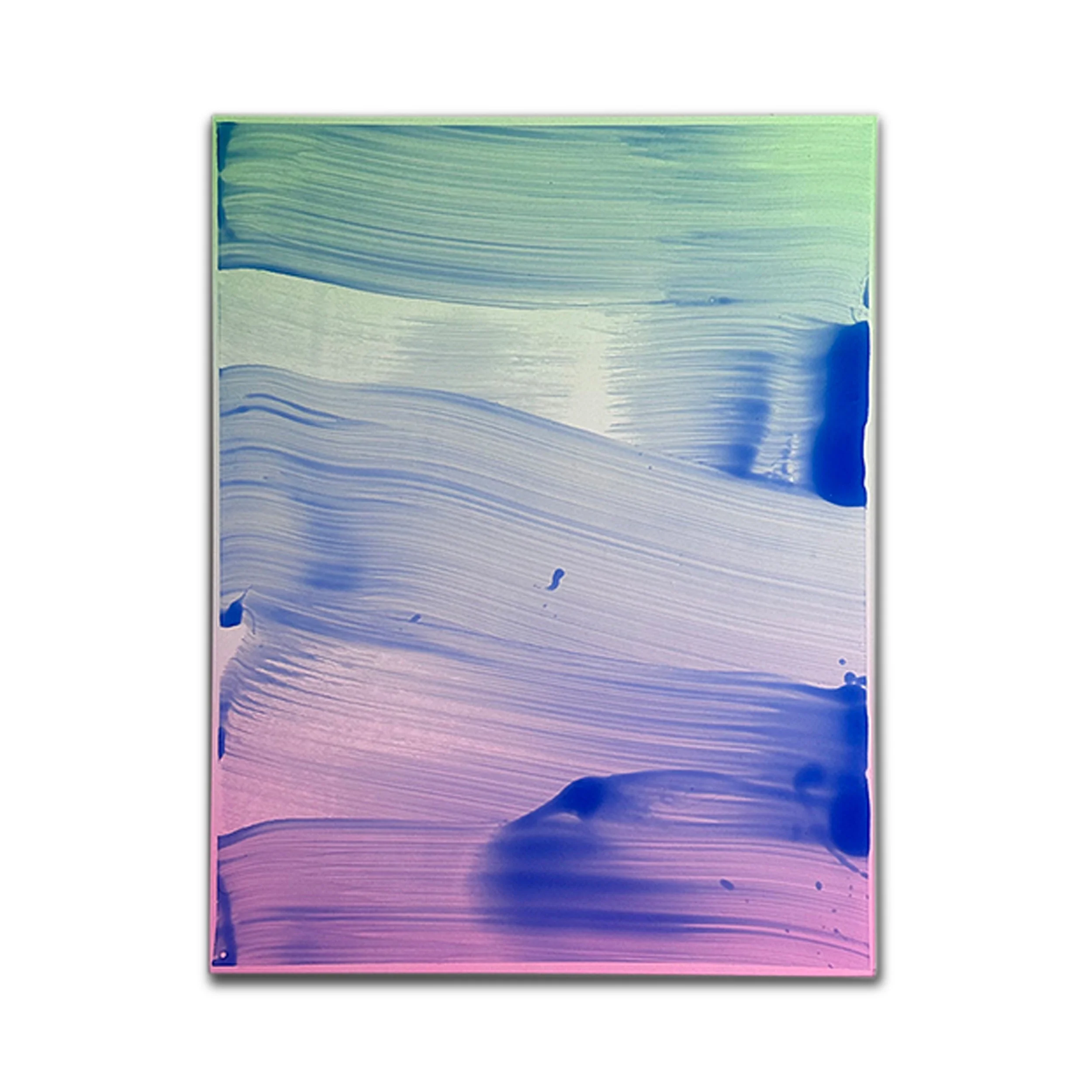
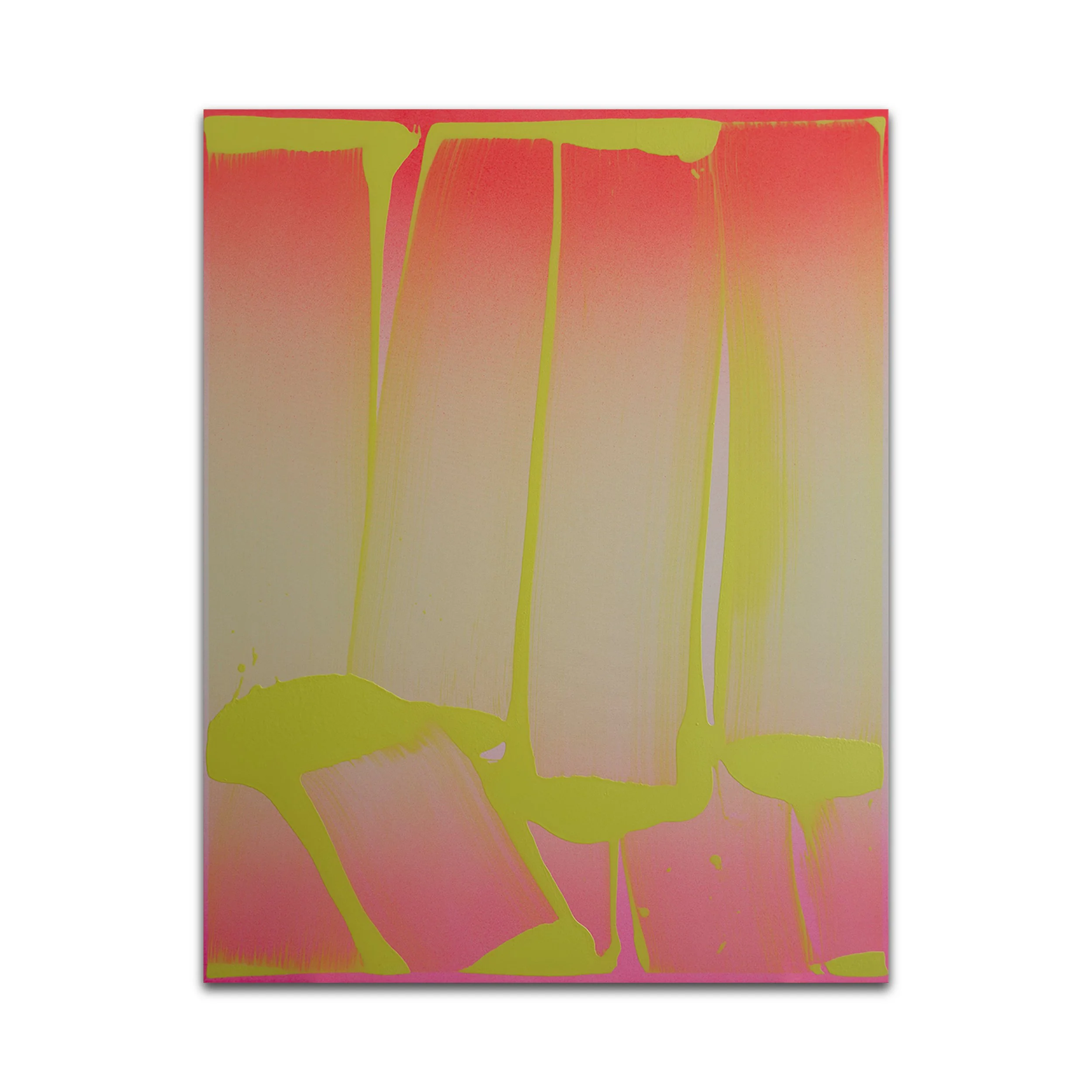
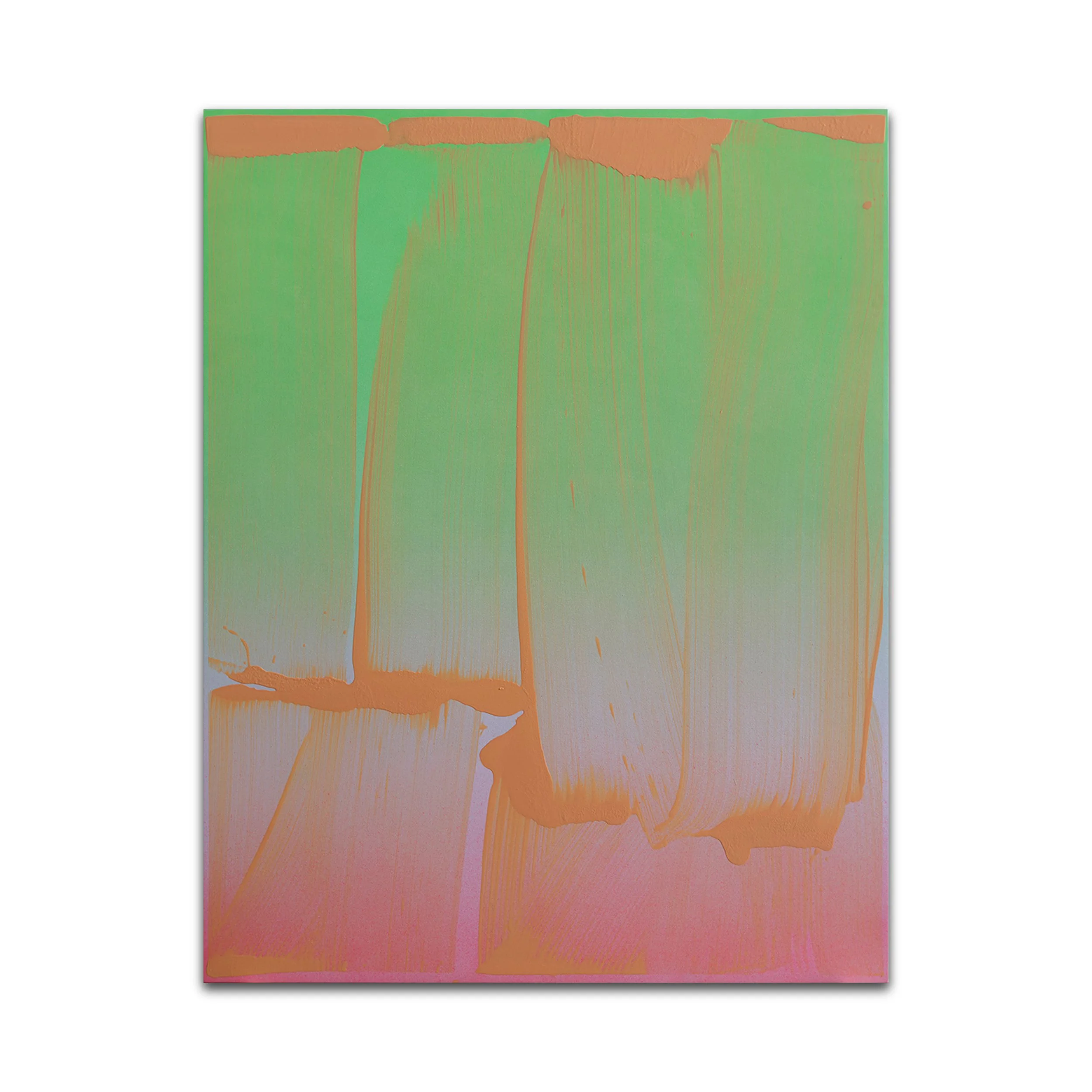
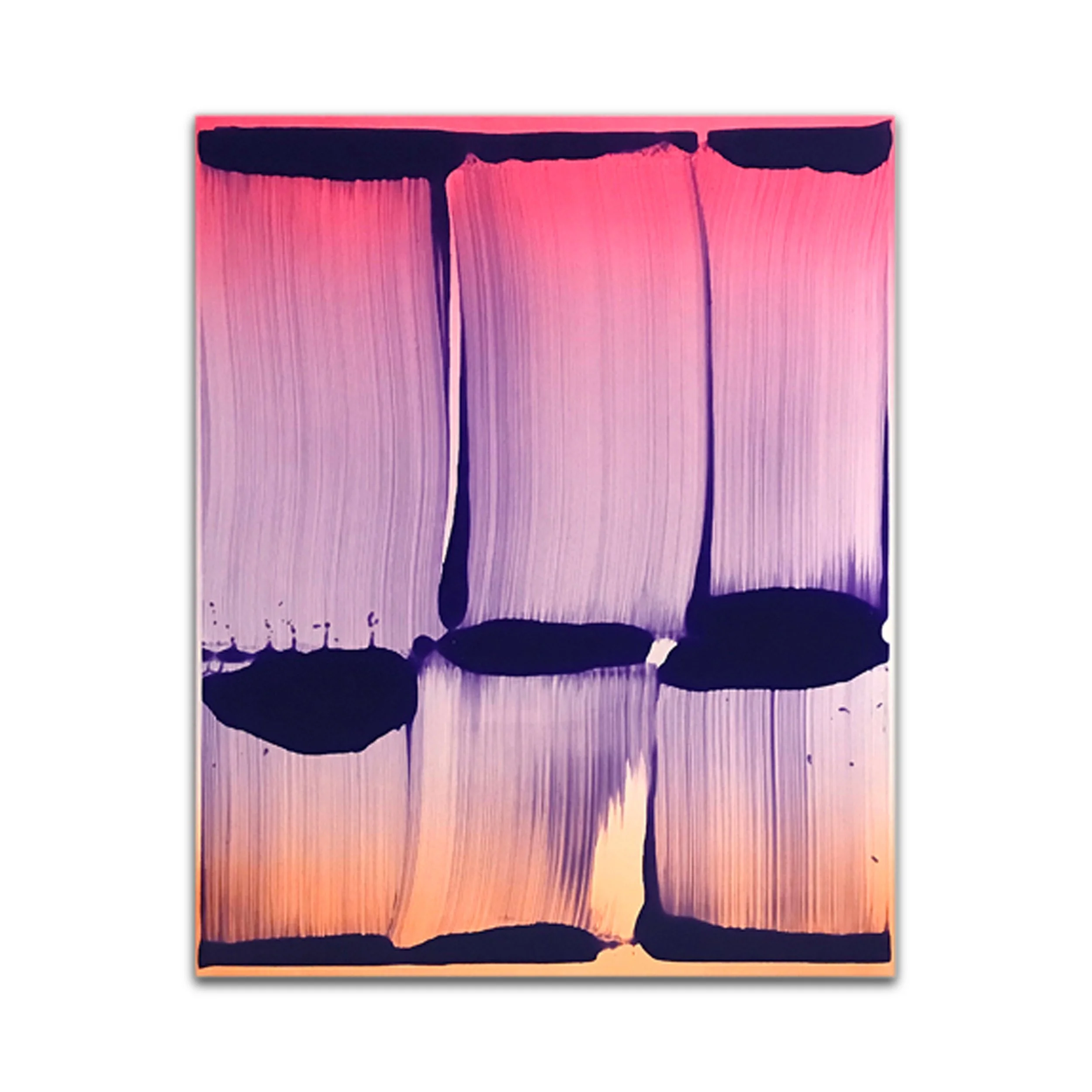
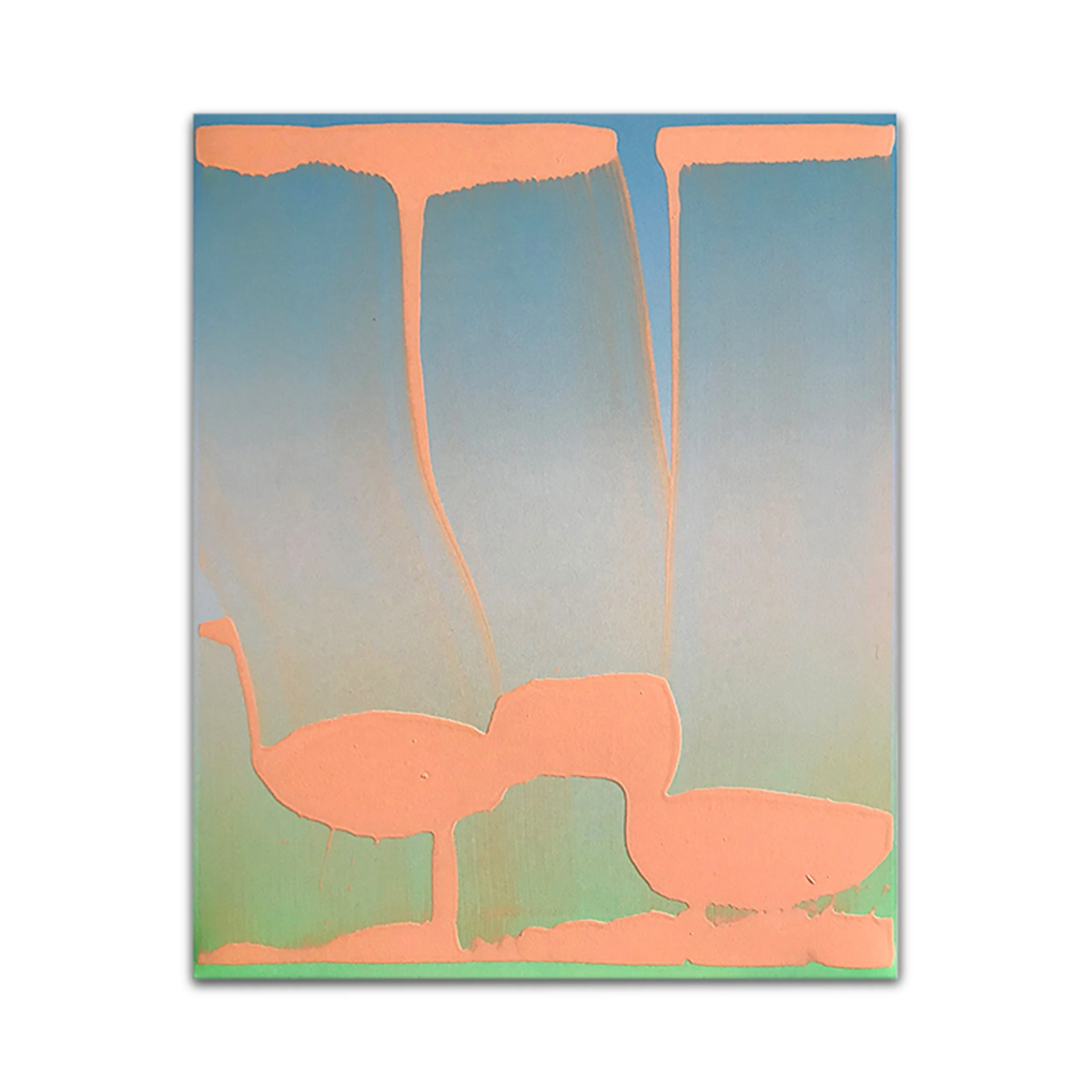
Aron Barath is best known for his abstract paintings, marked by color and the seductive qualities of paint as a substance. Art historian and art critic Rona Kopeczky describes the artist as a chromatogologue and a chromatophone, handing over his place in a noble manner to the colour. The colour dictates the gesture of the artist, freeing itself from contemporary visual culture or communicational trends. What is left is pure, genuine and truthful. Light, substance and colour.
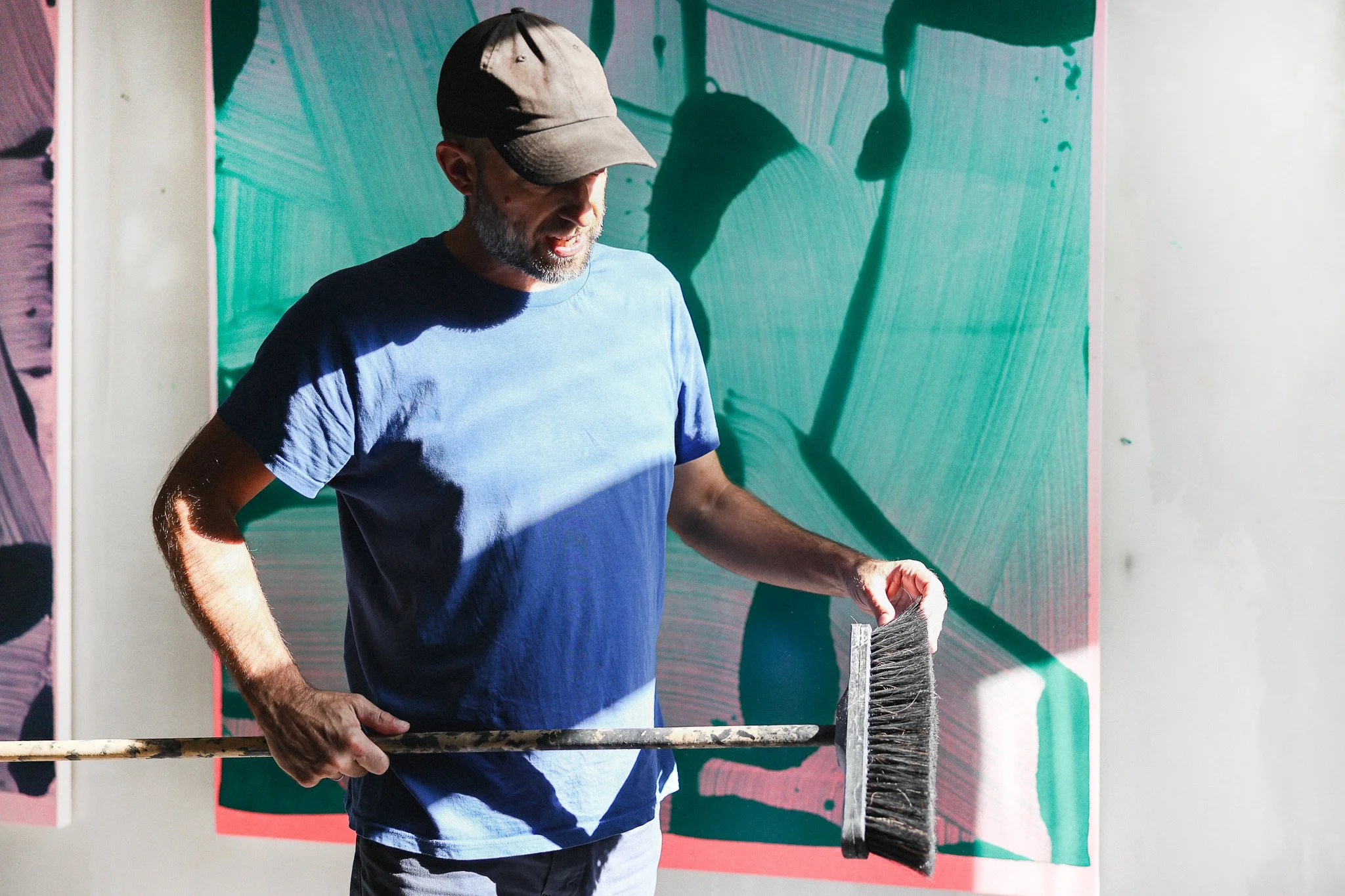
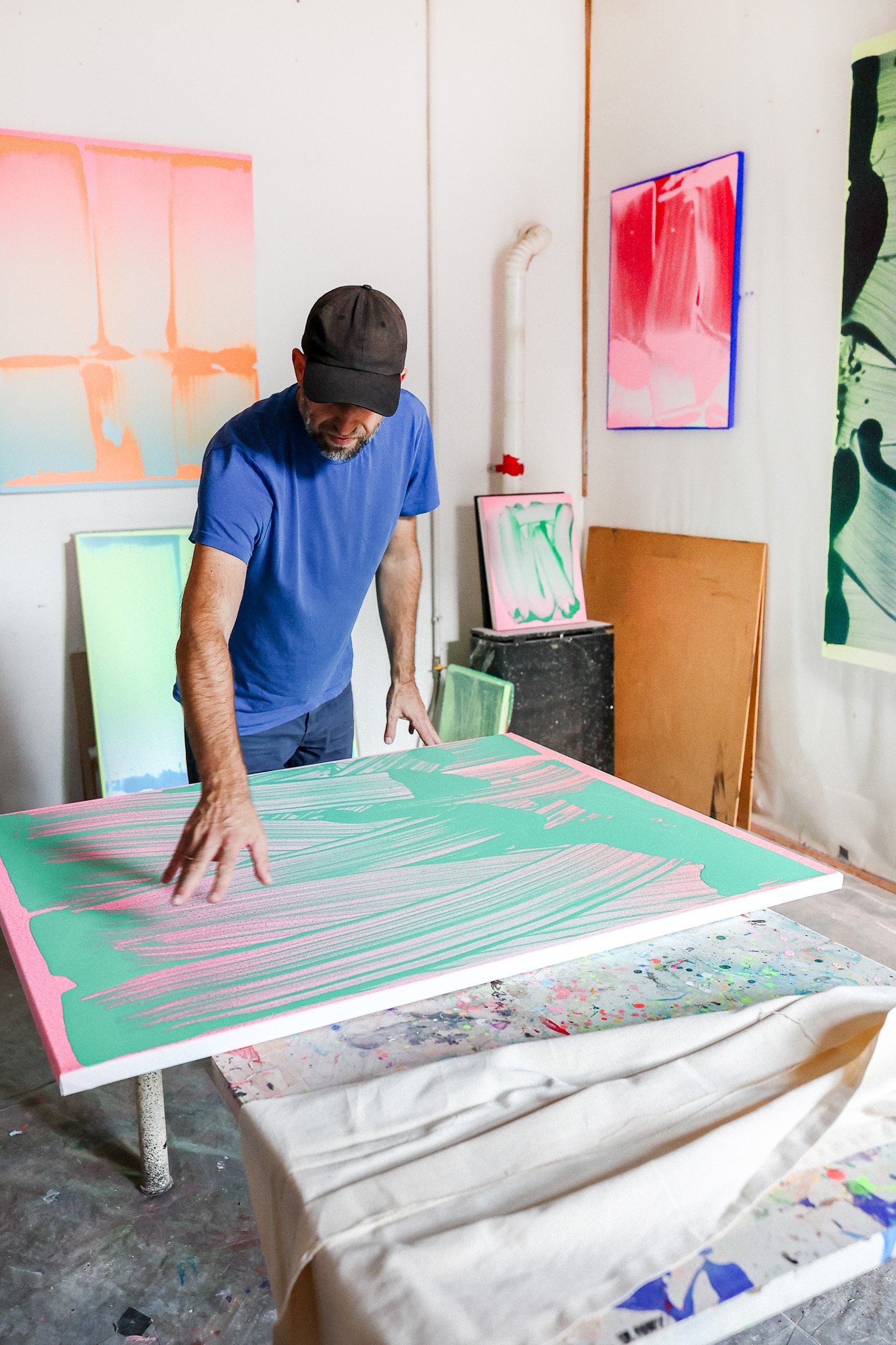
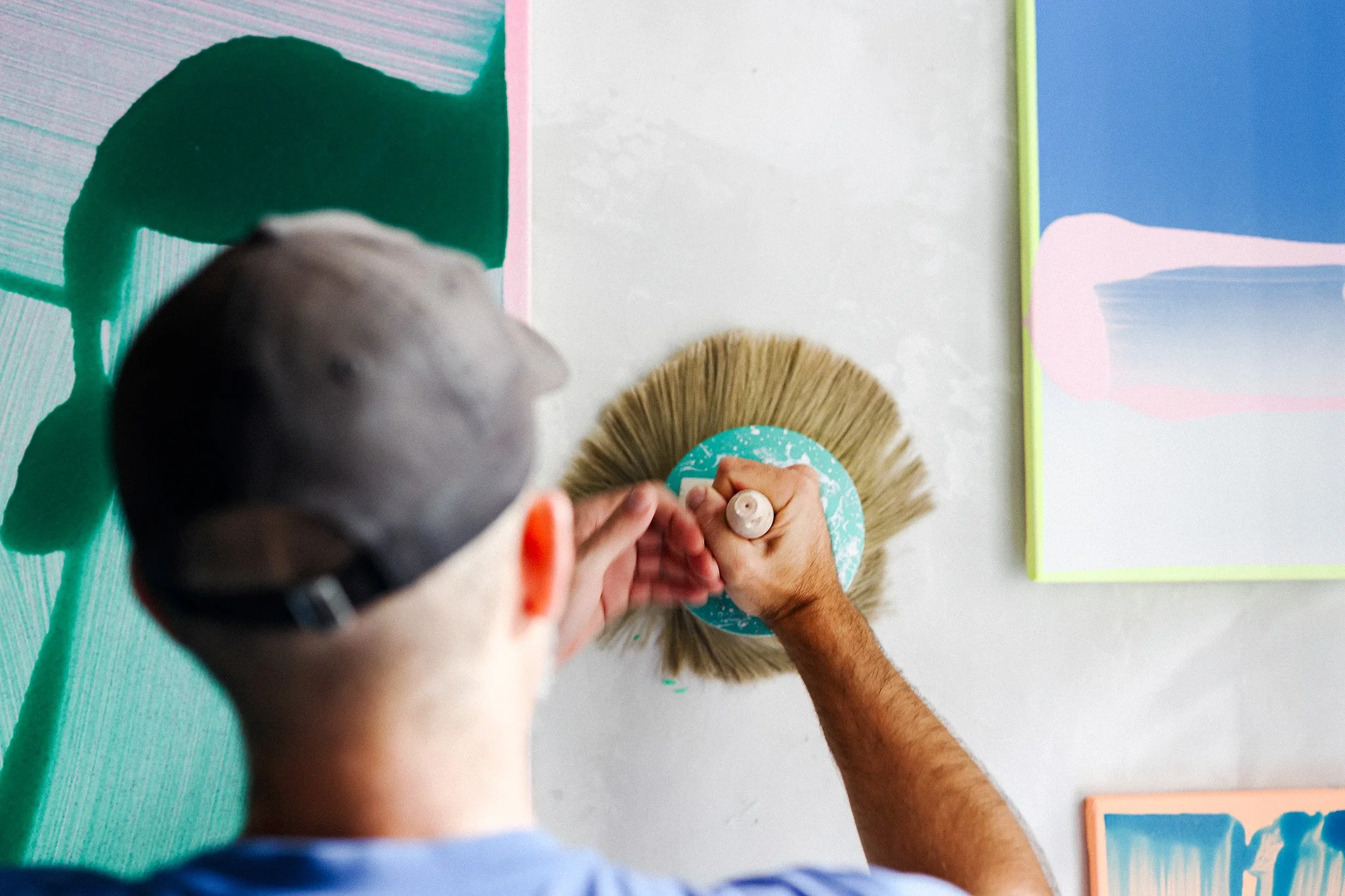
Laying his canvases on the floor, Barath uses colors freely, painting with various materials and tools. Tested and mixed himself are water-based paints which allow his multiple layers to all easily be perceived at once. He uses a variety of brushes, brooms, sponges, and sprayers of different shapes and sizes alongside his handmade tools.
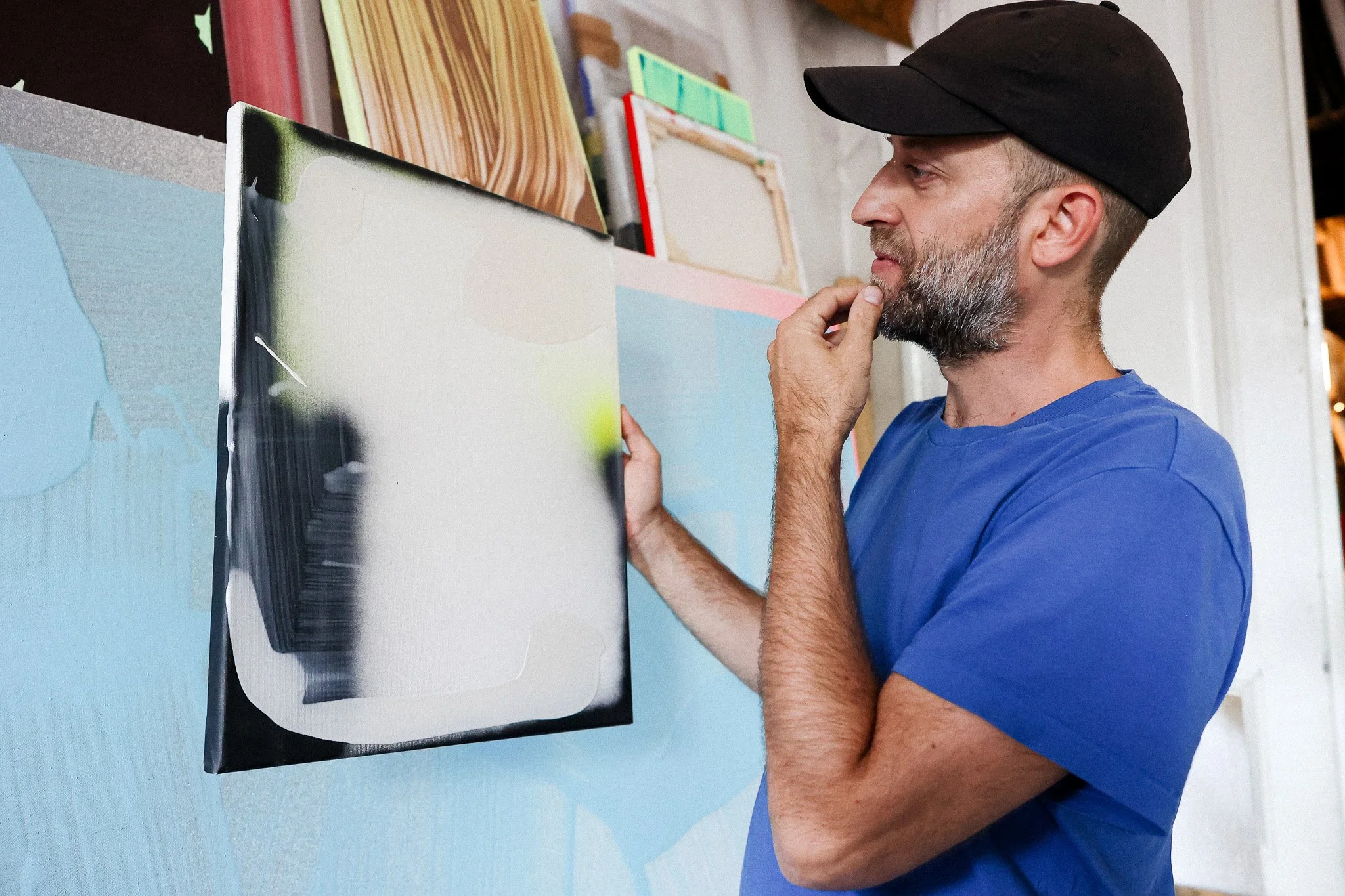
Barath chooses to explore the essence of traces of light, substance, and color in his work, absent from contemporary trends of communication. The selected paintings in the exhibition are studies of light and color through a series of intuitively completed steps. A euphoric kind of action takes place in Barath’s studio as he paints interpretively and sometimes dances around his canvases.
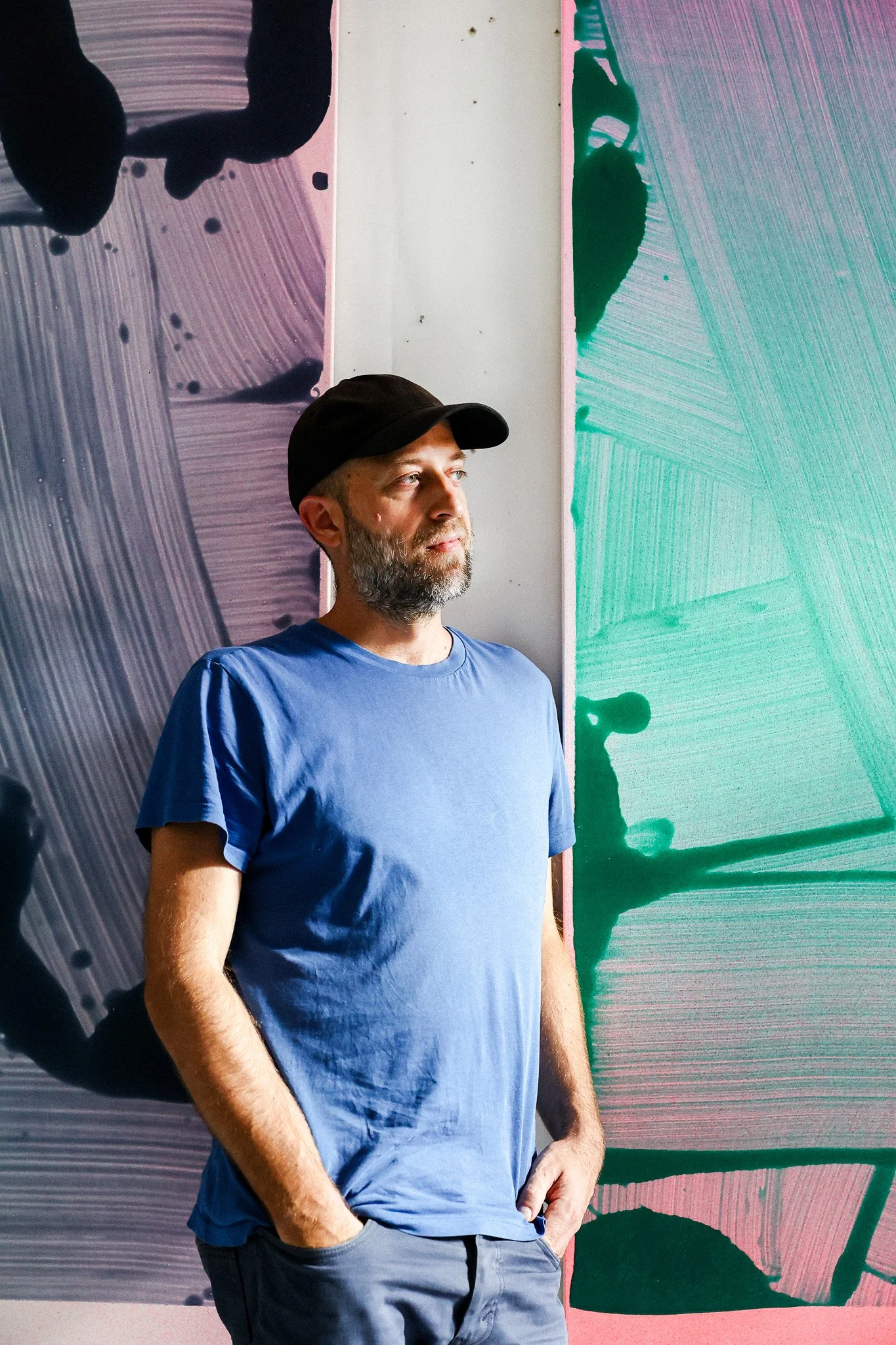
Aron Barath (b. 1980, Novi Sad, former Yugoslavia) resides and works in Budapest, Hungary. Barath has had group and solo shows predominately in his home country Hungary. However, the past three years his work has been noticed and lauded internationally, resulting in exhibitions in Warsaw, Poland, Berlin, United States, Vienna, Austria and Kortrijk, Belgium.