Aron Barath — Afterglow
November 14 – December 26, 2026
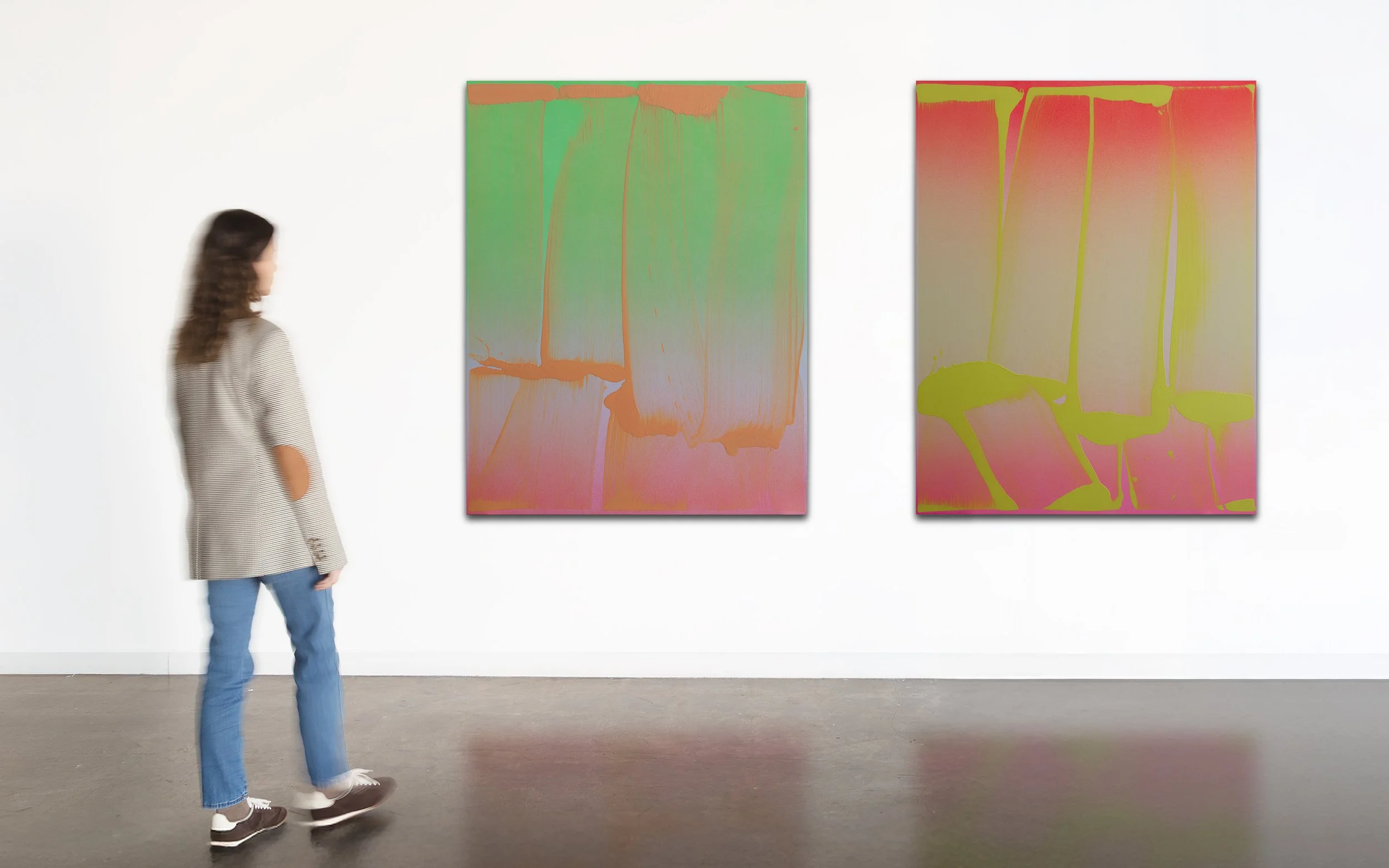
Galleri Urbane is pleased to announce Afterglow, a solo exhibition by Hungarian painter Aron Barath. This is the artist’s second solo show with the gallery, following his debut exhibition, Color is the Dope, in 2023. Known for his abstract brushstroke paintings, his latest body of work emphasizes a vibrant palette of shifting translucencies.
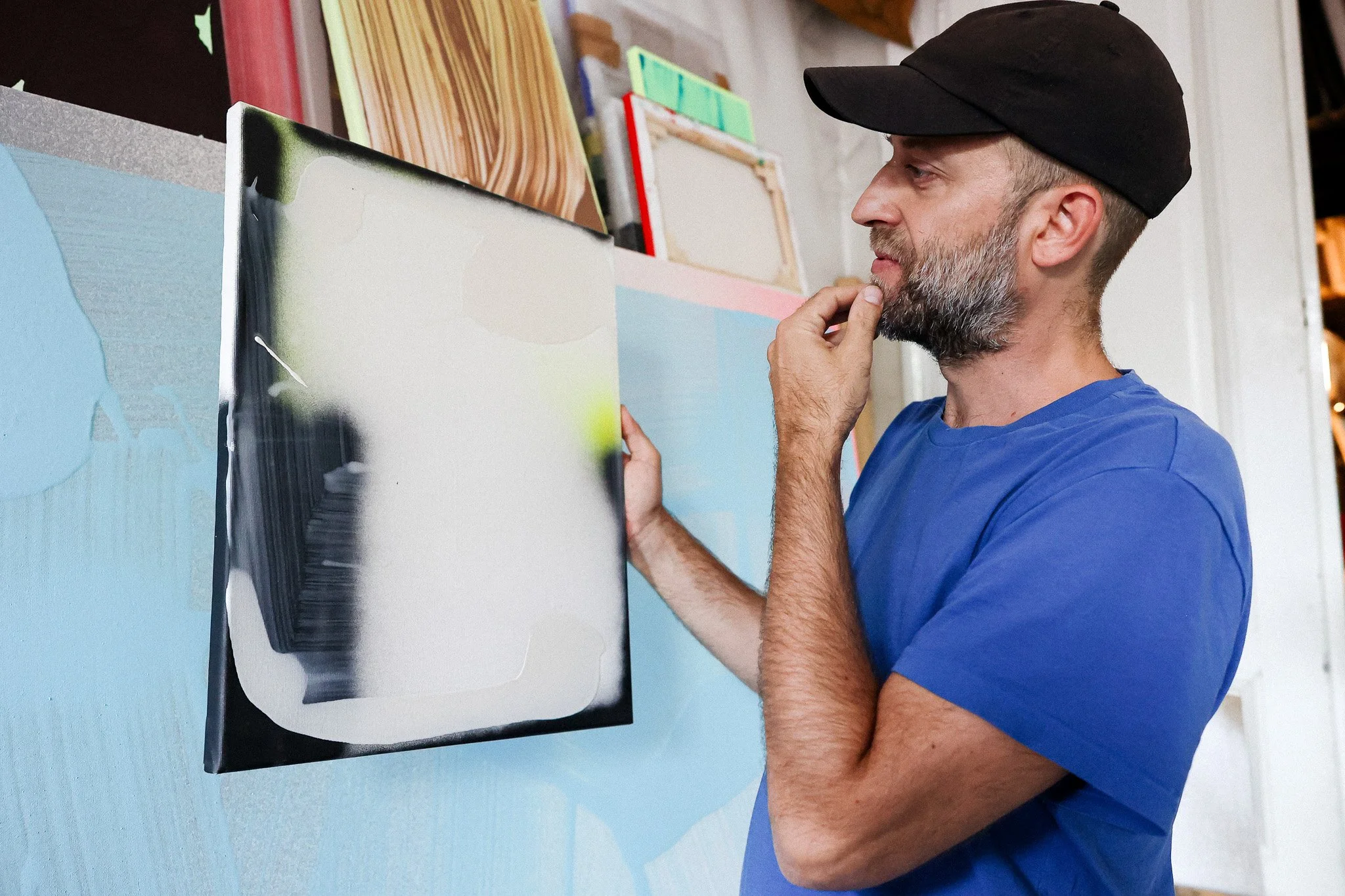
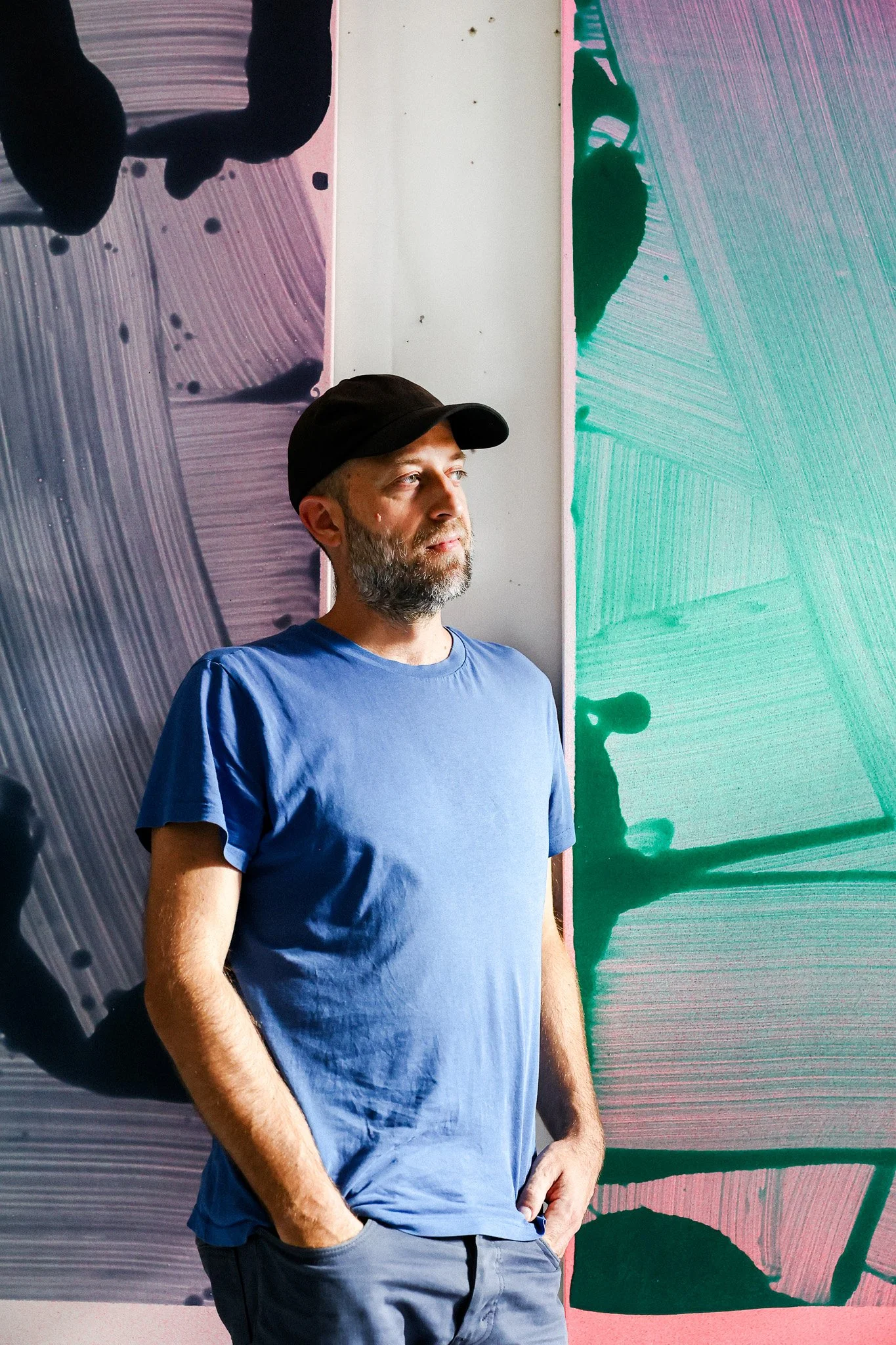
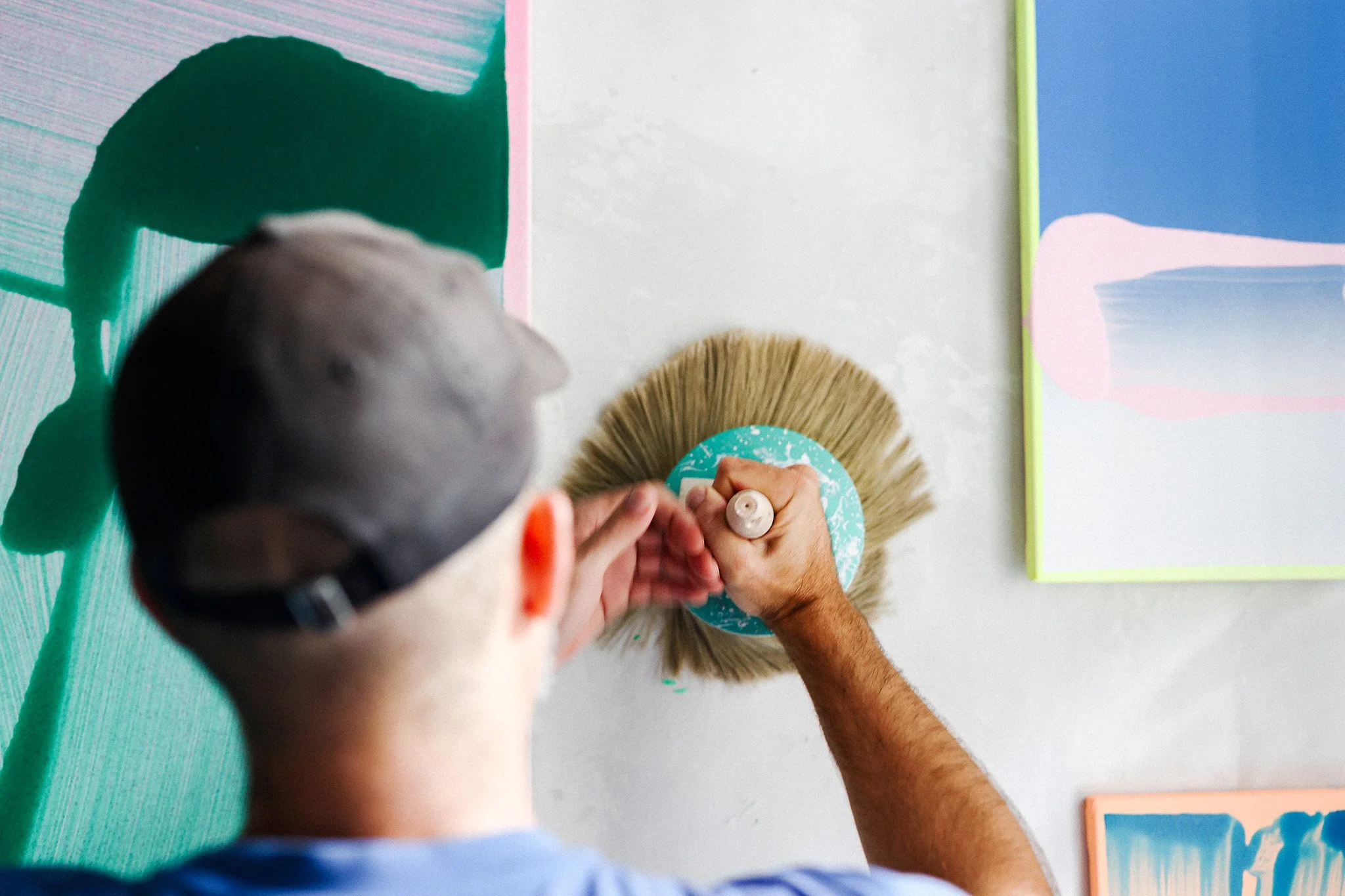
Laying his canvases on the floor, Barath uses colors freely, painting with various materials and tools. Tested and mixed himself are water-based paints which allow his multiple layers to all easily be perceived at once. He uses a variety of brushes, brooms, sponges, and sprayers of different shapes and sizes alongside his handmade tools.
Barath chooses to explore the essence of traces of light, substance, and color in his work, absent from contemporary trends of communication. The selected paintings in the exhibition are studies of light and color through a series of intuitively completed steps. A euphoric kind of action takes place in Barath’s studio as he paints interpretively and sometimes dances around his canvases.
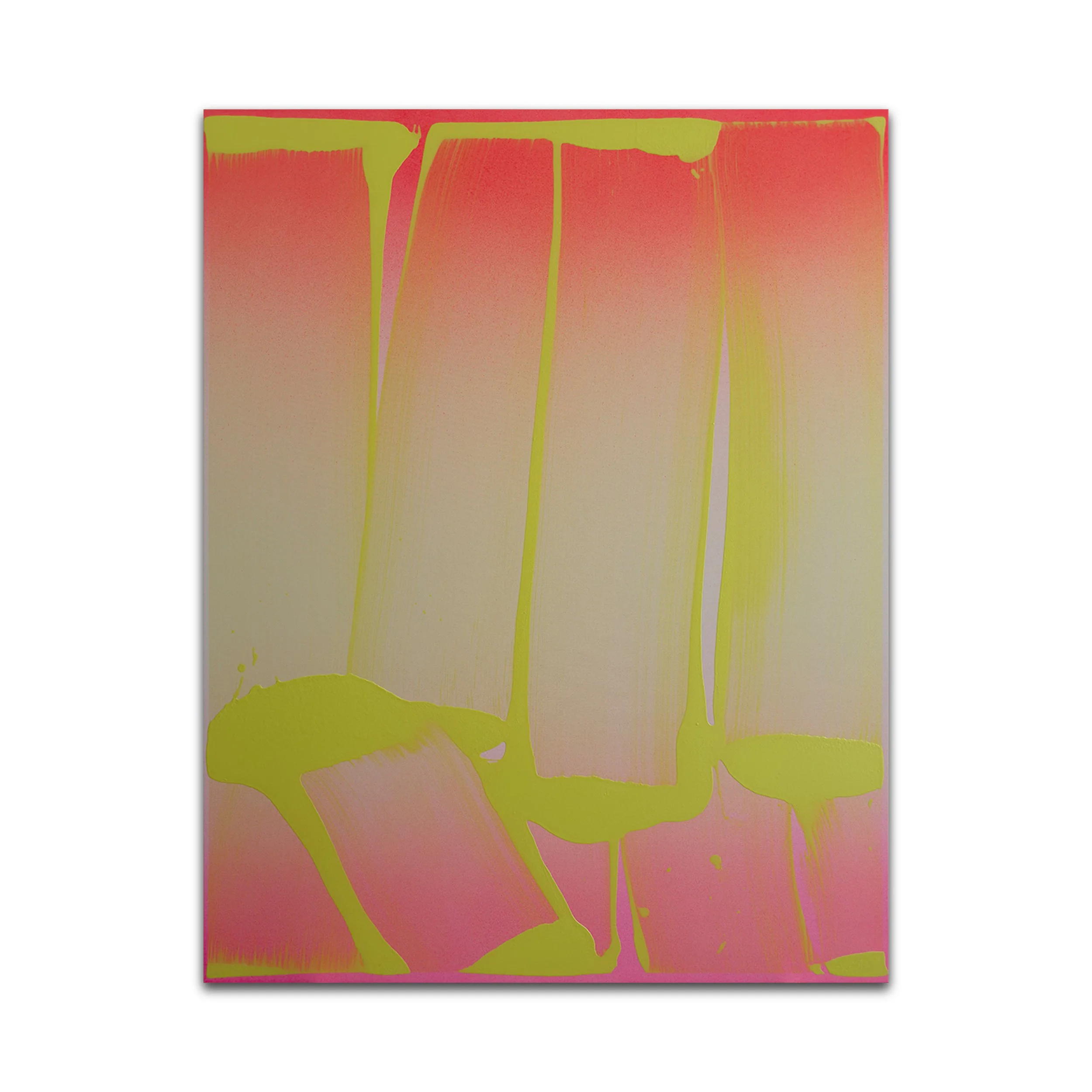
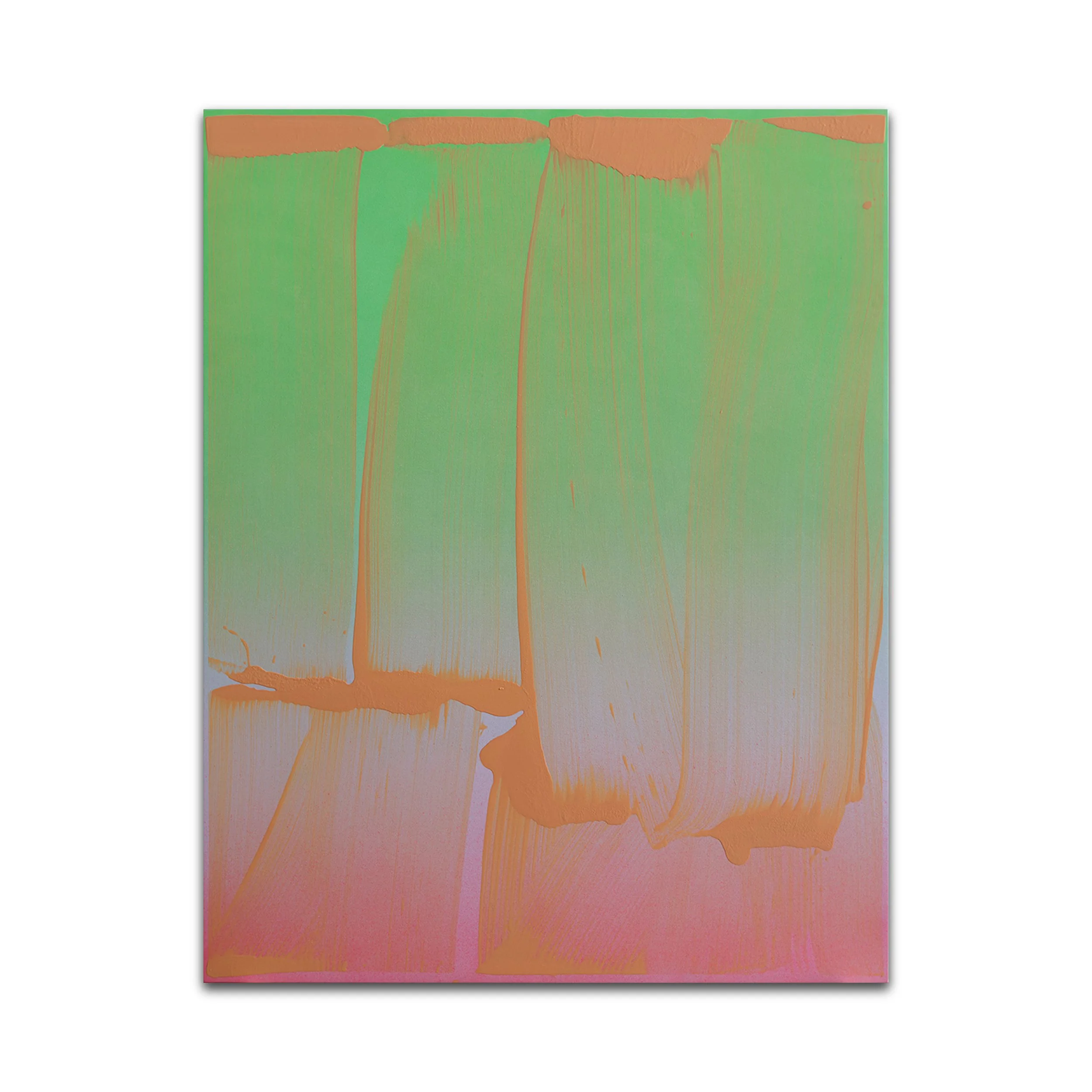
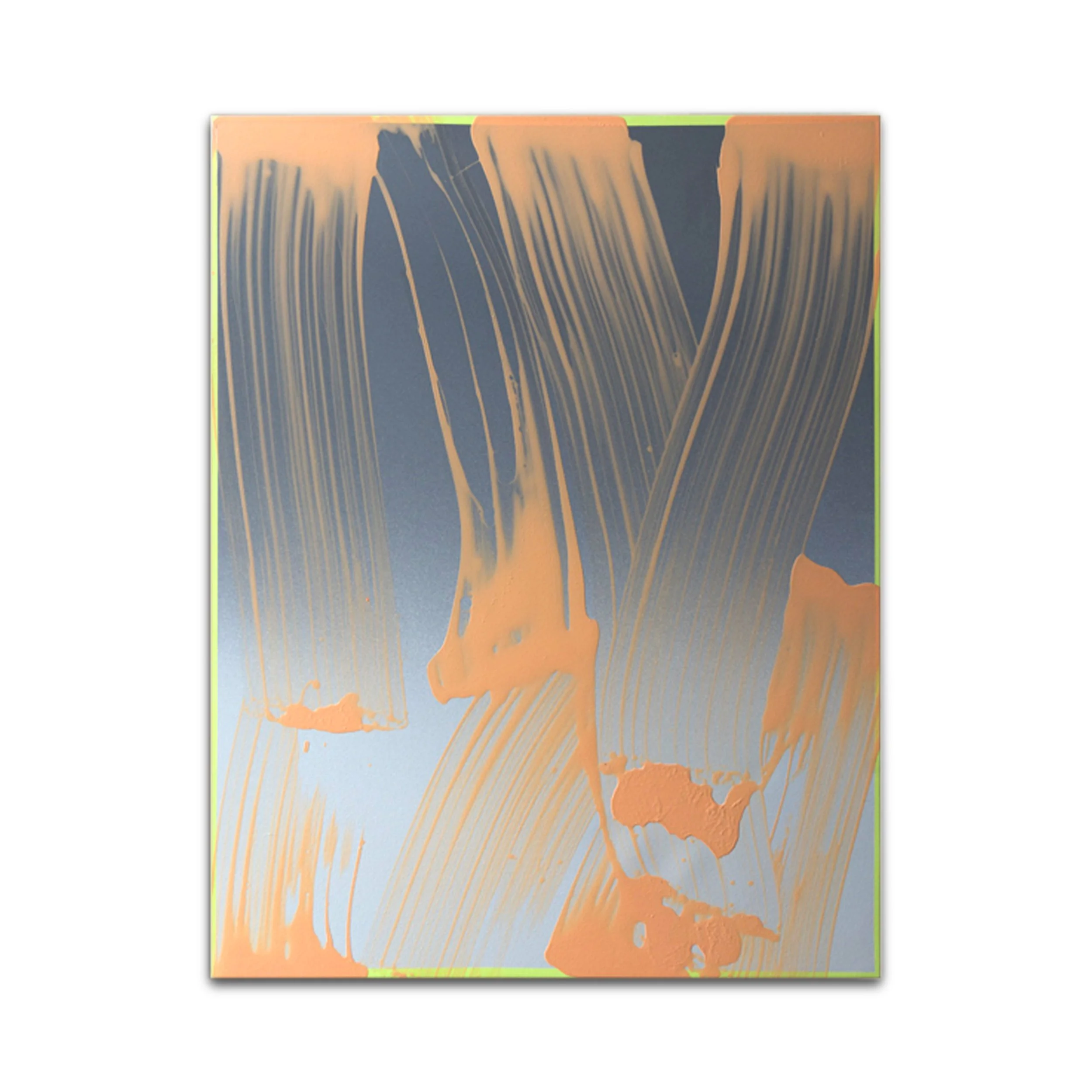
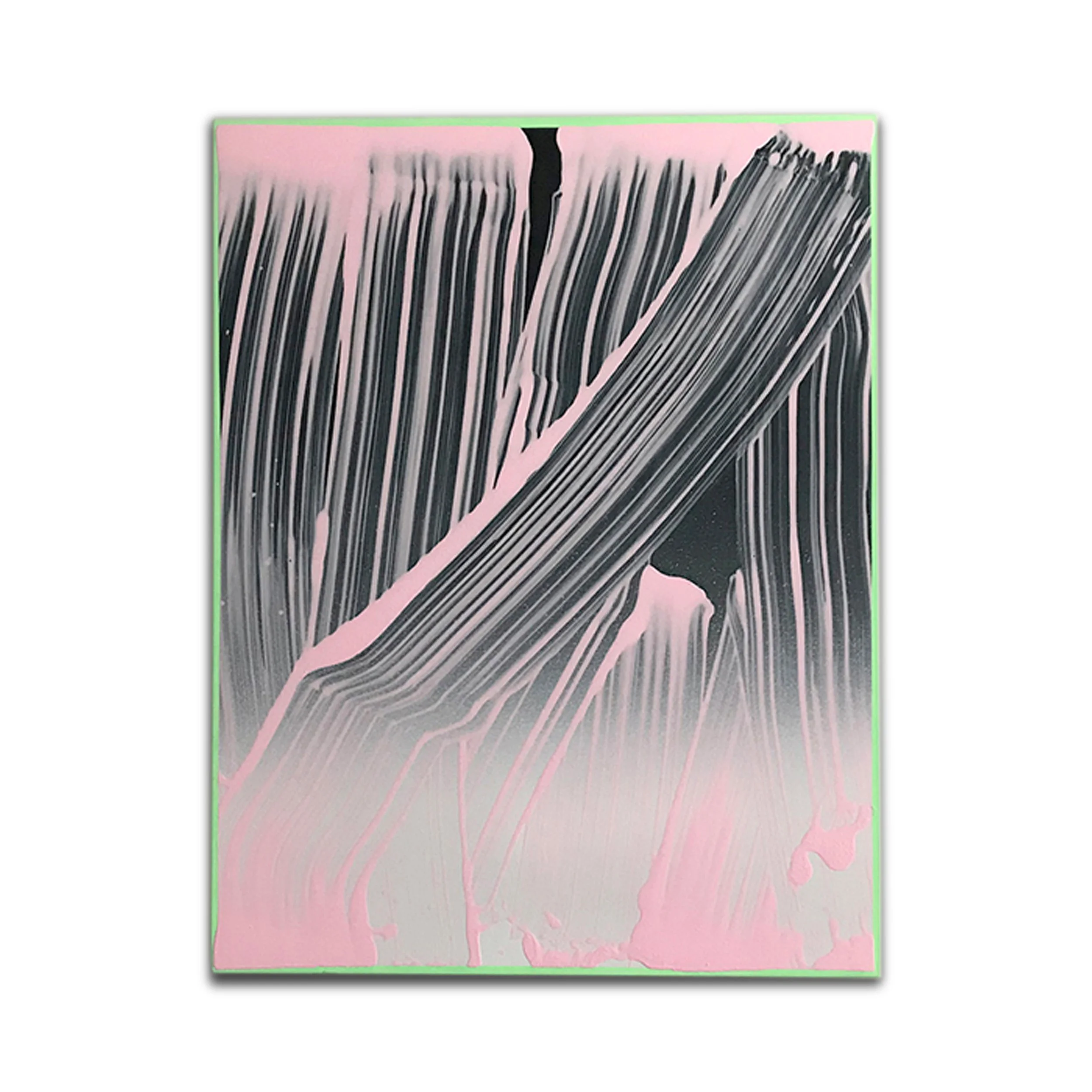
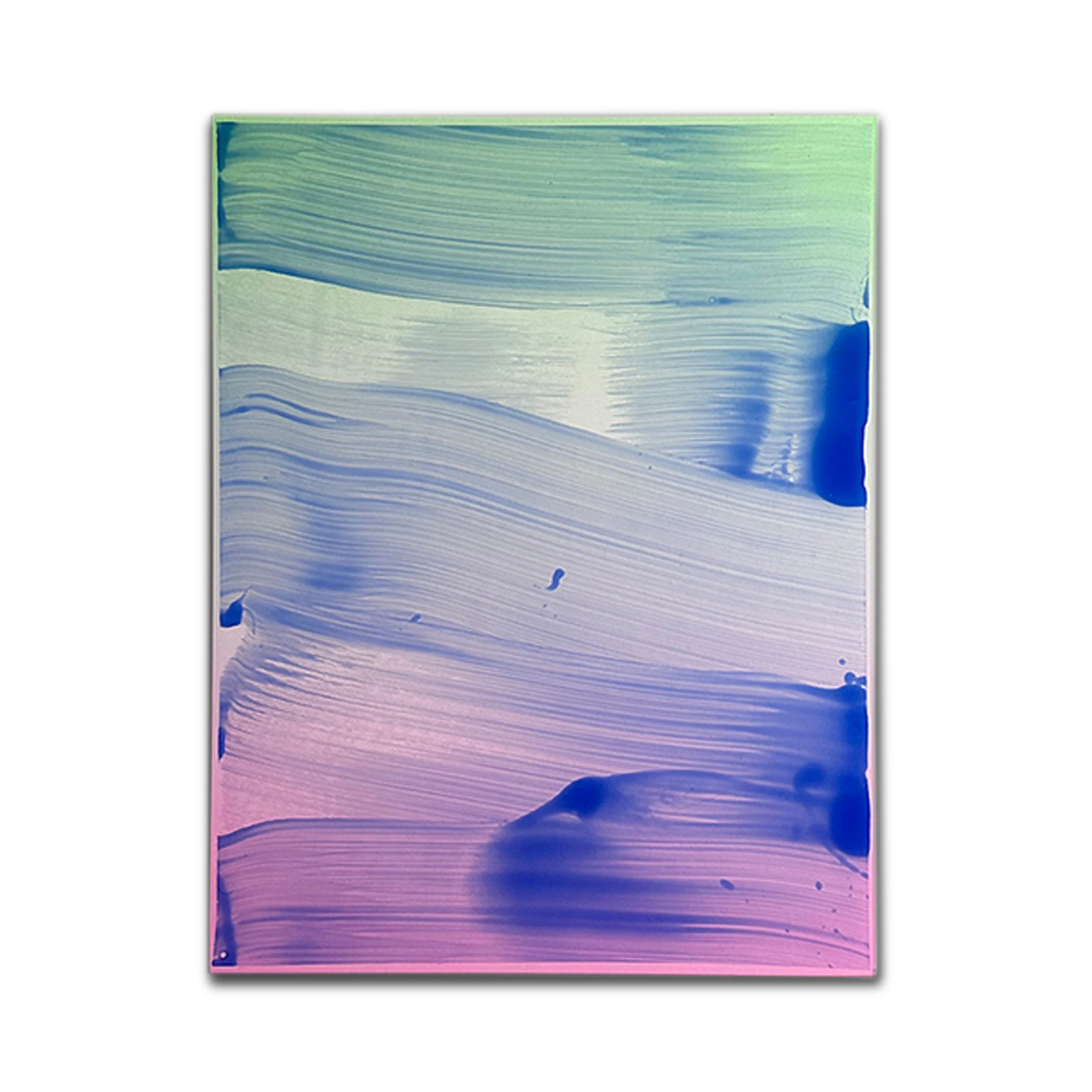
Afterglow opens with bold gestures. Massive brushstrokes pool and stretch across each canvas, pulling the viewer in at once. Up close, the texture takes over: ridges and hollows of paint seem to hover against gravity, as if they might break open and spill. Barath builds each surface in layers, and each layer adds to the cascade, the push and pull of the painting, of the brushstroke, of the artist.
Barath interweaves color to create layers of compression and diffusion, and his surfaces tend to settle into three distinct planes. His technique moves between splatter, gradient, flat color, and sweeping brushwork. Each change in color and handling pushes the layers further apart and deepens the space: flecks of orange scattered against black give way to broad strokes that open up the gaps between colors and sharpen their optical play.
When we look at intense color, the eye holds onto it. Afterimages linger on the retina, overlaying whatever we see next. Afterglow takes its title from this phenomenon. The vibrancy of Barath’s paintings carries from one canvas to the next, and the exhibition becomes kaleidoscopic. As viewers move through the gallery, each painting colors their view of the one that follows. The color relationships Barath explores in each work are shaped by the viewer’s own path through the show, creating new associations along the way.
Installation views:
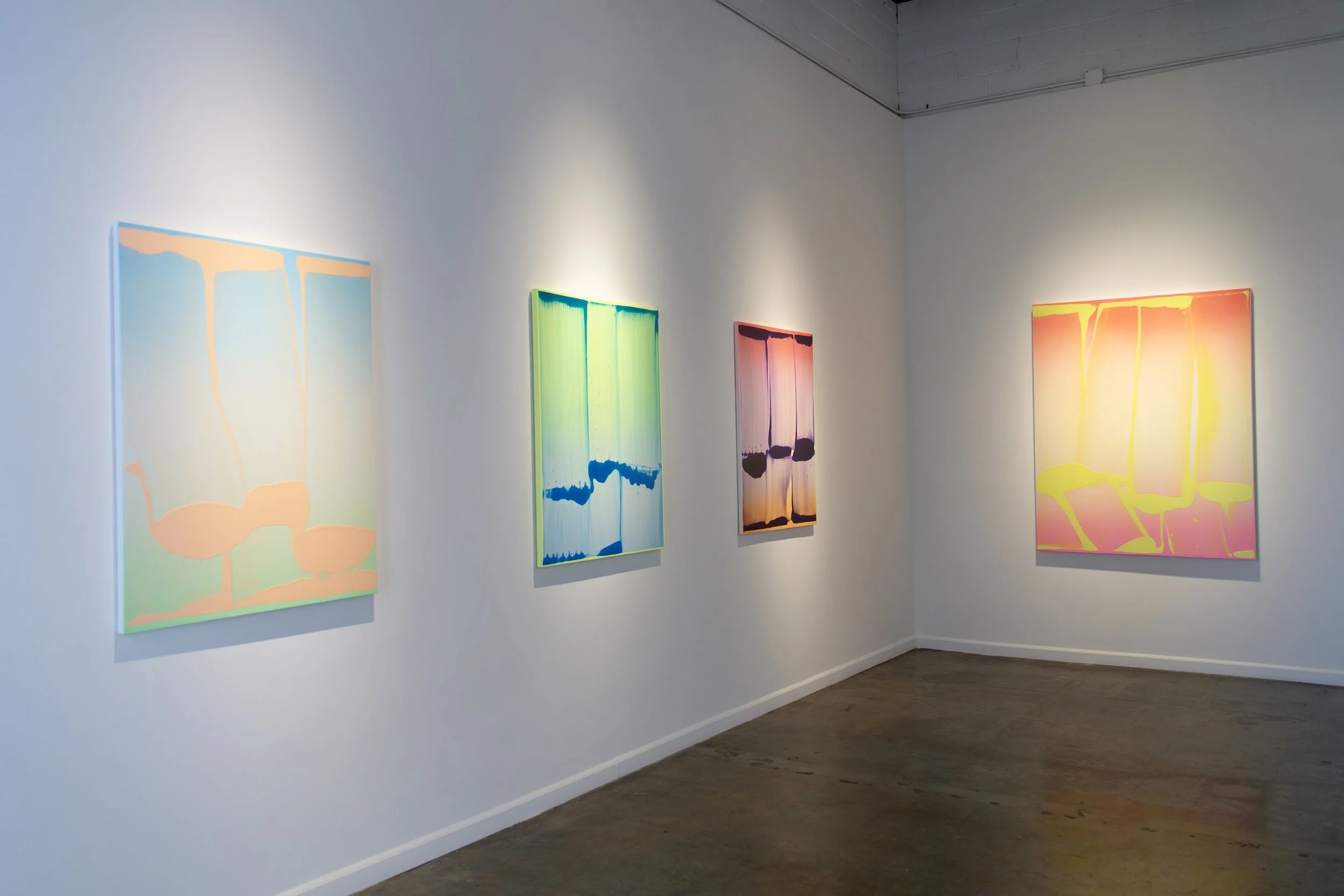
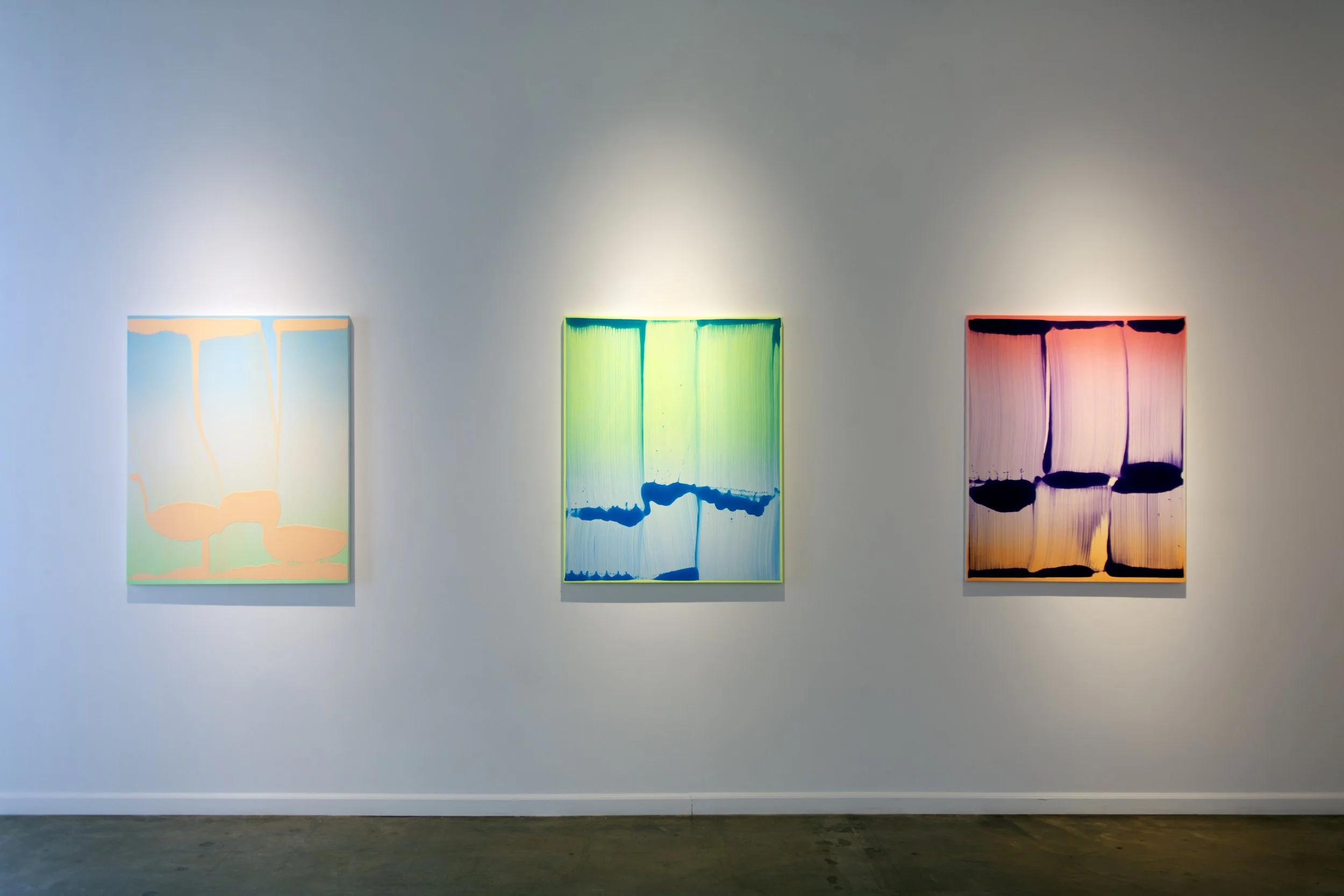
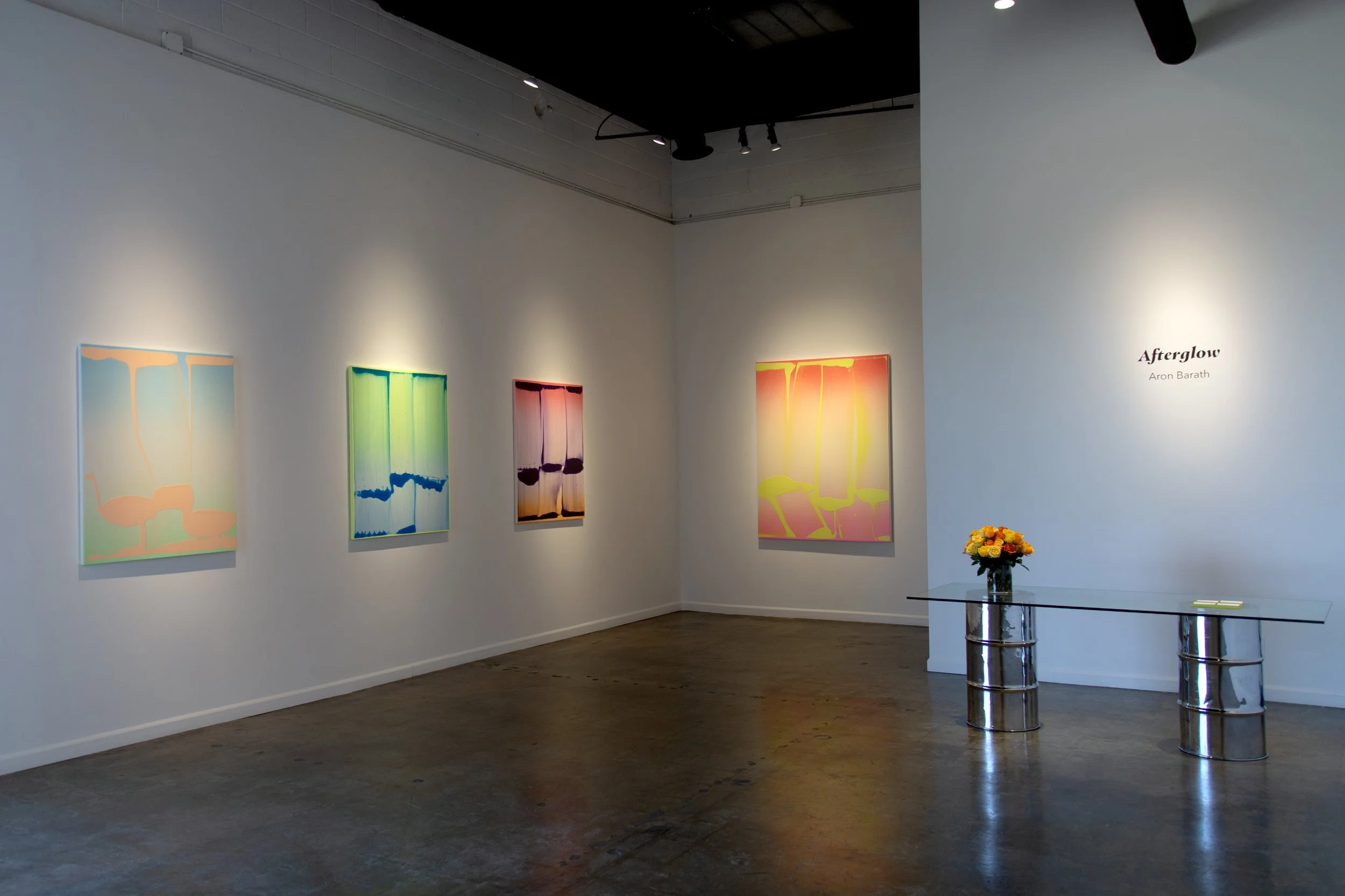
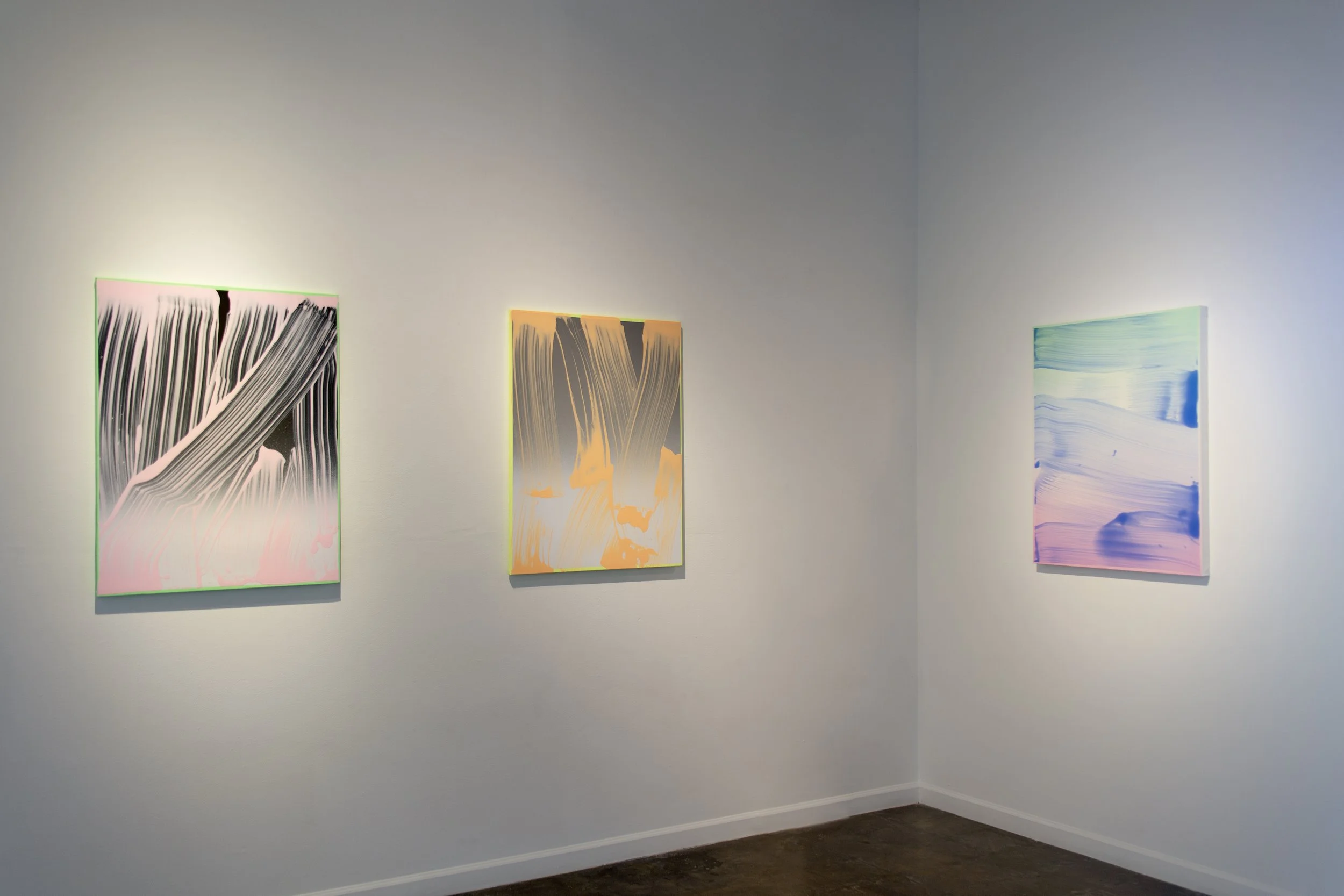
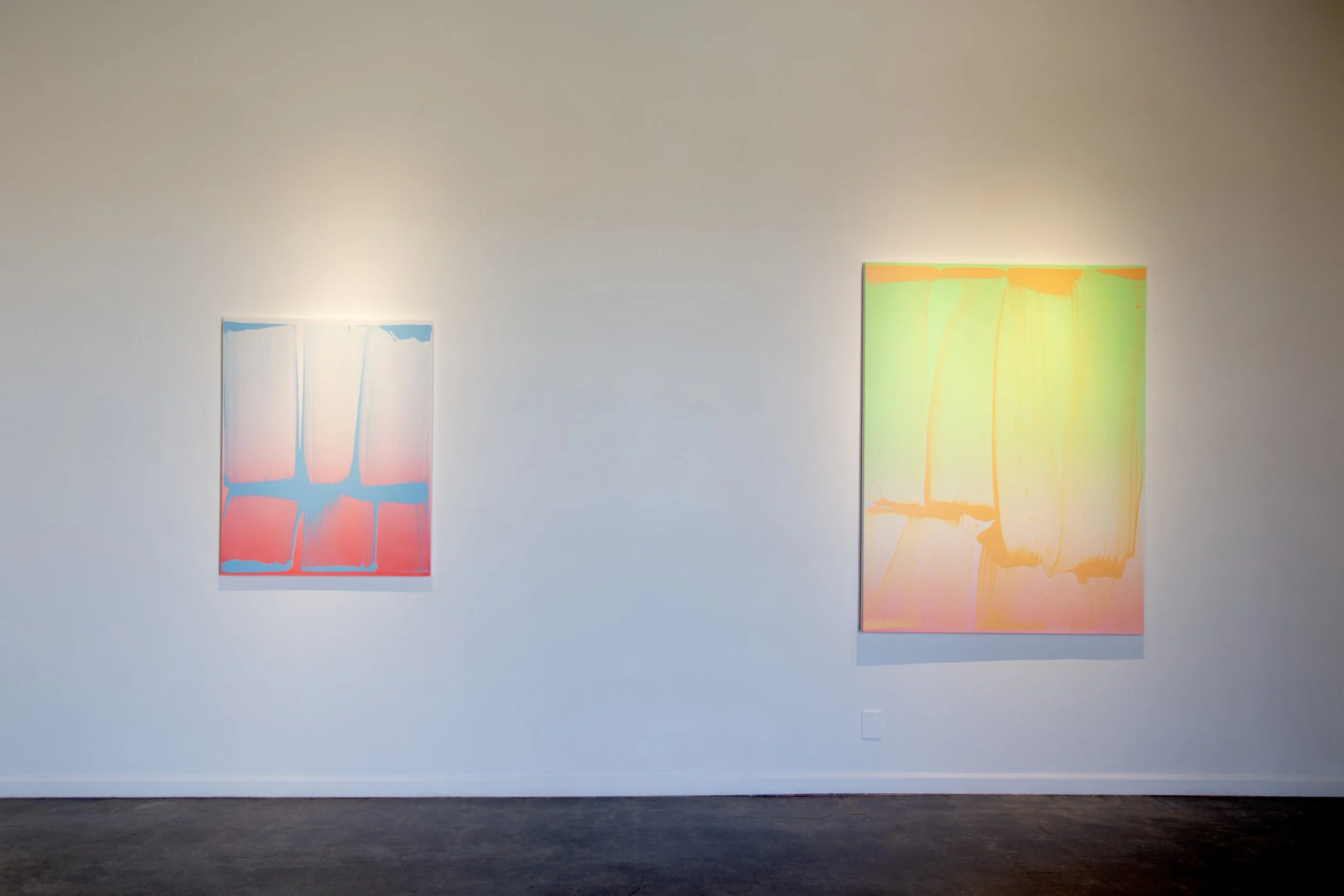
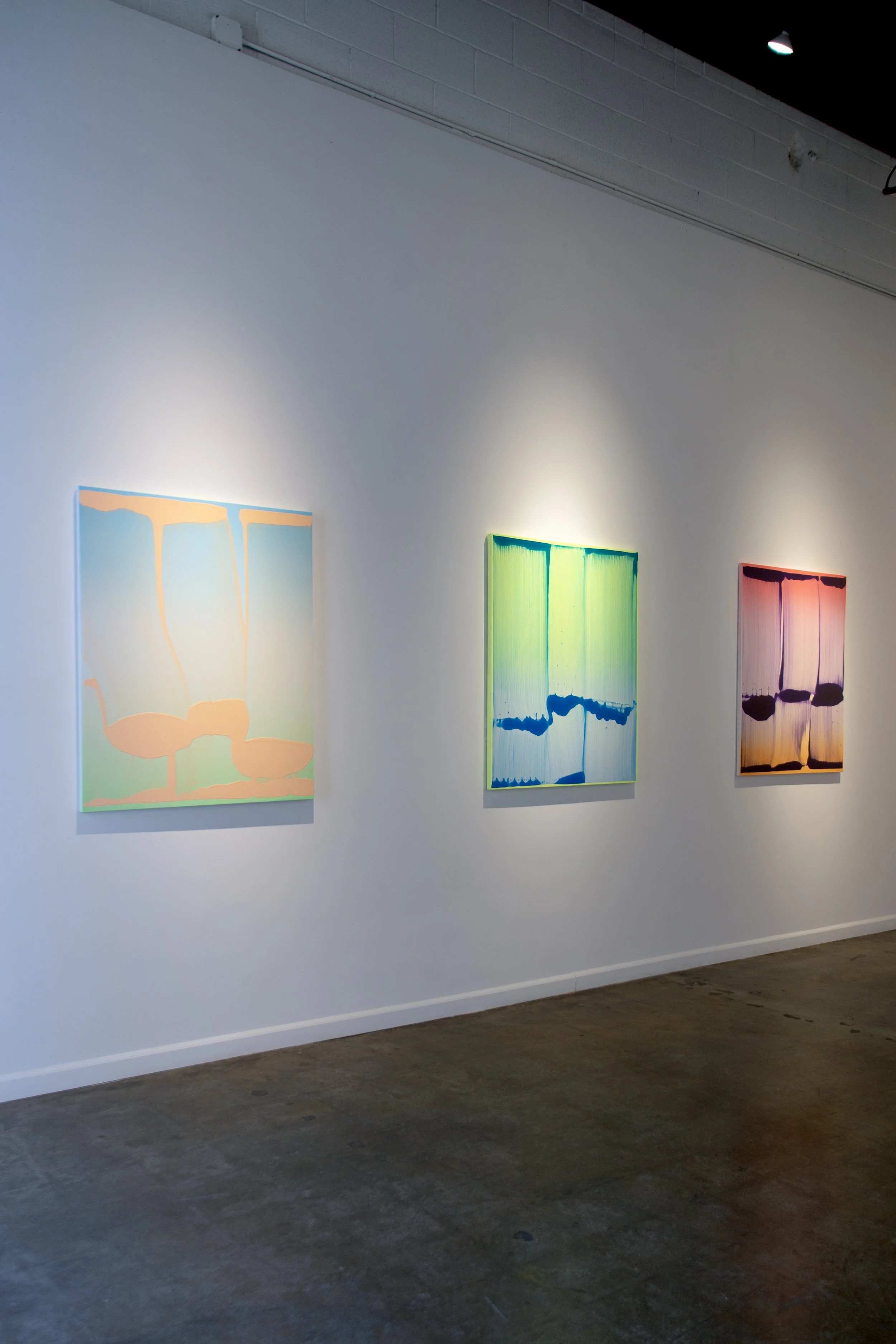
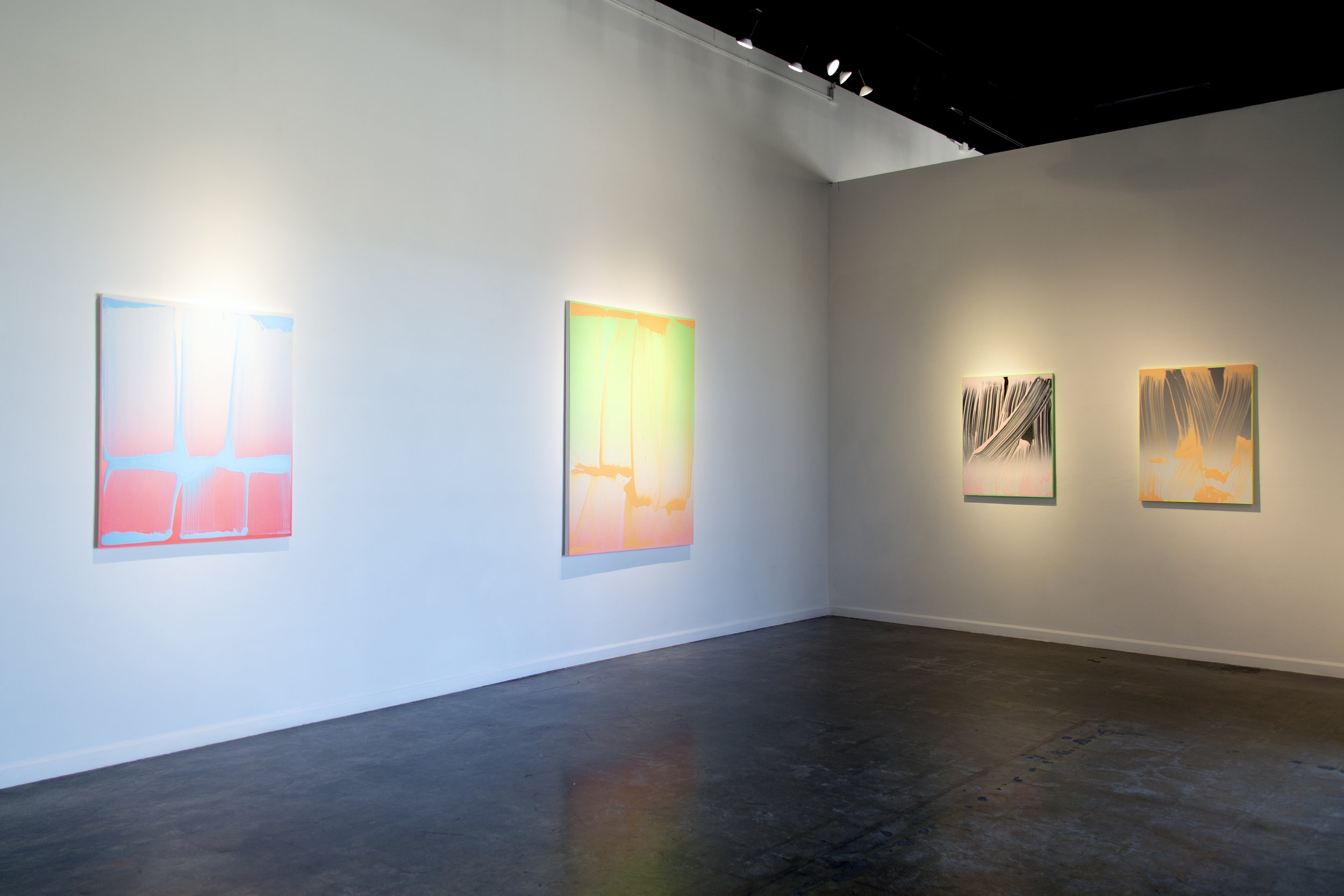
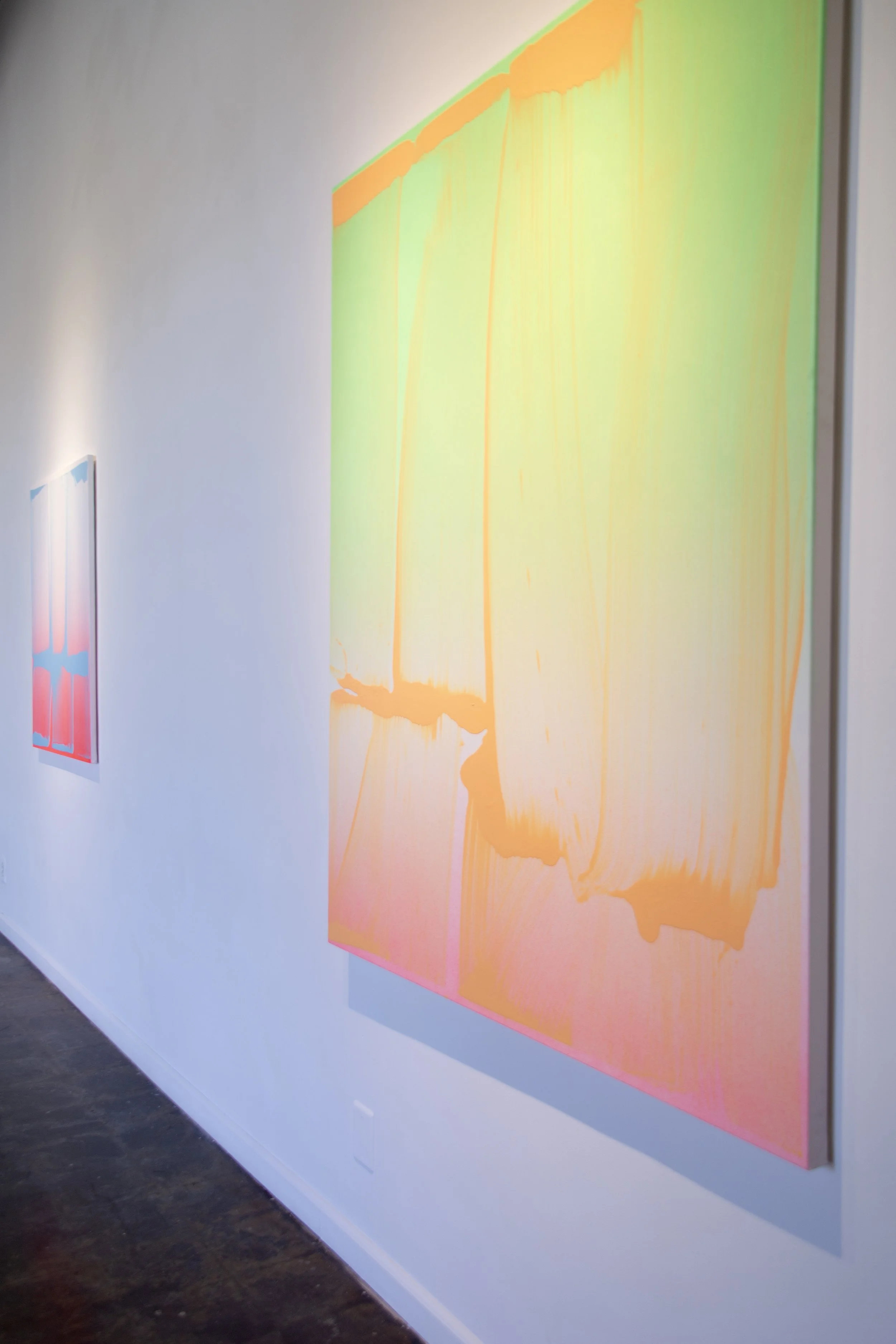
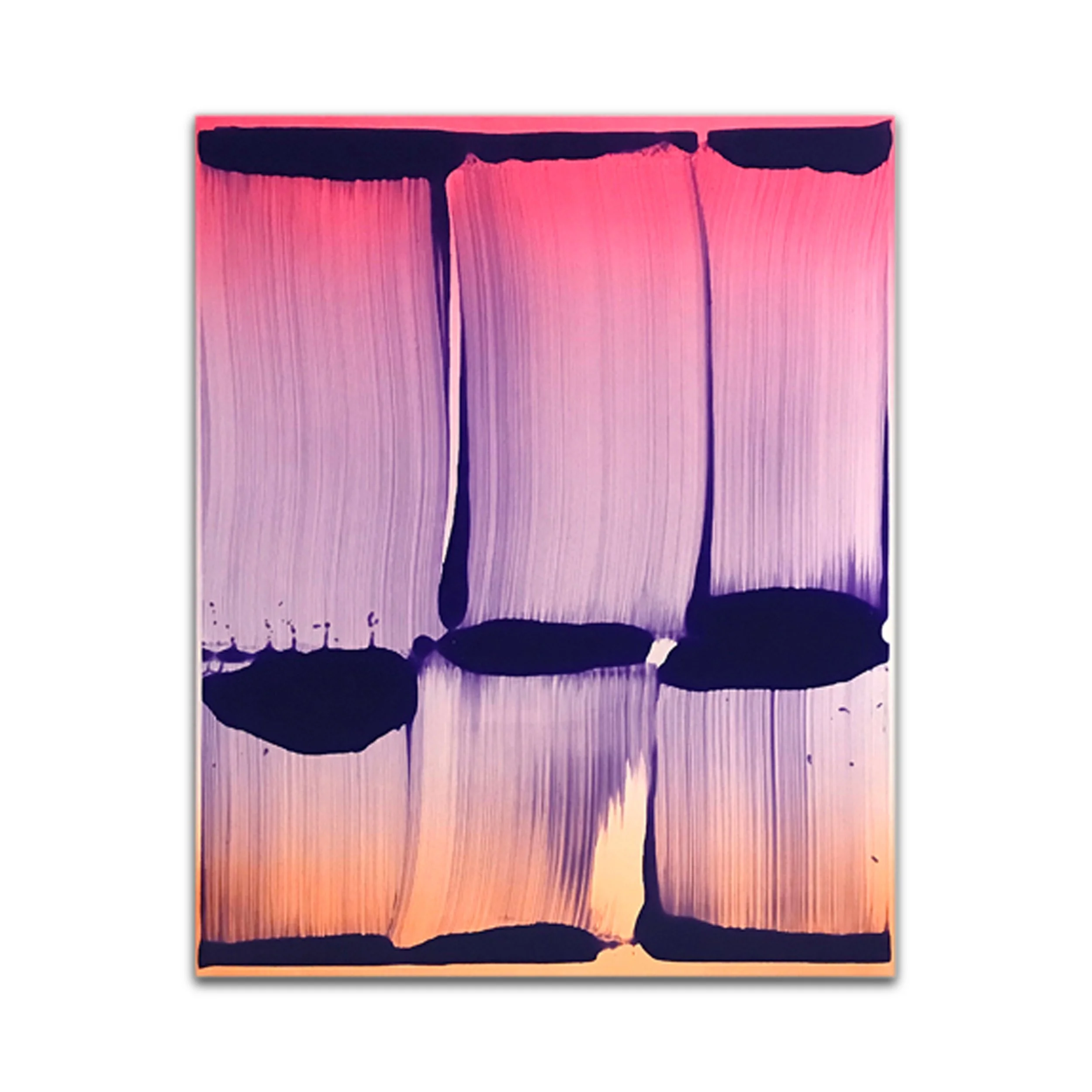
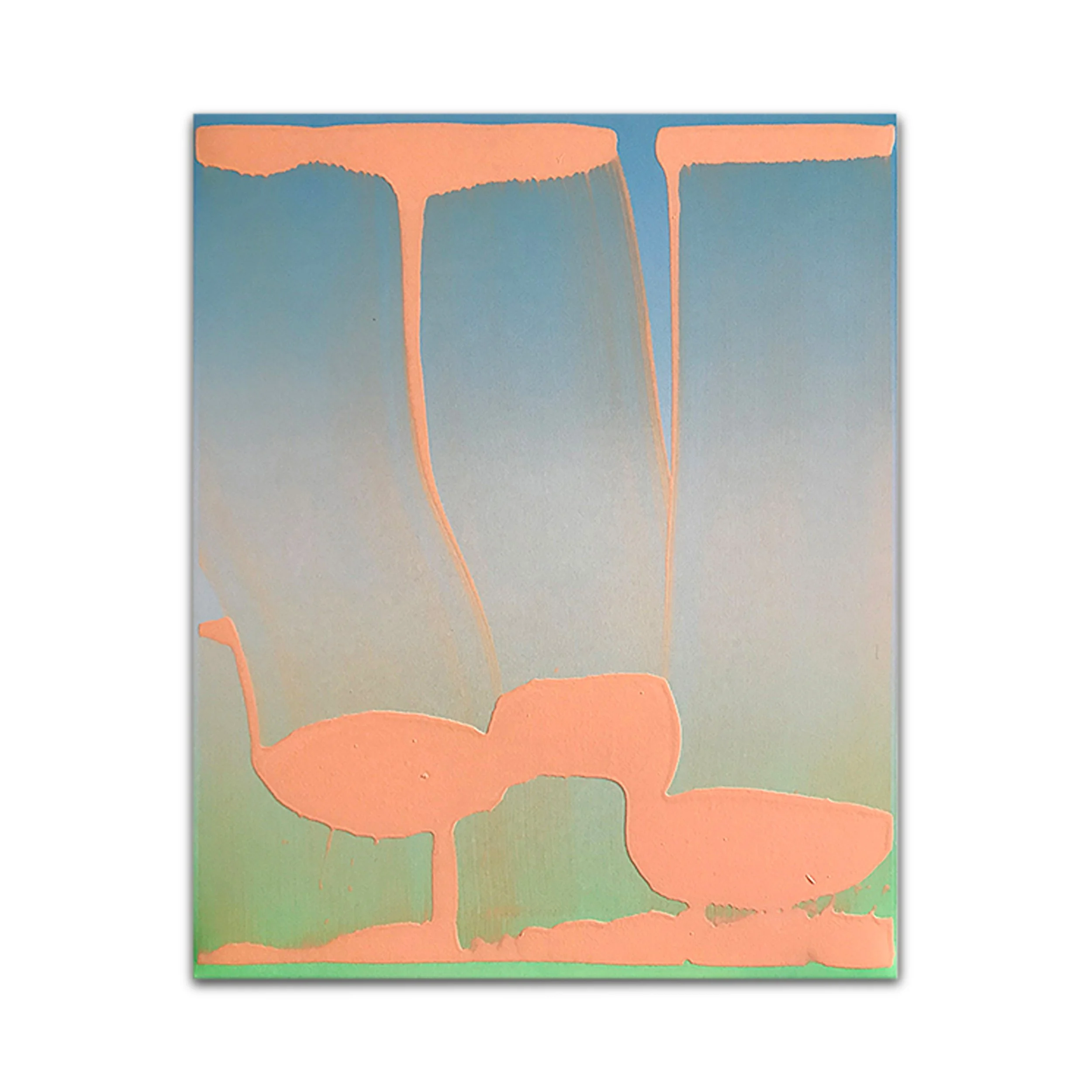
Translucency lets light pass through the acrylic, so colors seep into one another and background and foreground seem lit from within. This exchange of light reinforces the color relationships at the heart of the series. Luminosity shifts the hues and seems to carry the brushstrokes beyond the edge of the canvas.
Aron Barath is best known for his abstract paintings, marked by color and the seductive qualities of paint as a substance. Art historian and art critic Rona Kopeczky describes the artist as a chromatogologue and a chromatophone, handing over his place in a noble manner to the colour. The colour dictates the gesture of the artist, freeing itself from contemporary visual culture or communicational trends. What is left is pure, genuine and truthful. Light, substance and colour.
Laying his canvases on the floor, Barath uses colors freely, painting with various materials and tools. Tested and mixed himself are water-based paints which allow his multiple layers to all easily be perceived at once. He uses a variety of brushes, brooms, sponges, and sprayers of different shapes and sizes alongside his handmade tools.
Barath chooses to explore the essence of traces of light, substance, and color in his work, absent from contemporary trends of communication. The selected paintings in the exhibition are studies of light and color through a series of intuitively completed steps. A euphoric kind of action takes place in Barath’s studio as he paints interpretively and sometimes dances around his canvases.
Aron Barath (b. 1980, Novi Sad, former Yugoslavia) resides and works in Budapest, Hungary. Barath has had group and solo shows predominately in his home country Hungary. However, the past three years his work has been noticed and lauded internationally, resulting in exhibitions in Warsaw, Poland, Berlin, United States, Vienna, Austria and Kortrijk, Belgium.